


90% of Your Serotonin Is Made in Your Gut. Here's What That Does and Doesn't Mean
Where the 90% Figure Comes From
Serotonin is a signalling molecule, and the lining of the digestive tract is where most of it is made. The makers are enterochromaffin cells, specialised sensor cells scattered along the gut wall. A 2020 review in the International Journal of Biochemistry & Cell Biology describes them as the source of "almost all peripheral" serotonin, built with an enzyme called TPH1.
The 2015 Cell paper puts the gut's share at "more than 90%." Two later reviews go higher, to roughly 95%. So the popular "about 90%" figure is accurate, and if anything a little conservative.
One detail changes the picture, though. Gut serotonin does not stay where it is made. The cells release it into the gut lining and the space inside the intestine, and serotonin that escapes into the bloodstream is picked up and carried by platelets, the cell fragments that help blood clot.
What Gut Serotonin Actually Does
In the gut, serotonin is a working signal for digestion. A 2013 review in Nature Reviews Gastroenterology & Hepatology lists its routine jobs: setting off the muscle contractions that move food along, prompting fluid secretion into the gut and widening small blood vessels. Through nerves leading out of the gut, it also feeds into feelings of fullness, discomfort and nausea.
The same review notes that platelet serotonin "originating in the gut" helps blood clot and influences bone development. None of these jobs is mood. They are traffic control, housekeeping and repair, which is exactly what a digestive tract needs from its own messengers.
The National Institute of Diabetes and Digestive and Kidney Diseases (NIDDK) describes the gut's own nerve network, the enteric nervous system, releasing "many different substances that speed up or delay the movement of food." Serotonin is one of the most studied of those substances.
The Barrier Between Gut Serotonin and Your Brain
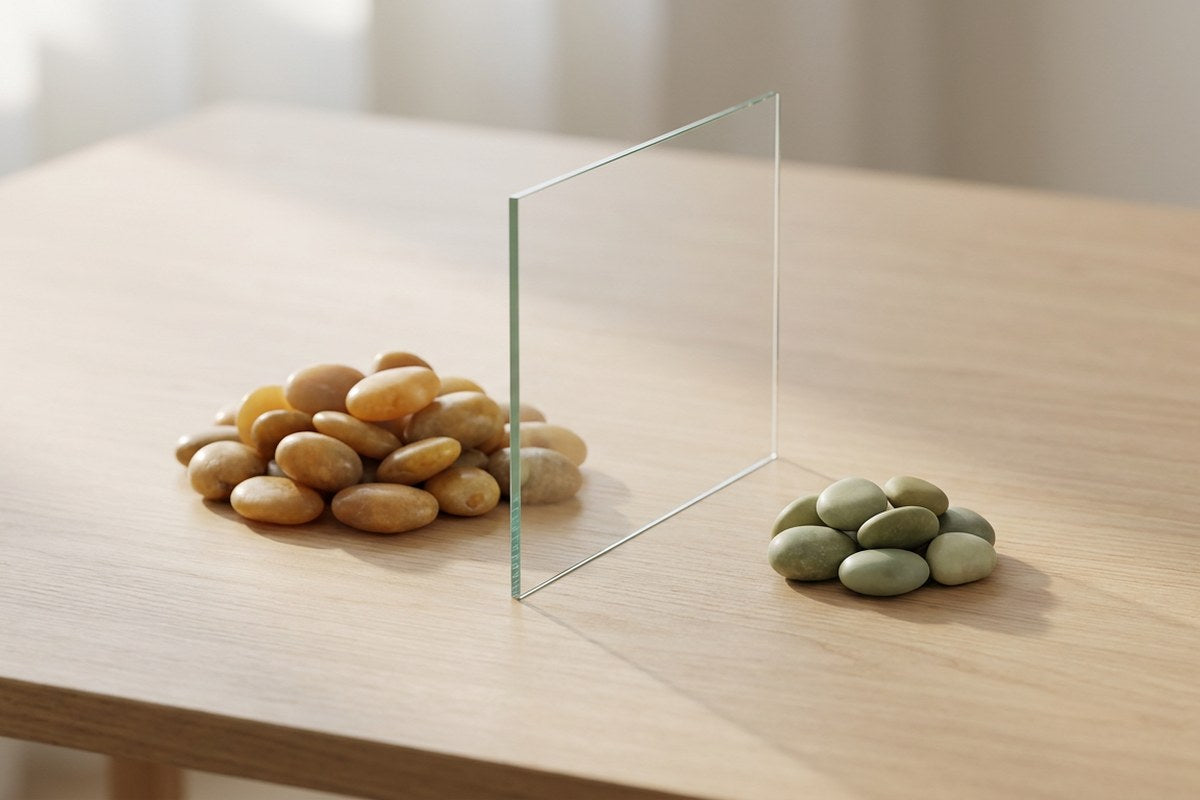
Here is the part most headlines skip. The 2020 review says it plainly: serotonin "cannot readily cross the blood-brain barrier," so the gut's supply and the brain's supply are "anatomically separated." The brain makes its own serotonin with a different enzyme, TPH2, in a small cluster of neurons in the brainstem.
So "90% of serotonin is in the gut" does not mean 90% of the serotonin involved in mood is in the gut. The brain's supply is a small share of the body's total, and it is made on the brain's side of the barrier.
The 2015 Cell paper shows how local the gut pool is. In that study in mice, animals raised without any gut bacteria had clearly lower serotonin in the colon and the blood. The researchers traced the effects of that shortfall to gut movement and platelet function, which is where gut serotonin does its daily work.
So Why Call It the Gut–Brain Axis?
Because the gut and the brain do talk, just not by shipping serotonin across. According to the 2013 review, serotonin released in the gut activates vagal and spinal nerve fibres, the wiring that carries information from the gut up to the brain. NIDDK puts it simply: "Signals flow within your GI tract and back and forth from your GI tract to your brain."
That two-way wiring helps explain why gut and bladder symptoms so often travel together. The Interstitial Cystitis Association notes that "up to a third or more of IC/BPS patients also meet criteria for IBS," and that the bladder and bowel "share sacral nerve pathways." We look at the stress side of that loop in our post on the gut-brain-bladder axis.
In short, the axis runs on nerves, immune signals and substances made by gut microbes. Gut serotonin is a local signal that starts some of those nerve messages, not a supply line to the brain.
Where Aloe Vera Fits In, and What We Claim
Aloe Vera enters this story through the gut. Its polysaccharides are fibres that gut bacteria can ferment in lab studies, which we explain in our post on Aloe Vera, acemannan and the gut. Every study we could find that links an Aloe Vera preparation to serotonin or to behaviour was done in animals or in lab dishes, mostly in rats and mice. We found no human study, and we will say so every time it comes up in this series.
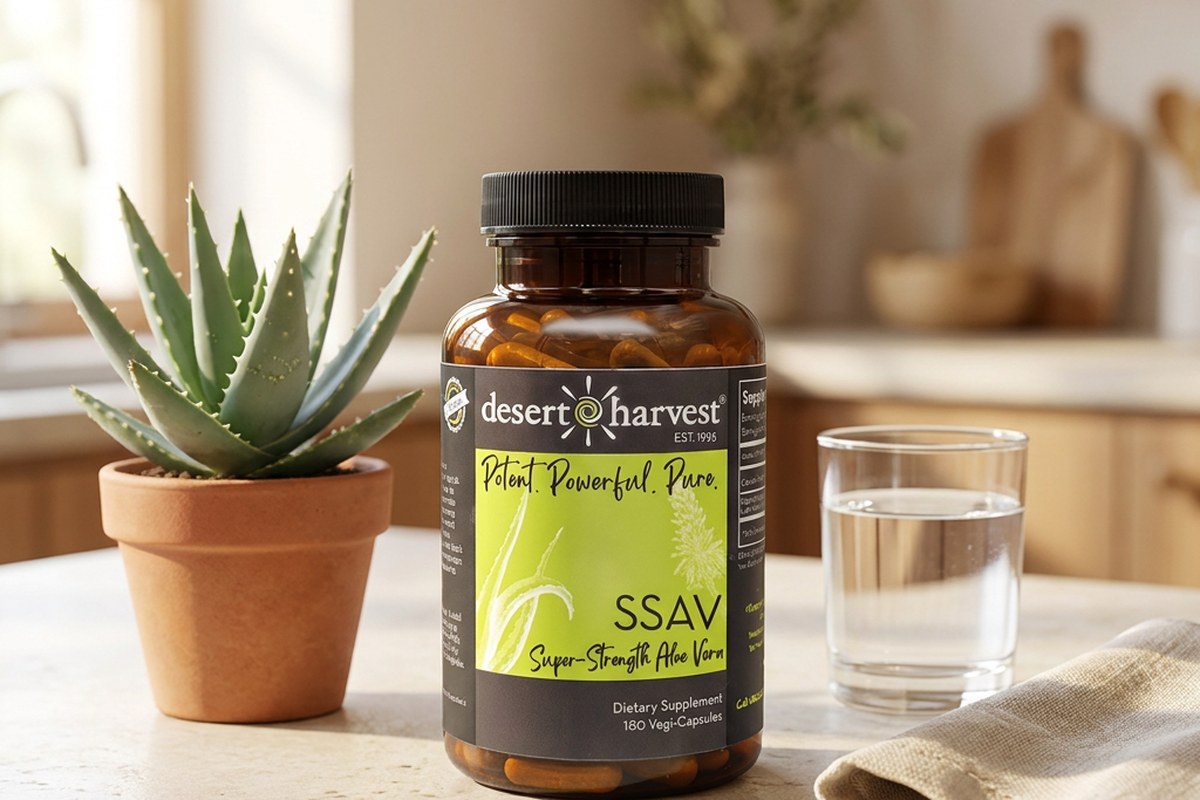
That is why SSAV (Super-Strength Aloe Vera) carries no mood claim of any kind. Its lane is bladder comfort for people living with IC/BPS. SSAV is a 200:1 concentrate, anthraquinone-free, made with a patented freeze-dry cold-process, manufactured under cGMP and third-party tested. Desert Harvest is also the only Aloe Vera supplement named in the International Painful Bladder Foundation's global IC/BPS guidelines, a fact about recognition rather than a promise about results.
If you take an SSRI or any other prescription medicine, talk to your prescriber before adding any supplement. For everyone else, the same rule applies in softer form: check with your healthcare provider before starting something new.
These statements have not been evaluated by the Food and Drug Administration. This product is not intended to diagnose, treat, cure, or prevent any disease. This content is for informational purposes only and does not constitute medical advice. Always consult with a qualified healthcare provider before making changes to your health regimen.