


Aloe Vera, the Gut and the Immune System: What Acemannan Does Below the Surface
An often-cited estimate places roughly 70% of the body's immune tissue in and around the gut. If that number surprises you, you are in good company — most people picture immunity as something that happens in the bloodstream, not in a 25-foot tube.
It also explains why a plant with no obvious connection to immunity keeps appearing in the research literature. Aloe Vera's activity is largely a gut story, and the gut is where a great deal of immune conversation takes place.
Where Immunity Actually Lives
Gut-associated lymphoid tissue
The lining of your intestine is not a passive pipe. It carries a dense population of immune cells — collectively gut-associated lymphoid tissue — that sample everything passing through and decide what warrants a response.
That system sits behind a single layer of epithelial cells joined by tight junctions. The integrity of that barrier is one of the more actively researched topics in gastroenterology, and studies indexed in PubMed have examined it from every direction over the past two decades.

The microbiome is part of the apparatus
Your resident bacteria are not passengers. They compete with less welcome organisms, ferment fiber into short-chain fatty acids that feed the colon lining, and train immune cells about what to ignore.
Anything that disturbs that population — a course of antibiotics, a rough illness, a sharp change in diet — is felt by the immune system too. The NIDDK is a reliable starting point for the digestive side of this picture.
What Aloe Vera Actually Contributes
Acemannan and the polysaccharide fraction
The inner gel of an Aloe Vera leaf is mostly water, but the dry weight is dominated by polysaccharides — long chains of sugar units. The best-studied is acemannan, an acetylated mannan.
Research cataloged in PubMed Central has examined acemannan across immune signaling, mucosal tissue and barrier models for several decades. It is a substantial body of laboratory and animal literature, and it is fair to describe it as promising while noting that human clinical research remains a smaller field.
Mucilage, moisture and mucosal surfaces
Aloe Vera polysaccharides hold water and form a soft gel. On a mucosal surface, that physical property matters: mucilage coats, hydrates and slows transit slightly.
This is the same characteristic behind Aloe Vera’s reputation on skin, applied internally to a different tissue. Many people find it is what makes an otherwise harsh mineral or botanical sit more comfortably.
The absorption question
Studies indicate Aloe Vera may support absorption of nutrients taken alongside it, which is the rationale behind formulating it with vitamins, minerals and botanicals rather than selling it alone. Traditional use, modern formulation practice and the laboratory literature point in the same direction here.
The Part Nobody Advertises
Aloin decides whether Aloe Vera is gentle or not
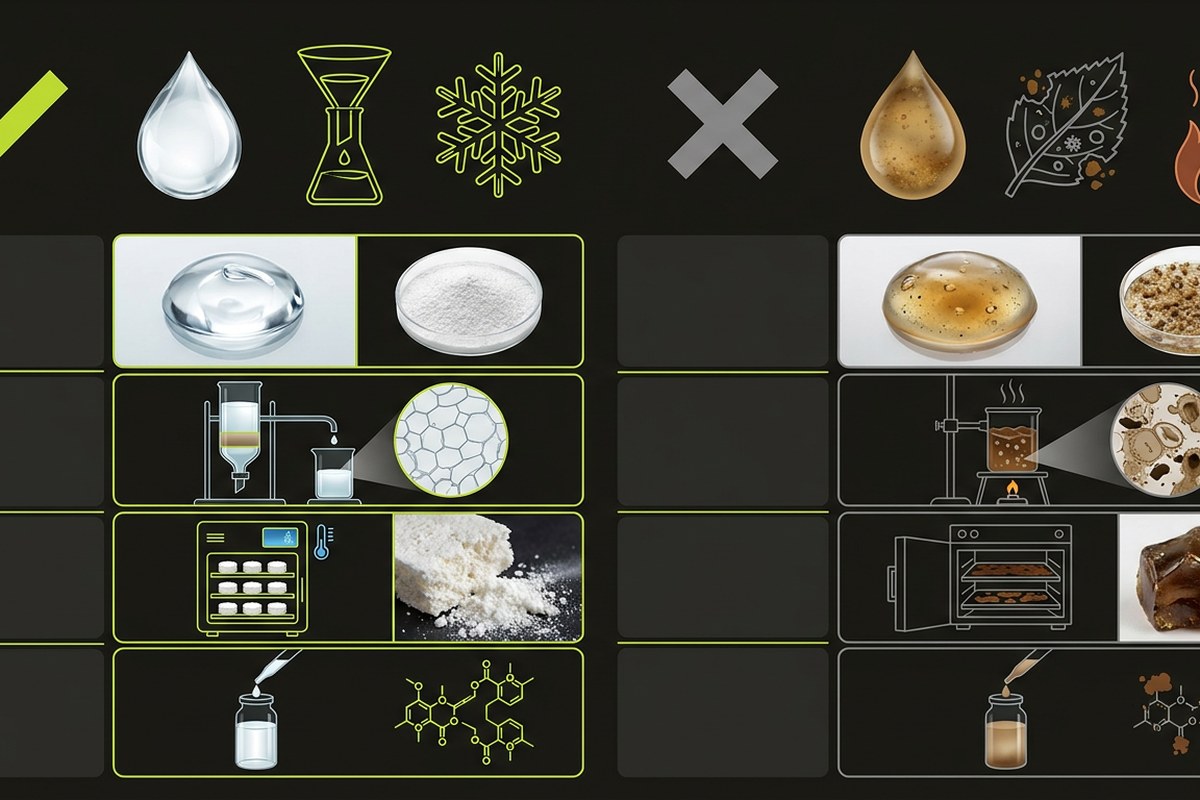
Between an Aloe Vera leaf's inner gel and its outer rind sits a bitter yellow latex containing anthraquinones — chiefly aloin. Aloin is a stimulant laxative compound.
An Aloe Vera product that has not had this fraction removed is an entirely different proposition from one that has, particularly for anyone with a sensitive gut or bladder. Decolorized, purified and anthraquinone-free are the label terms that matter; their absence is informative.
Heat destroys what you are paying for
Aloe Vera’s larger polysaccharides are fragile. Processing that cooks the leaf produces something chemically simpler than what was harvested, which is why cold-process freeze-drying — slower, more expensive — remains the standard worth looking for. The International Painful Bladder Foundation names Aloe Vera in its global IC/BPS guidance, and source quality is a large part of why that distinction is made carefully.
The Desert Harvest Difference
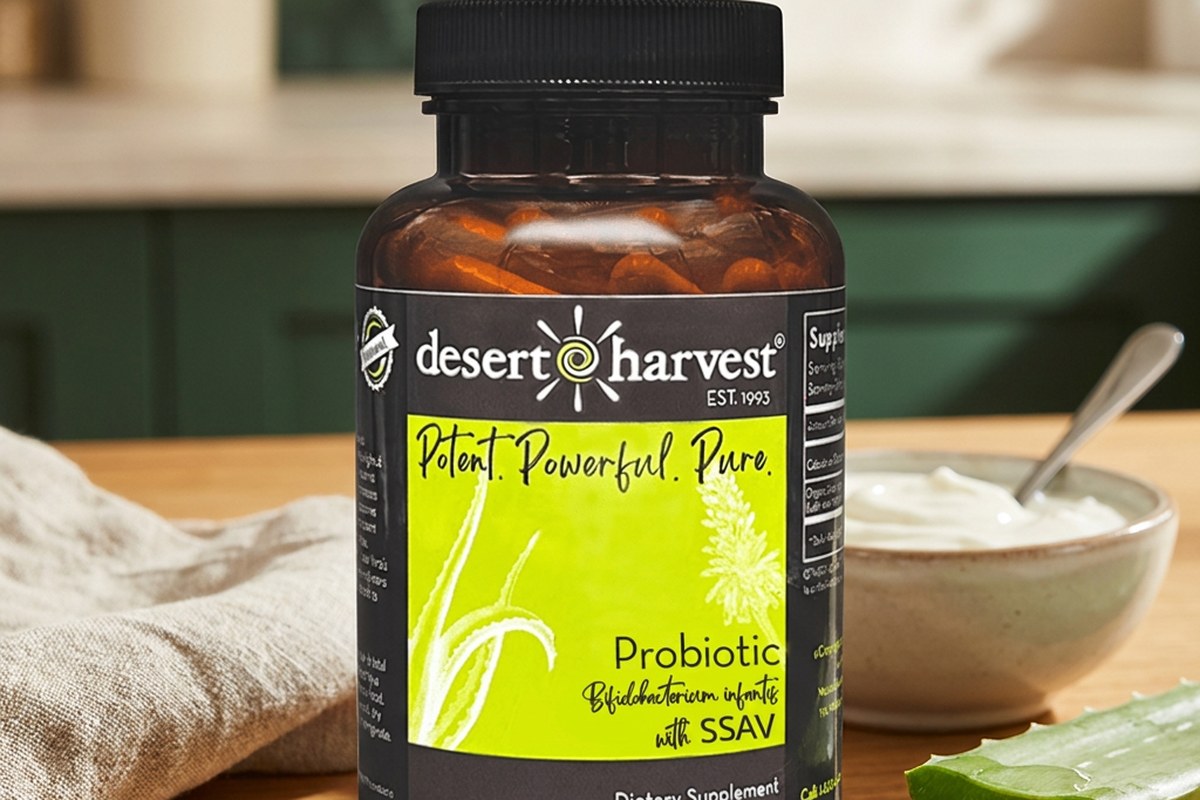
Every Desert Harvest formula carries the same organic, inner-leaf, anthraquinone-free, cold-process freeze-dried Aloe Vera used in SSAV (Super-Strength Aloe Vera) — the only Aloe Vera supplement named by name in the IPBF global guidelines.
The clearest example of the gut-immune pairing is the Probiotic: one billion CFU of Bifidobacterium infantis carried in 200 mg of organic freeze-dried Aloe Vera — the second-largest Aloe Vera dose in the range. One capsule daily, no refrigeration, and not within two hours of an antibiotic.
"The capsules are easy to take; smaller than other products. Bloating seems less of a problem." — Connie L., Verified Customer, Probiotic
Gluten-free, bladder-friendly, cGMP certified, third-party tested, no fillers. Check with your healthcare provider before adding anything new.
The Bottom Line
Aloe Vera earns its place in a gut-and-immune conversation through its polysaccharides, its mucilage and its behavior on mucosal surfaces — not through the marketing that usually surrounds it. The variables that decide whether a given Aloe Vera product delivers any of that are printed on the label: which part of the leaf, whether aloin was removed, and how it was dried.
Subscribe to Buffered Vitamin C and every subscription order ships free.
These statements have not been evaluated by the Food and Drug Administration. This product is not intended to diagnose, treat, cure, or prevent any disease. This content is for informational purposes only and does not constitute medical advice. Always consult with a qualified healthcare provider before making changes to your health regimen.