


The Gut-Brain-Bladder Axis: Why Stress Shows Up in Your Bladder
It's Not "In Your Head" — It's a Nerve Pathway
Roughly 90% of the body's serotonin — a signaling chemical tied to mood, pain processing, and gut function — is made in your intestines, not your brain. If a provider has ever told you your bladder symptoms are "just stress" and it landed like an accusation that you were imagining things, that statistic is worth sitting with, because it points toward something physical instead.
"It's stress" often gets heard as "you're making this up" or "you're too anxious." That is not what the research shows, and it is not what we mean by the gut-brain-bladder axis. Gut, brain, and bladder share nerve pathways and chemical messengers, so a stress response can produce a measurable physical effect on a bladder that is already sensitized. That is a mechanism, not a verdict on your state of mind.
What the Gut-Brain-Bladder Axis Actually Is
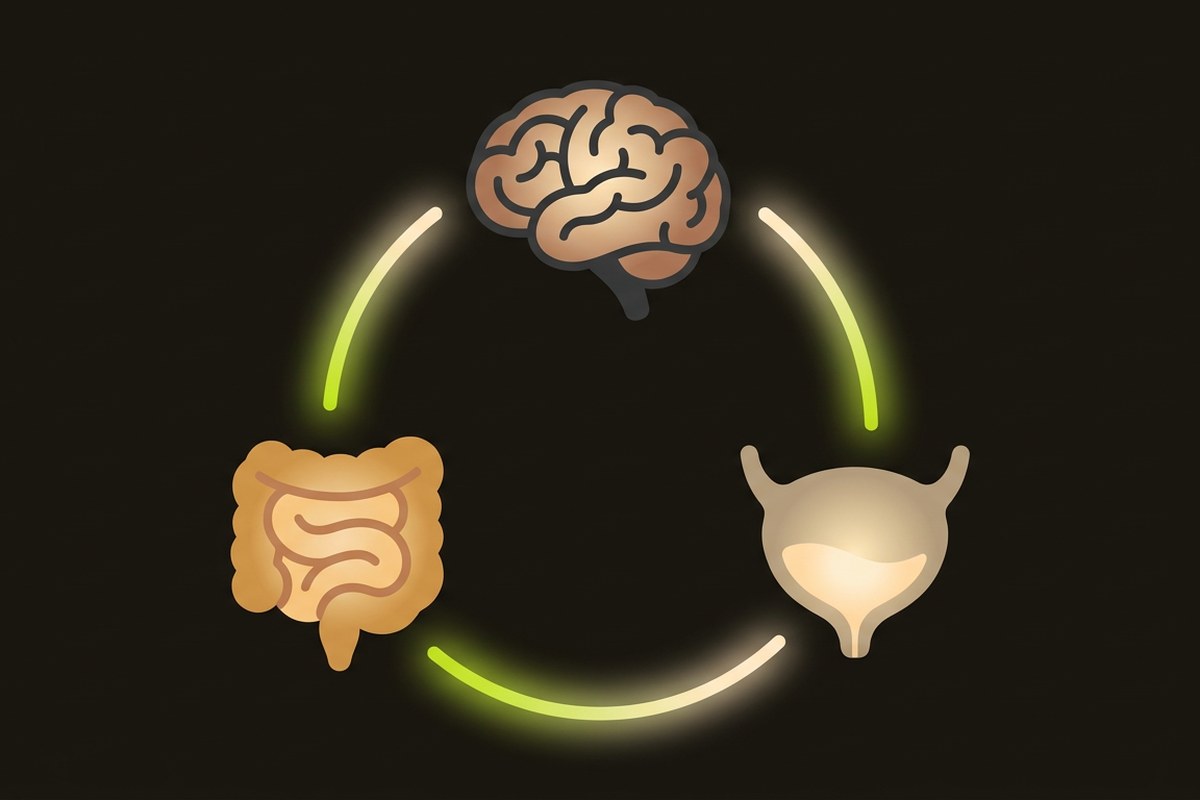
Picture three organs sharing one line: gut, brain, and bladder. The vagus nerve and spinal pathways carry signals between them continuously, and serotonin, made largely in the gastrointestinal tract, travels that same line. Scientists have studied this network for years as the gut-brain axis, and research in journals such as Neurogastroenterology & Motility increasingly views the bladder as wired into that same loop rather than as a separate system.
That shared wiring is why a stressful stretch, a poor night of sleep, or a flare of gut symptoms can show up as bladder urgency, frequency, or pain — and why it runs the other direction too, with bladder flares affecting mood and sleep. The National Institute of Diabetes and Digestive and Kidney Diseases (NIDDK) notes that IC/BPS symptoms can worsen with stress, which fits this bidirectional picture.
Why a Sensitized Bladder Turns Up the Volume
Here is the part that matters most for IC/BPS: a bladder that has already been through repeated pain signaling does not process new input the way a healthy bladder does. Researchers describe this as central sensitization — the nervous system, over time, gets better at detecting a threat and worse at filtering it out.
In a sensitized system, an ordinary stress-hormone surge or a routine gut signal can be amplified into a genuinely painful bladder sensation — the same way an over-sensitive smoke detector goes off from toast, not fire. Bladder pain research published in journals such as the Journal of Urology describes this as a real, measurable feature of chronic pelvic pain, not a character trait or a sign that someone is "too stressed."
An honest limit here: this describes a plausible mechanism and a documented association between gut and brain signaling and bladder symptoms. It does not show that gut-derived serotonin or microbiome changes directly cause human bladder pain — researchers are still working out how much of this loop is cause and how much is correlation.
Why "Just Relax" Doesn't Help — What Actually Might
"Just relax" fails because it puts the burden on willpower, and a sensitized nervous system is not a willpower problem. Telling someone to relax mid-flare is a little like telling someone to lower their own blood pressure by thinking calm thoughts — it skips over the physiology entirely.
What the bidirectional loop actually responds to looks different. A few things worth building into a routine:
- A consistent sleep schedule — poor sleep raises next-day pain sensitivity
- Pelvic floor physical therapy with a specialist, not general PT
- Paced breathing practiced daily, not only reached for during a flare
- Naming the gut-brain-bladder loop directly with your provider, instead of settling for "it's stress"
That last conversation is worth having in plain terms. Desert Harvest's clinical research page and the Interstitial Cystitis Association both maintain patient resources that can help you frame it — we recommend bringing them to your next appointment and asking a qualified healthcare provider where this fits your own history.
Where Daily Bladder-Friendly Nutrition — and SSAV (Super-Strength Aloe Vera) — Fit In
None of this replaces a bladder-friendly eating pattern; it sits alongside it. Many people managing IC/BPS already track how specific foods and drinks affect a flare, and a steady, low-irritant daily routine is one of the few variables fully within your control on a hard week.
Desert Harvest's SSAV (Super-Strength Aloe Vera) is one part of that daily routine for many customers managing a sensitized bladder — a 200:1 concentrate, anthraquinone-free, and the only aloe supplement named in the International Painful Bladder Foundation's global IC/BPS guidelines. It is not a mood or stress product: early animal research has looked at Aloe Vera and neurotransmitter activity, but that work is preclinical and has not been shown to apply to people, so we are not making that claim. Browse the full bladder health collection, and always consult with a qualified healthcare provider before making changes to your health regimen.
These statements have not been evaluated by the Food and Drug Administration. This product is not intended to diagnose, treat, cure, or prevent any disease. This content is for informational purposes only and does not constitute medical advice. Always consult with a qualified healthcare provider before making changes to your health regimen.