


Restorative Areola Tattooing, and Why We're Partnering With Vixen Ink This October
What Restorative Areola Tattooing Is
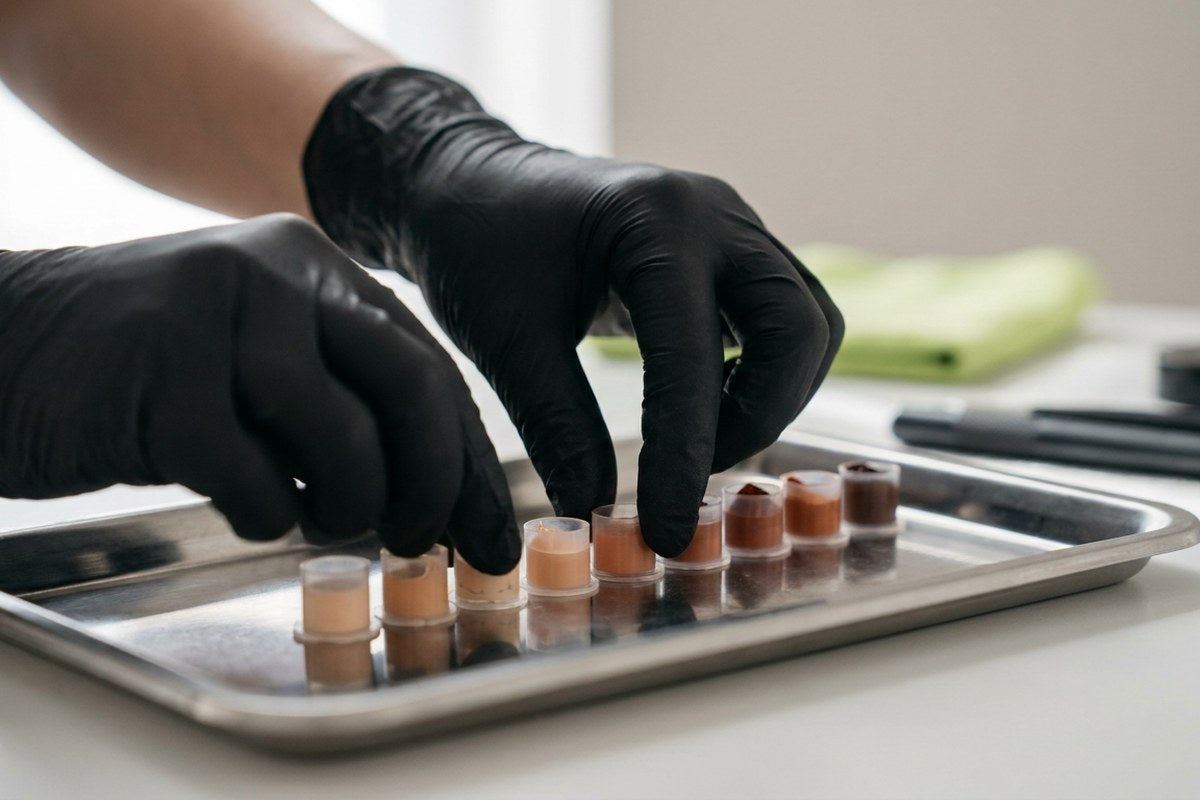
A tattoo artist can create a nipple and areola that are flat to the touch but look realistic. That is how the National Cancer Institute describes one of the two ways a nipple and areola can be re-created after a mastectomy. The other way is surgery.
For many women it is the final stage of breast reconstruction. The American Cancer Society's guide to reconstructing the nipple and areola says tattooing on its own is sometimes called "3D tattooing or medical nipple tattooing." The artist places pigment under the skin and uses shading so the flat tattoo looks raised. Most people finish in one or two visits.
Some women choose surgery plus tattooing, some choose tattooing alone, and some choose silicone nipple prosthetics or nothing at all. Each is a legitimate choice, and the American Cancer Society is plain that there is no rush to decide.
How Tattoo Artists Became Part of This Work
Traditional areola tattooing filled in a flat circle of color. In 2014, a team writing in Plastic and Reconstructive Surgery described three-dimensional nipple-areola tattooing, built on the artistic principles of light and shadow instead. The listed affiliations run from Brigham & Women's Hospital and MD Anderson to a tattoo studio, Little Vinnie's Tattoos. The authors called the result "more realistic and three-dimensional."
That shift has not reached every clinic. A survey of 68 oncology care providers, published in 2015, found that nurses were significantly less likely than other providers to recommend a professional tattoo artist. That held even though a similar share of both groups believed a tattoo artist would give the patient a better tattoo. The American Cancer Society describes both routes: a specially trained medical professional or a tattoo artist usually does this work, and some hospitals refer people to an outside studio.
The research base is still young. A 2024 scoping review analyzed 13 studies and rated their overall quality as weak. Satisfaction was the outcome measured most often, in 8 of them. Nurses were the professionals most often involved (6 studies), then medical staff (4) and tattoo artists (2). The reviewers still called the research relevant, because this tattooing helps women redefine their identity after cancer surgery.
Meet Chelsea Brozovich of Vixen Ink
Chelsea Brozovich is the artist behind Vixen Ink, a private tattoo studio in Tinley Park, Illinois, open by appointment. Her focus is restorative and cosmetic tattooing: hyper-realistic areola restoration, permanent makeup and custom body art.
Tattooing is not her only job. Chelsea is also a Director of Special Education on the South Side of Chicago, where she has spent nearly fifteen years advocating for people with disabilities. That background shapes her studio. In her words, "every client is met with empathy, patience, and respect for their individual story."
She describes the aim of her work as helping people "feel confident and at home in their bodies." Vixen Ink already offers gifted and partially funded areola tattooing for people who would not otherwise have access to it, particularly people affected by breast cancer.

What Desert Harvest Is Doing This October
For Breast Cancer Awareness Month, Desert Harvest is working with Chelsea. Every purchase helps fund restorative 3D areola tattoos for breast cancer survivors. The commitment comes from Heather Florio, our CEO, and our goal is to fund tattoos for four survivors.
Desert Harvest started in 1993 to help one family member with a bladder condition, and most of what we write about is bladder and menopause health. This partnership sits a little outside that. It exists because a skilled artist is already doing this work for survivors, and we can help her reach more of them.
If You Are Considering Areola Tattooing
Start with your surgeon or breast care team. The American Cancer Society notes that many plastic surgery practices work with a specific tattoo artist, and that tattooing usually happens about 3 to 4 months after reconstruction surgery, once the area is ready. Ask about the small risks too: infection, allergic reaction and color fading over time.
Then ask about cost before you book. According to the National Cancer Institute, the Women's Health and Cancer Rights Act of 1998 requires group health plans and insurers that cover mastectomy to cover all stages of reconstruction. Some religious and government plans may be exempt, and the law does not apply to Medicare or Medicaid. The American Cancer Society says some plans cover tattooing as part of reconstruction, and Vixen Ink asks applicants to its gifted program to check with their insurer first.
Calls like these take persistence. Our post on being your own advocate has scripts that carry over well to an insurer or a new care team. If you have a question for us about this partnership, get in touch. Please talk with your healthcare provider about what is right for your own body and your own timing. Our Breast Cancer Awareness Month page has more on the partnership and what we fund this October.
These statements have not been evaluated by the Food and Drug Administration. This product is not intended to diagnose, treat, cure, or prevent any disease. This content is for informational purposes only and does not constitute medical advice. Always consult with a qualified healthcare provider before making changes to your health regimen.