


Reading an Aloe Vera Label: What "Inner Leaf," "Whole Leaf," and "Decolorized" Mean
Inner Leaf vs. Whole Leaf: Where Aloin Comes From
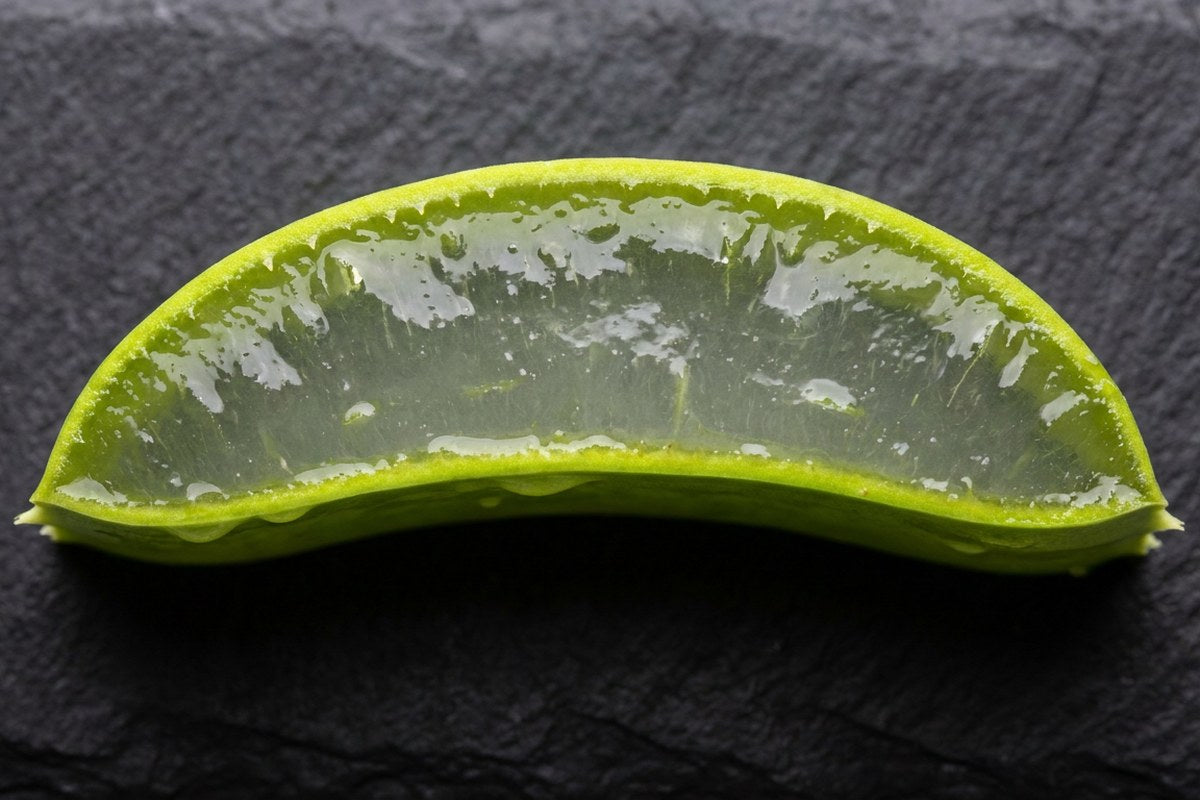
An Aloe Vera leaf has three layers: an outer green rind, a thin latex layer just beneath it, and the clear inner fillet — the thick, gel-like tissue most people picture when they think of Aloe Vera. Aloin, a yellow compound in the anthraquinone family, concentrates in that latex layer, not in the inner gel itself.
"Inner leaf" or "inner fillet" processing means the rind and latex are trimmed away before the gel is used, leaving most of the aloin behind with them. "Whole leaf" processing uses the entire leaf, latex included, unless a separate step removes it afterward. A 2026 review in the journal Molecules notes that industrial processing "focuses almost exclusively on the inner parenchyma," with the outer skin discarded as a byproduct — and that skin is where the anthraquinone content concentrates.
Decolorized: What Charcoal Filtration Removes
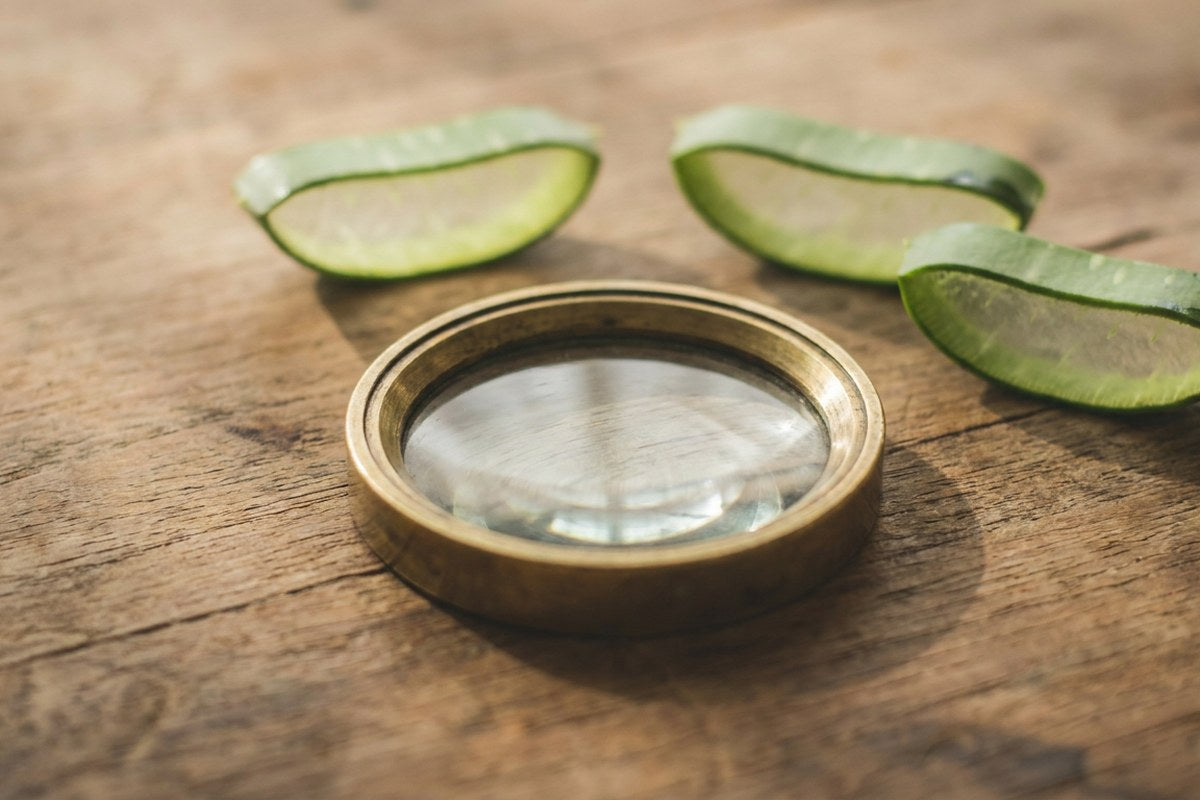
"Decolorized" describes a filtration step, typically activated-carbon (charcoal) filtration, that pulls latex residue and aloin out of a whole-leaf extract after processing. The National Center for Complementary and Integrative Health draws a clear line between the two forms: it flags "non-decolorized" whole-leaf extract as carrying more safety concerns, while decolorized extract is closer to what commercial beverages typically use.
Aloin is measured in parts per million, and a 2023 review the same NCCIH page cites looked at drinkable products "containing no more than 10 parts per million of aloin" and found them "not genotoxic" under that review's testing. NCCIH also notes that a small amount of laboratory research has raised questions even about decolorized whole-leaf extract — one more reason inner-leaf processing matters. A label stating "aloin-free" or "anthraquinone-free" is telling you the maker tested for this specific compound and it came in below a defined threshold. It is a testing claim, so it is fair to ask to see the certificate behind it.

Freeze-Dried vs. Spray-Dried: What Drying Method May Affect
Fresh Aloe Vera gel is mostly water, so every supplement has to concentrate it somehow. A 2025 review in Fitoterapia catalogs the range of extraction methods brands use — hand-filleted processing, whole-leaf processing, hot water extraction, and freeze-drying among them — and ties the plant's chemical composition, including its polysaccharides, directly to which method was used. The same review is candid about a gap: it points to a "lack of standardization in extraction procedures" across the industry.
That gap is exactly why drying method belongs on your checklist. Freeze-dry cold-processing runs at low temperatures, which matters for heat-sensitive polysaccharides; spray-drying uses heat to evaporate moisture quickly, and research suggests the method used shapes what ends up in the finished powder. A label rarely states which method was used — sometimes you have to ask.
What "Organic Aloe Vera" on the Ingredient List Actually Tells You
Flip to the Supplement Facts panel and you'll usually find the ingredient listed by its generic name — "Organic Aloe Vera" — regardless of how it was processed or what name a brand markets it under. That generic listing is a labeling convention, not a description of quality. It doesn't say inner-leaf or whole-leaf, decolorized or not, freeze-dried or spray-dried.
That gap is also why third-party testing carries real weight. The FDA does not verify a supplement's contents before it reaches a shelf; by its own description, manufacturers "are responsible for evaluating the safety and labeling of their products before marketing," and the agency's authority applies only once a product is already on the market. Manufacturing under cGMP and independent third-party testing are how a brand can show what's actually inside a capsule beyond its own say-so. The International Aloe Science Council runs a certification seal specifically so "consumers and retailers can depend on" an outside check for content and purity, rather than a label alone.
Three Questions to Ask Any Aloe Vera Brand
Before you buy, ask any brand three things: Is this inner-leaf or whole-leaf? Is it decolorized, or tested and stated aloin-free? And is it third-party tested under cGMP standards, with results the company will actually show you? A brand that answers plainly is usually the one that handled the plant carefully in the first place.
SSAV (Super-Strength Aloe Vera) answers all three plainly: inner-leaf gel at a 200:1 concentration, anthraquinone-free, made with a patented freeze-dry cold-process, manufactured under cGMP standards and third-party tested. Desert Harvest is also the only Aloe Vera supplement named by brand in the International Painful Bladder Foundation's global guidelines for IC/BPS — a fact about recognition, not a claim about what it may do for you. Read more on our why Desert Harvest page, see the arithmetic behind what "200:1" means, or go deeper on Aloe Vera and anthraquinones. Our research history is on our clinical studies page.
As always, talk with your healthcare provider before adding any new supplement to your routine, particularly if you manage a chronic condition.
These statements have not been evaluated by the Food and Drug Administration. This product is not intended to diagnose, treat, cure, or prevent any disease. This content is for informational purposes only and does not constitute medical advice. Always consult with a qualified healthcare provider before making changes to your health regimen.