


What "200:1" Actually Means on an Aloe Vera Label
What a concentration ratio actually means
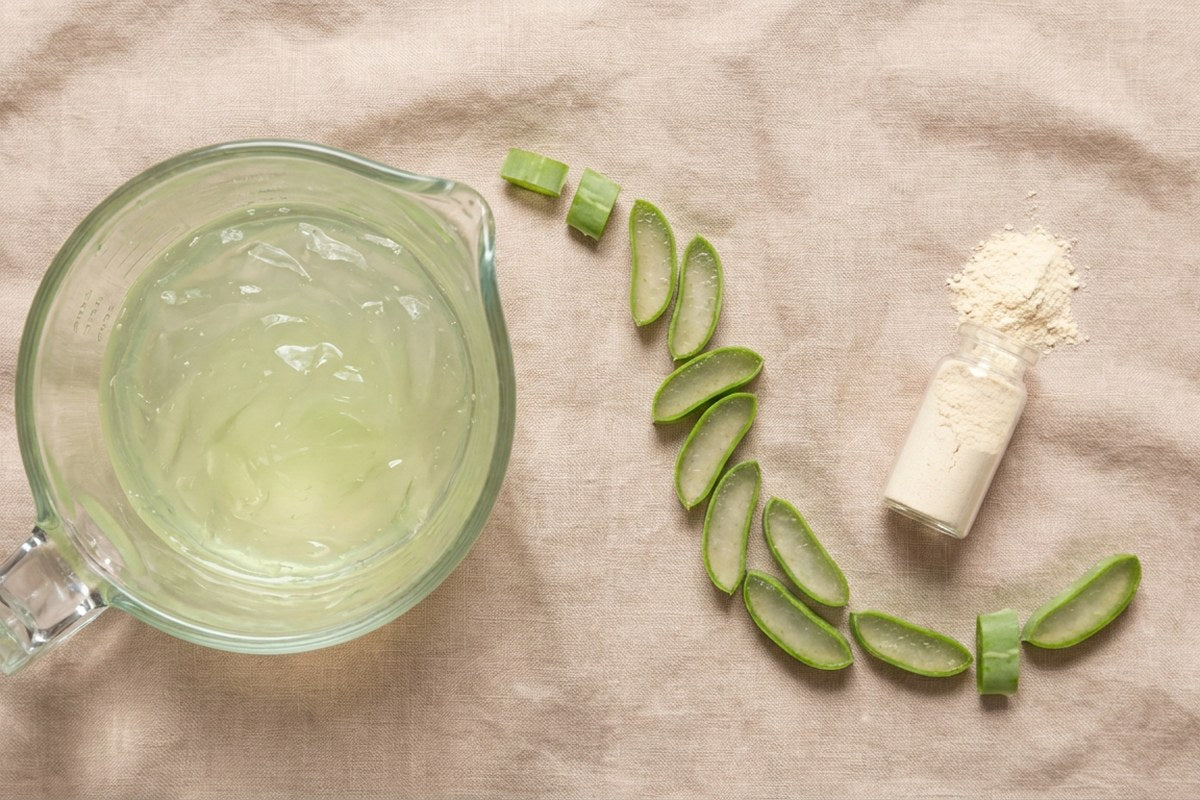
A concentration ratio describes how much raw material it took to make one part of the finished product. "200:1" means 200 parts of fresh inner-leaf gel were reduced down to 1 part of finished powder or extract.
Think of it the way a cook reduces stock: you start with a large pot of liquid, simmer off the water, and end with a small, concentrated base that carries far more flavor per spoonful than the liquid you began with. Raisins work the same way — grapes lose most of their water content in drying, so a handful of raisins represents a much larger volume of fresh grapes.
Aloe Vera concentration follows the same principle. Fresh leaf gel is mostly water. Removing that water and concentrating what remains is what makes a capsule practical at all.
Why concentration matters for a supplement in the first place
Fresh Aloe Vera gel is roughly 98-99% water. That leaves only a small fraction as actual plant solids — the polysaccharides, enzymes, and other compounds people are usually looking for when they choose an Aloe Vera supplement.
Run the numbers on an unconcentrated product. If a capsule contained straight fresh gel with no concentration step at all, well over 98% of its contents would be water — leaving a tiny amount of actual plant material inside. That's the arithmetic every Aloe Vera supplement has to confront before it can be a meaningful capsule instead of mostly water in powder form.
A meaningful concentration ratio is what turns a large volume of mostly-water gel into a small amount of powder that actually carries the plant material. This is true of any brand, not just ours — it's simply what the ratio number is measuring. Research on Aloe Vera's inner-leaf compounds, including its polysaccharides and other bioactive constituents, is indexed through PubMed Central, the National Institutes of Health's full-text research archive.
What the ratio does not tell you
Here's the part most labels leave out: a concentration ratio, by itself, says nothing about quality. It's a measurement of volume reduction, not a measurement of purity, safety, or how the plant material was handled.
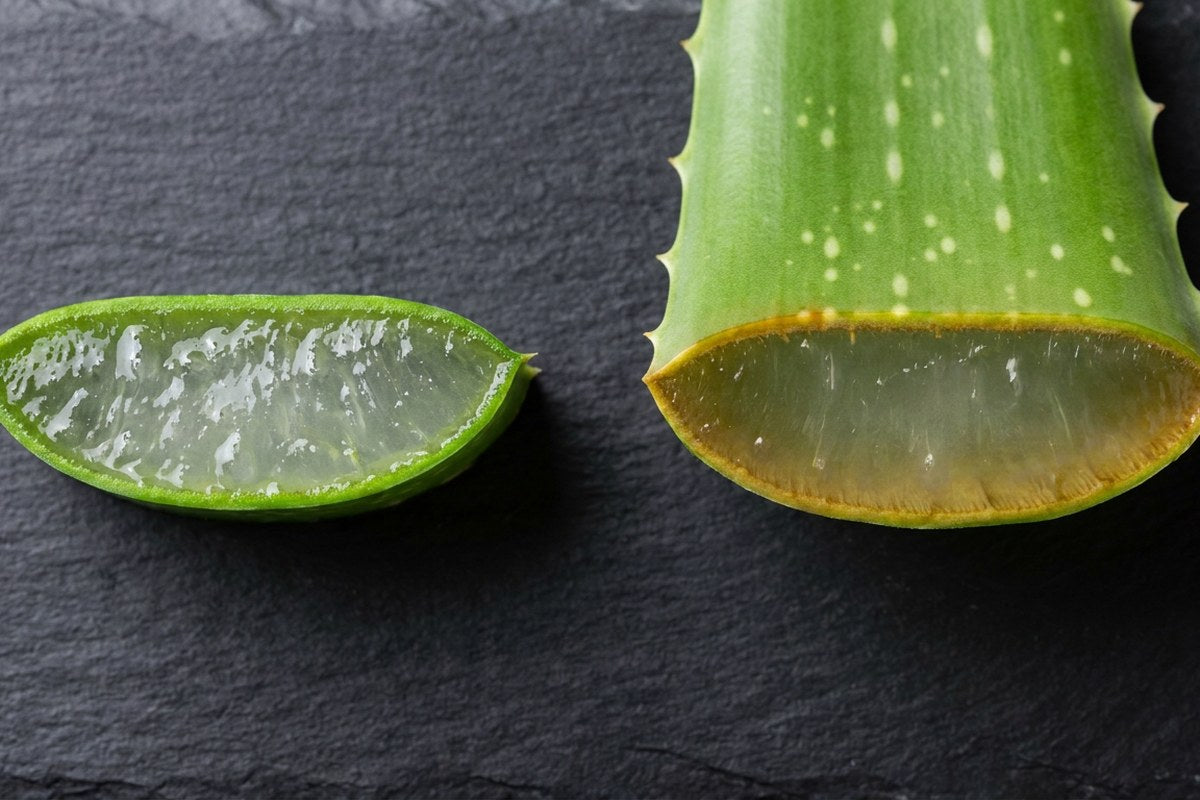
A 200:1 ratio doesn't tell you which part of the leaf was used — inner fillet gel or whole leaf, including the outer rind where a compound called aloin concentrates. It doesn't tell you whether aloin and related anthraquinones were removed. It doesn't tell you how the gel was dried, and drying method affects how much of the plant's original polysaccharide structure survives the process. And it doesn't tell you whether the finished product was independently tested for what it claims to contain.
A high ratio produced by a harsh, high-heat process can leave you with a more concentrated but less intact end product than a lower ratio produced gently. In other words, two "200:1" labels are not automatically equal, and a bigger number on its own is not a reason to trust a product more. Regulatory guidance on dietary supplement claims and ingredient sourcing is published by the FDA.

What to check instead of the ratio alone
If a ratio alone can't tell you whether an Aloe Vera supplement is well made, here's what actually can:
- Inner leaf vs. whole leaf. Inner-leaf (fillet) processing avoids the outer rind and latex layer, where aloin concentrates.
- Anthraquinone-free / low aloin content. Look for a brand that states this explicitly rather than leaving it implied. Untreated whole-leaf extracts containing aloin have raised safety questions in animal research indexed on PubMed, the National Institutes of Health's research database.
- Drying method. Freeze-dry cold-processing preserves more of the original polysaccharide structure than high-heat drying, which can degrade heat-sensitive compounds before they ever reach the capsule. Research on how processing affects bioactive compound stability in dietary supplements appears in journals like Nutrients.
- Third-party testing. Independent lab verification of what's actually inside the capsule, not just what the label claims.
Those four checks work on any Aloe Vera brand's label, not just ours — that's the point of understanding the arithmetic in the first place. As always, talk with your healthcare provider before adding any new supplement to your routine, particularly if you manage a chronic condition.
Where our SSAV (Super-Strength Aloe Vera) sits
SSAV (Super-Strength Aloe Vera) is a 200:1 concentration made from inner-leaf gel, using a patented freeze-dry cold-process, and is anthraquinone-free. It's manufactured under cGMP standards and third-party tested. You can review the specifics on our dosage and usage page and see how we source and test it on our clinical studies page.
Desert Harvest is the only Aloe Vera supplement named by brand in the International Painful Bladder Foundation's global guidelines for IC/BPS — a factual point about recognition, not a claim about what the product does for you. You can browse the full Super-Strength Aloe Vera collection, or see how we compare our sourcing and processing to other brands on our why Desert Harvest page.
These statements have not been evaluated by the Food and Drug Administration. This product is not intended to diagnose, treat, cure, or prevent any disease. This content is for informational purposes only and does not constitute medical advice. Always consult with a qualified healthcare provider before making changes to your health regimen.