

Aloe Vera Polysaccharides, Gut Bacteria and the Serotonin Pathway: Every Step Labelled
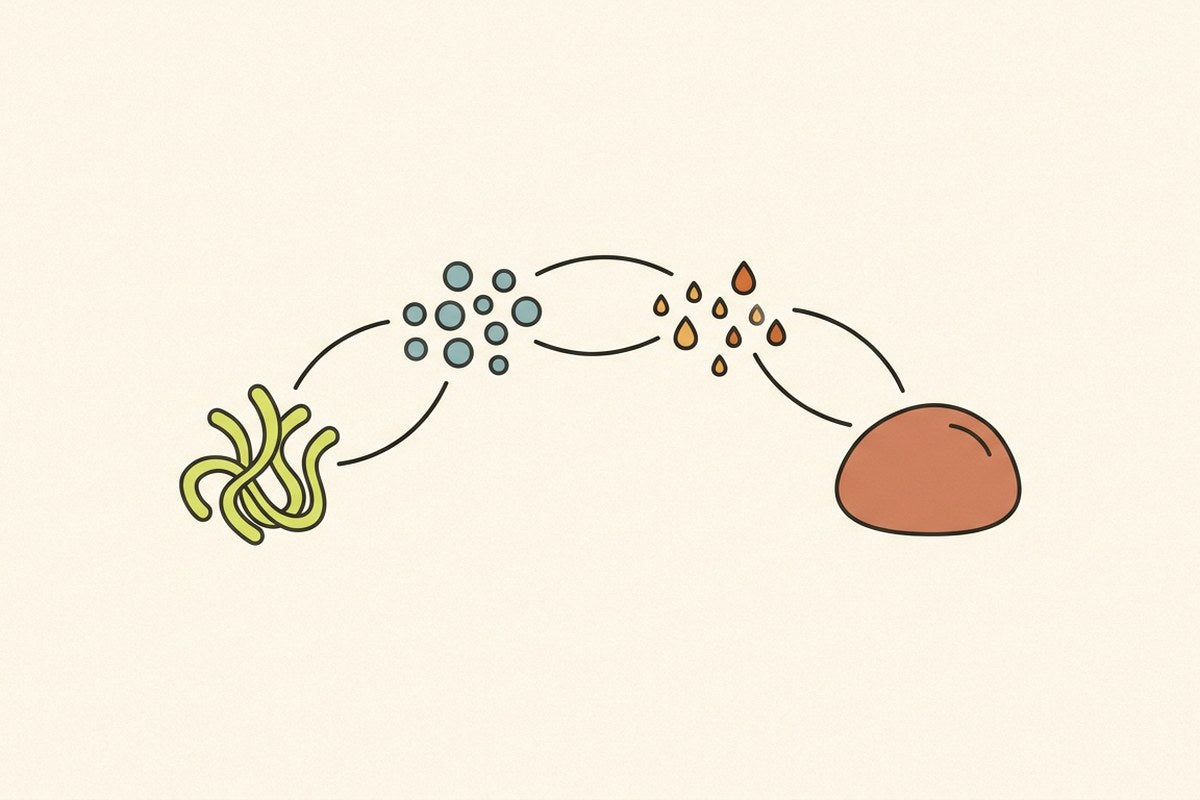
Step One: Gut Bacteria Can Ferment Aloe Vera Polysaccharides
Aloe Vera gel is rich in long-chain sugars called polysaccharides, the best known being acemannan, which we introduce in our post on Aloe Vera, acemannan and the gut. In a 2019 laboratory study, Aloe Vera gel fibre came through a simulated digestion and was then fermented much like lactulose, a standard reference fibre.
The clearest recent test is a 2025 laboratory study published in Food Chemistry. Researchers fermented a polysaccharide from Aloe Vera gel with stool samples from 30 healthy volunteers. It increased short-chain fatty acids and encouraged specific bacteria, including Faecalibacterium prausnitzii and Bacteroides uniformis; of those, only B. uniformis could break the polysaccharide down on its own.
Evidence level: in vitro. It shows what human gut bacteria can do with the fibre in a vessel, not what happens inside a person.
Step Two: More Fatty-Acid-Making Bacteria, in Mice
Short-chain fatty acids, such as butyrate, propionate and acetate, are what gut bacteria produce when they ferment fibre. In a 2021 study in mice published in Carbohydrate Polymers, Aloe Vera polysaccharides increased groups of bacteria that produce short-chain fatty acids, while Firmicutes and Clostridium fell. The authors also found that the bacteria and the fatty-acid levels rose together.
Evidence level: animal. Mouse gut communities differ from human ones, and this study measured bacteria and fatty acids, not serotonin.
Step Three: Fatty Acids Reach the Serotonin-Making Cells
This is the step that links fibre to serotonin, and it comes from research that did not involve Aloe Vera at all. The 2015 study in The FASEB Journal compared germ-free mice, mice given human gut bacteria, and conventionally raised mice. Colon serotonin rose with the bacteria, at 17, 25 and 35 nanograms per milligram respectively, while the number of serotonin-making cells stayed the same.
The researchers then added short-chain fatty acids to a human cell line that models the gut's serotonin-making enterochromaffin cells. The fatty acids switched on TPH1, the enzyme that starts serotonin production. Evidence level: mice plus a cell line. Their conclusion was about the gut, where serotonin is "a key regulator of GI motility and secretion."
Step Four: The One Study That Joined Aloe Vera to Gut Serotonin
Only one study we found connects these steps with an Aloe Vera preparation. In a 2025 study in mice published in Food Research International, a polysaccharide from Aloe Vera gel raised TPH1 in the gut lining and increased the conversion of tryptophan to serotonin, and experiments with antibiotics pointed to the gut microbes as the go-between. The serotonin was measured in the gut and linked to the gut barrier and gut stem cells.
Then comes the step no fibre can get around. Serotonin made in the gut cannot readily cross the blood–brain barrier, a point covered at the start of this series, so a rise in gut serotonin in mice is a gut event. This research describes a possible gut pathway in animals. It does not describe a route to the brain, and it has not been tested in people.
What Has Been Tested in People, and Where We Stand
Human research on Aloe Vera and the gut does exist, but it measured gut symptoms and gut bacteria, not serotonin. The largest trial we found, a 2020 randomised, double-blind study published in Neurogastroenterology & Motility that 160 people with IBS completed, compared an Aloe Vera extract with inulin, a well-known fibre, for four weeks. Symptoms eased in both groups, and the Aloe Vera extract "was not superior" to inulin. The researchers did find that stool bacteria profiles differed between people who responded to the extract and those who did not.
Fibre matters for anyone with a sensitive bladder, too. The Interstitial Cystitis Association's guide to eating with IC/BPS warns that over-restricting food can cause "constipation or digestive problems," and reminds readers that "the bladder, brain, pelvic floor, gut, and nervous system can all interact." A varied diet you tolerate is the foundation; no single fibre replaces it.
SSAV (Super-Strength Aloe Vera) fits into that daily routine for many of our customers, in its own lane: bladder comfort for people living with IC/BPS. It is a 200:1 concentrate, anthraquinone-free and made with a patented freeze-dry cold-process. We make no gut-brain, mood or serotonin claim for it, and none of the mouse research above used SSAV. Browse the SSAV collection, see our SSAV dosage page for how it is taken, or explore the wider bladder health collection, and check with your healthcare provider before starting any new supplement.
These statements have not been evaluated by the Food and Drug Administration. This product is not intended to diagnose, treat, cure, or prevent any disease. This content is for informational purposes only and does not constitute medical advice. Always consult with a qualified healthcare provider before making changes to your health regimen.