

UTI Supplements: What to Look For on the Label
What FDA Does and Does Not Check
Under existing law, the FDA does not have the authority to approve dietary supplements for safety and effectiveness, or to approve their labels, before they are sold. That line comes from the agency's own guide to supplements, and it surprises most people. It means the company selling a UTI supplement is responsible for what is in the bottle and what the label says.
So the label is worth reading closely. This is especially true for urinary tract supplements, a crowded category where bold promises are easy to find. Here is how to read one, what the research says about common ingredients, and which claims should make you pause.

What a Label Has to Tell You
FDA says the Supplement Facts panel has to show the serving size, the number of servings per container, a list of all dietary ingredients, and the amount per serving of those ingredients. Those four items are your starting point. Look at them before you read anything on the front.
Here is how to use them:
- Do the serving math. A big number on the front may take three or four capsules a day to reach. Divide the price by the real number of days in the bottle.
- Look for a blend. If several ingredients sit under one "proprietary blend" total, you cannot see how much of each one you are getting.
- Read the other ingredients. If you have a sensitive bladder, check for added sugar, sweeteners and acidic additives.
- Ask about testing. Can the maker tell you it follows Good Manufacturing Practices and tests its products?
An ingredient you cannot measure is hard to compare with any study. That is why the amount matters more than the length of the ingredient list.
What the Research Says on Common Ingredients
Most UTI supplements draw on the same short list, and the evidence is uneven:
- Cranberry. This has the most research. A 2023 Cochrane review of 50 studies found lower risk for women with recurrent UTIs, and did not support use in elderly people or pregnant women.
- D-mannose. In a 2024 JAMA Internal Medicine trial of 598 women, 51.0% taking D-mannose and 55.7% taking placebo went on to seek care for a suspected UTI, which was not a significant difference.
- Probiotics. A 2015 Cochrane review found no significant benefit, and said a benefit could not be ruled out because the studies were few and small.
- Heather, Calluna vulgaris. This has a long history of traditional use, and the published research so far is at an early, largely laboratory stage.
A label cannot tell you any of this, so it helps to look up the ingredient along with the product. Ask whether the research was done in people, in people like you, and at the amount on the label.
Claims to Doubt
Under FDA's rules, a product intended to diagnose or clear up a disease is a drug, even if it is labeled as a supplement. So be careful with any supplement that says it will clear a UTI, replace antibiotics or work fast. A UTI that is left alone can reach the kidneys, and that is not a risk to take on a label's word.
Words like "clinically tested" and "doctor recommended" deserve a follow-up question too. Tested how, in whom, and for what? A good company can point you to the study, and it should not mind you asking. If the answer is vague, that is useful to know before you spend your money.
The American Urological Association's guideline on recurrent UTIs is a useful reference for what your provider may suggest, and it covers options beyond supplements. If your UTIs keep returning, our post on why UTIs keep coming back is a good next read. Any burning, fever, chills or back pain means a call to your provider first.
How Our Label Reads
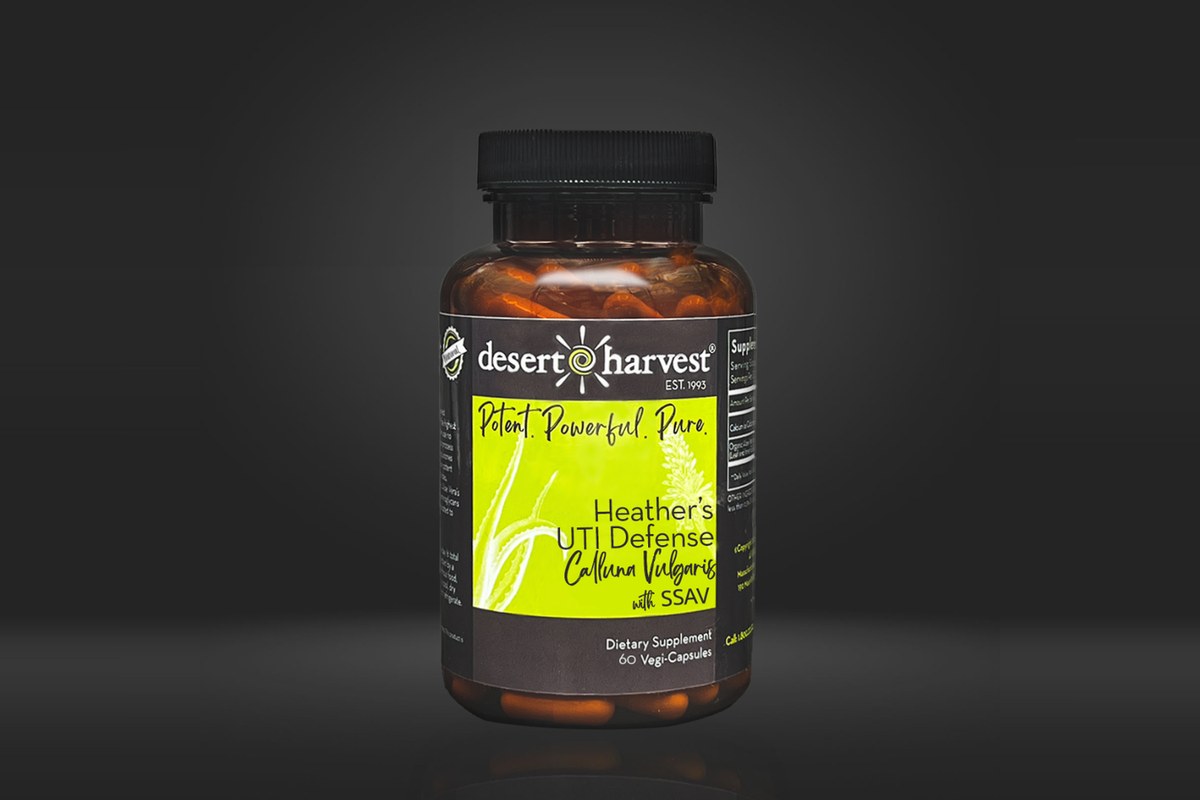
It seems fair to hold our own label to the same test. Heather's UTI Defense has two ingredients, with the amounts stated: 300 mg of heather and 300 mg of SSAV (Super-Strength Aloe Vera) per capsule. The SSAV is there as a carrier to enhance absorption. The serving is one capsule a day, and a bottle holds 60.
There is no proprietary blend, and the capsule is tapioca starch with less than 0.5% silicon dioxide. It is cGMP certified, vegan and third-party tested. Our post on the history and science of heather explains where the plant comes from and what is known so far.
It is a daily supplement designed to support urinary tract wellness, and it is not a substitute for medical care. If you have symptoms of an infection, please talk to your provider. Before you start any new supplement, bring the label along to your appointment, so you can read it together and decide whether it fits your wellness plan.
These statements have not been evaluated by the Food and Drug Administration. This product is not intended to diagnose, treat, cure, or prevent any disease. This content is for informational purposes only and does not constitute medical advice. Always consult with a qualified healthcare provider before making changes to your health regimen.