


Menopause in the Heat: How Summer Changes Hot Flashes, Hydration and Your Bladder
Menopause is officially a single day on the calendar — the 12-month mark after your last period — but the transition around it can run the better part of a decade. Summer has a way of making that decade feel considerably louder.
If you have noticed that July brings more night sweats, more urgency, more of that low-grade irritation nobody warned you about, you are not imagining a connection. Heat, fluid balance and declining estrogen act on the same systems, and they compound.
Why Heat Lands Differently After 45
Your thermostat has a narrower band
Body temperature is regulated within a comfortable range, and the width of that range does not stay constant for life. Research indexed in PubMed has examined how the thermoneutral zone narrows during the menopause transition, so a smaller rise in core temperature is enough to trigger the flushing-and-sweating response.
Add an 88°F afternoon and the margin disappears entirely. The flash was always coming; ambient heat simply removes the buffer that used to absorb it.
Sweating costs more than water
A night sweat is not only fluid. It carries sodium, potassium and chloride out with it, and repeated sweating over a hot week can leave you mildly dehydrated and slightly off on electrolytes at the same time.
That combination shows up as fatigue, headache and muscle cramps — symptoms readily attributed to hormones when the cause is partly the thermometer. The North American Menopause Society is a good starting point for separating one from the other with a clinician.
Sleep, heat and the next day's tolerance
Poor sleep lowers your tolerance for everything, including discomfort. A hot bedroom that fragments sleep for four nights makes day five harder in ways that have nothing to do with estrogen — but which feel identical from the inside.
The Genitourinary Shift Nobody Mentions
What lower estrogen does to urogenital tissue
Estrogen receptors are dense in the vagina, urethra and bladder trigone. As levels fall, those tissues become thinner, less elastic and less well lubricated, and the local microbiome shifts away from its lactobacillus-dominant pattern.
Clinicians call the cluster genitourinary syndrome of menopause. The practical translation is dryness, urgency, more frequent trips and greater vulnerability to urinary tract infections — and unlike hot flashes, it tends to progress rather than fade. The Office on Women's Health covers the full symptom picture.
Why summer sharpens it
Chlorinated pools, damp swimwear worn for hours, travel that disrupts routine, and less fluid intake because bathrooms are inconvenient. None of these are causes on their own; together they stack onto tissue that already has less margin. Studies cataloged in PubMed Central have examined the rise in urinary tract infections among postmenopausal women in some detail.
A Hot-Weather Routine Worth Keeping
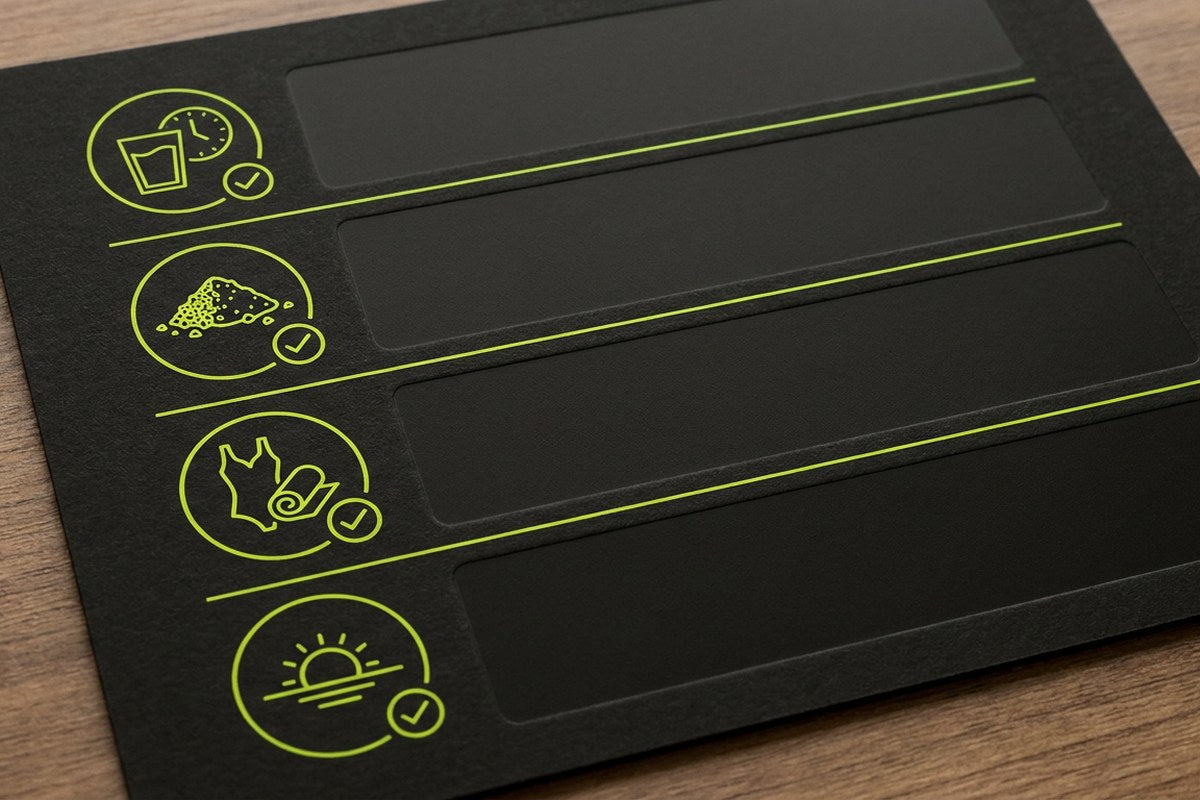
Hydrate on a schedule, not on thirst
Thirst signaling becomes less reliable with age. Four to eight ounces every 30 to 45 minutes across the day beats two large glasses at dinner, and it avoids the sudden bladder volume that makes urgency worse.
Replace what sweat removes
If you are sweating heavily for several days, plain water alone can leave you diluted rather than restored. Look for a low-sugar electrolyte option without citric acid if acidity bothers your bladder.
Change out of wet swimwear promptly
Unglamorous, and the single most useful habit on this list. The same goes for breathable cotton in place of synthetics on hot days.
Front-load fluids, taper by evening
Most of your intake before 4pm gets you the daytime benefit without adding to nocturia. And do talk with your healthcare provider about whether local estrogen therapy belongs in your plan — for many women it is the piece that changes the picture most.
The Desert Harvest Difference
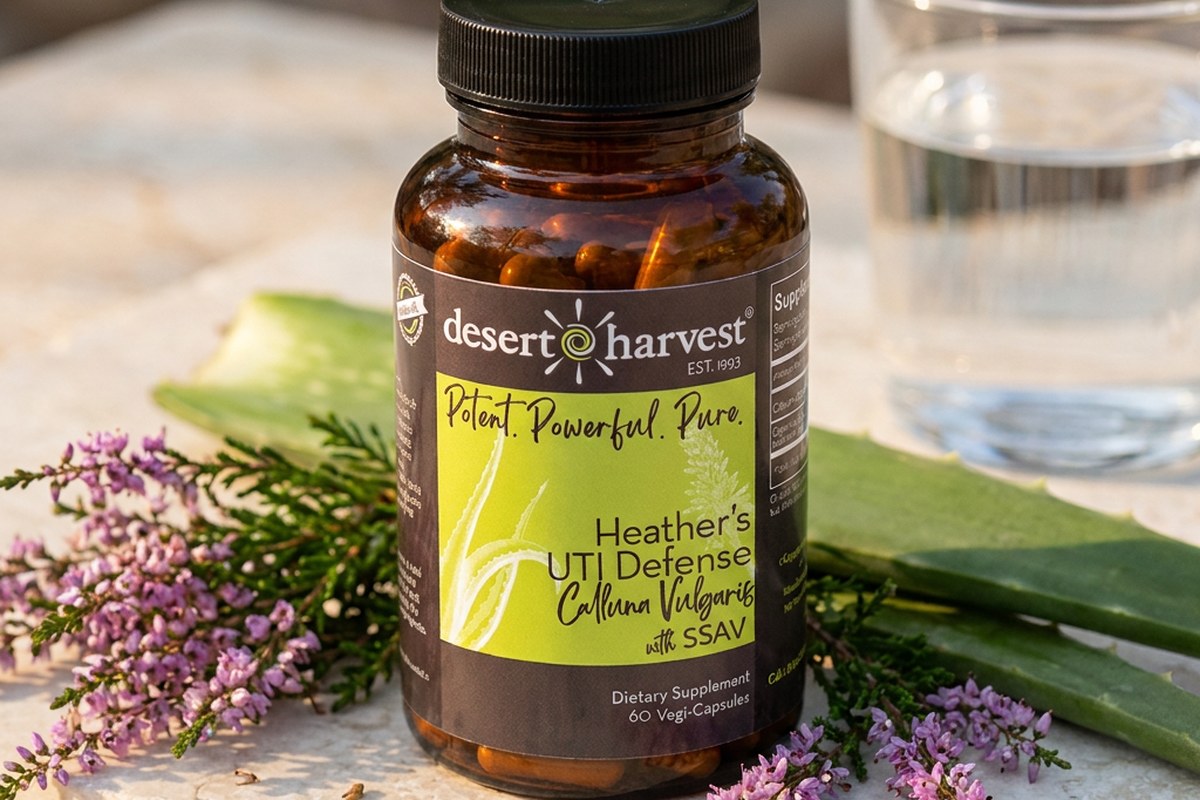
Desert Harvest has spent since 1993 building supplements for women whose systems do not tolerate the usual options. Heather's UTI Defense pairs 300 mg of Calluna vulgaris — a heather botanical with a long history of traditional use for urinary wellness — with a full 300 mg of SSAV (Super-Strength Aloe Vera) in a single daily capsule, designed to support urinary tract wellness as part of a routine rather than a rescue.
For the wider menopause picture, our women's health range is built the same way: gluten-free, vegan, cGMP certified, third-party tested, no fillers. Bring any of it to your provider before you start.
The Bottom Line
Summer does not cause menopause symptoms. It removes the slack — in thermoregulation, in fluid balance, in tissue that already has less reserve than it did at 40. Scheduled hydration, honest electrolyte replacement, dry clothing and an open conversation with your clinician will carry you further through August than any single product.
Subscribe to Heather's UTI Defense and every subscription order ships free. Read what other women say in our 2,289+ verified reviews.
These statements have not been evaluated by the Food and Drug Administration. This product is not intended to diagnose, treat, cure, or prevent any disease. This content is for informational purposes only and does not constitute medical advice. Always consult with a qualified healthcare provider before making changes to your health regimen.