


The Estrobolome: What Your Gut Bacteria Have to Do With Menopause
There is a collection of bacteria living in your gut whose job description includes handling estrogen. It has a name — the estrobolome — and almost nobody mentions it during a menopause appointment.
If your digestion changed at the same time as your cycle did, and you have been quietly wondering whether the two are connected, you were not imagining a link. Researchers have spent the last decade mapping exactly that relationship. Here is what the estrobolome is, why it matters more after 45 than before, and what a reasonable person can actually do with the information.
The Gut's Estrogen Desk
What the estrobolome does
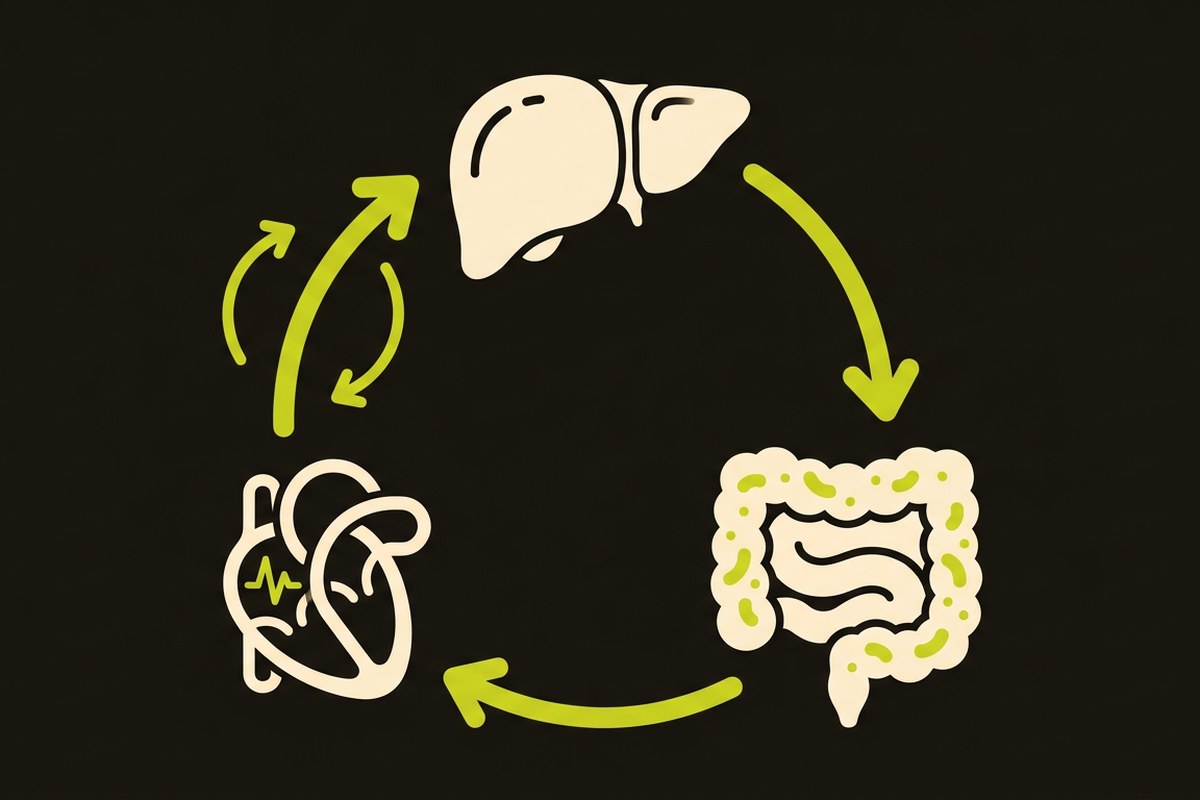
Estrogen does not simply get used and vanish. The liver packages it for disposal and sends it into the gut, and at that point a subset of your bacteria gets involved. Certain gut microbes produce an enzyme that can unpackage some of that estrogen, allowing a portion of it to be reabsorbed rather than excreted.
That recycling loop is the estrobolome. When it is balanced, it is part of normal physiology. When the bacterial mix shifts, the amount of estrogen being sent back into circulation can shift with it.
Menopause changes the conversation in both directions
This is where it gets genuinely interesting. Estrogen influences the gut — motility, the mucosal lining, and the bacterial mix itself all respond to hormonal signaling. And the gut, through the estrobolome, influences estrogen.
So when estrogen falls during the menopause transition, the digestive changes that follow are not a side story. The bloating, the slower transit, the sense that foods you have eaten for forty years suddenly disagree with you — the Office on Women's Health lists digestive changes among the many shifts of this stage, and there is a plausible mechanism underneath.
What the Research Actually Examines
The microbiome shifts with hormonal status
The relationship between menopause and gut bacterial composition is an active research area. Studies comparing premenopausal and postmenopausal microbiomes are indexed in PubMed Central, and the estrobolome specifically has its own growing body of literature.
What the research does not yet support is any claim that a particular supplement changes estrogen levels. Be skeptical of anything marketed that way. The honest framing is that gut composition and hormonal status move together, and supporting one is a reasonable thing to do while the science matures.
Bifidobacteria and the aging gut
One consistent observation across microbiome research is that Bifidobacterium populations tend to decline with age. These are among the first bacteria to colonize the human gut in infancy, and they thin out over decades.
Bifidobacterium infantis in particular has been studied for its role in digestive comfort, and that research is searchable on PubMed. It is also worth knowing that most of the body's serotonin is produced in the digestive tract rather than the brain — one reason gut research keeps turning up in conversations about mood and energy.
Supporting a Menopausal Gut
Consistency beats intensity
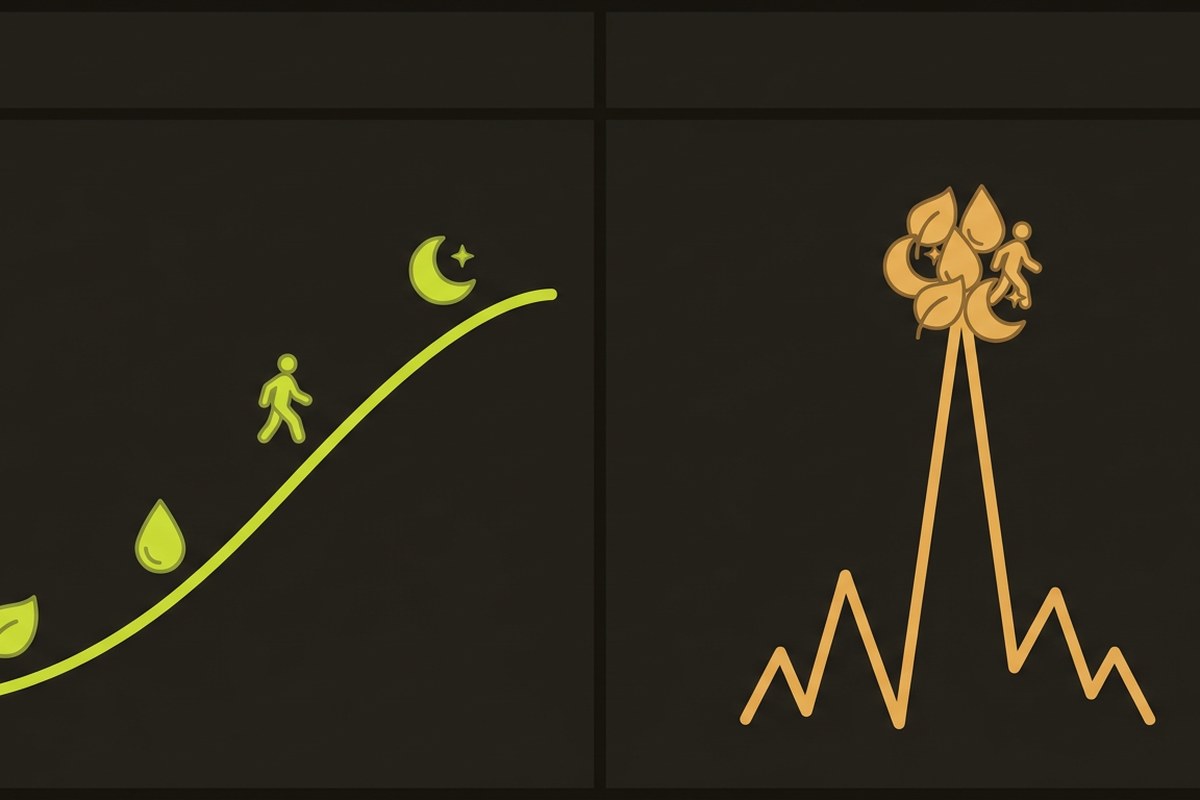
The North American Menopause Society makes the same point about most menopause strategies that gastroenterologists make about the gut: steady habits over months outperform dramatic interventions over weeks.
Practically, that means fiber from food rather than a sudden supplement blitz, enough water, movement most days, and — genuinely — sleep. The National Institute of Diabetes and Digestive and Kidney Diseases has straightforward guidance on the fiber-and-fluid side that is worth reading before you buy anything.
Where a probiotic fits, and where it doesn't
A probiotic is not a substitute for fiber, and it is not a hormonal intervention. What it may do is add a strain that has thinned out.
Two practical notes. First, if you take antibiotics, space them at least two hours apart from a probiotic. Second, if you have a sensitive bladder, introduce any new probiotic on its own so you can tell what is doing what. We recommend consulting your healthcare provider before starting a new supplement during the menopause transition, particularly if you are on hormone therapy.
The Desert Harvest Difference
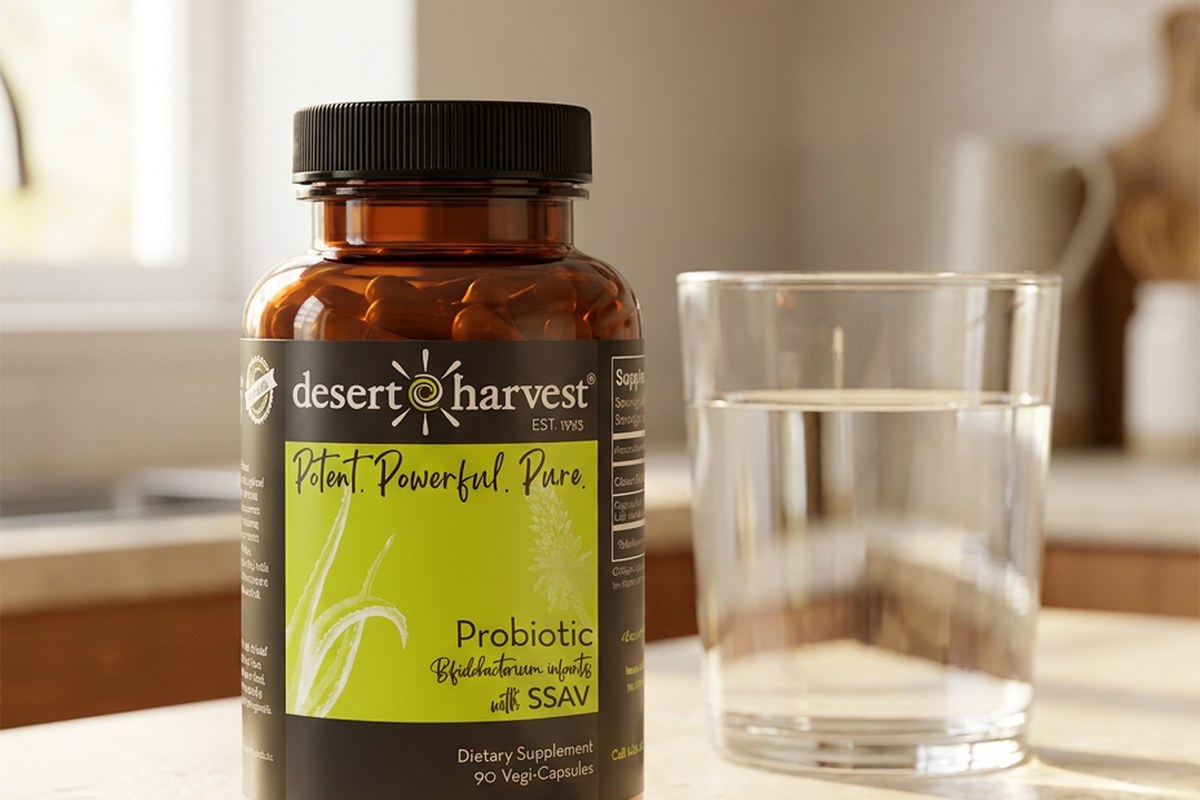
Desert Harvest has formulated for bladder-sensitive and chemically sensitive bodies since 1993, which shapes how our Probiotic is built. One capsule a day delivers 20 mg — one billion CFU — of Bifidobacterium infantis, plus 200 mg of organic whole-leaf Aloe Vera at a 200:1 concentration. No refrigeration needed, no fillers, no artificial ingredients, gluten-free and cGMP certified.
It is deliberately a single strain rather than a fourteen-strain blend, which makes it far easier to tell whether it agrees with you. You can see the rest of the range in our menopause support collection, and there is more on the hormonal timeline in Perimenopause vs. Menopause.
"The capsules are easy to take; smaller than other products. Bloating seems less of a problem." — Connie L., Verified Customer
The Bottom Line
Your gut and your hormones have been in conversation your whole adult life; menopause simply makes that conversation audible. You cannot rebuild a microbiome in a fortnight, but you can be consistent, change one variable at a time, and take your digestion as seriously as your hot flashes. Subscribe to the Probiotic and every subscription order ships free.
These statements have not been evaluated by the Food and Drug Administration. This product is not intended to diagnose, treat, cure, or prevent any disease. This content is for informational purposes only and does not constitute medical advice. Always consult with a qualified healthcare provider before making changes to your health regimen.