


Menopause Brain Fog: What's Actually Happening, and What Helps You Function
The average age of menopause in the United States is 52, according to womenshealth.gov — squarely inside the years of peak career responsibility and peak caregiving at home. Which is exactly why "I lost the word mid-sentence" frightens women far more than a hot flash ever did.
You are not imagining it, and you are almost certainly not looking at the thing you are afraid you are looking at. Midlife cognitive changes are common, they are well documented, and research describes them as typically transient. Here is what is actually going on, and where to put your effort.
What This Feels Like, and What It Is Not
Naming it properly
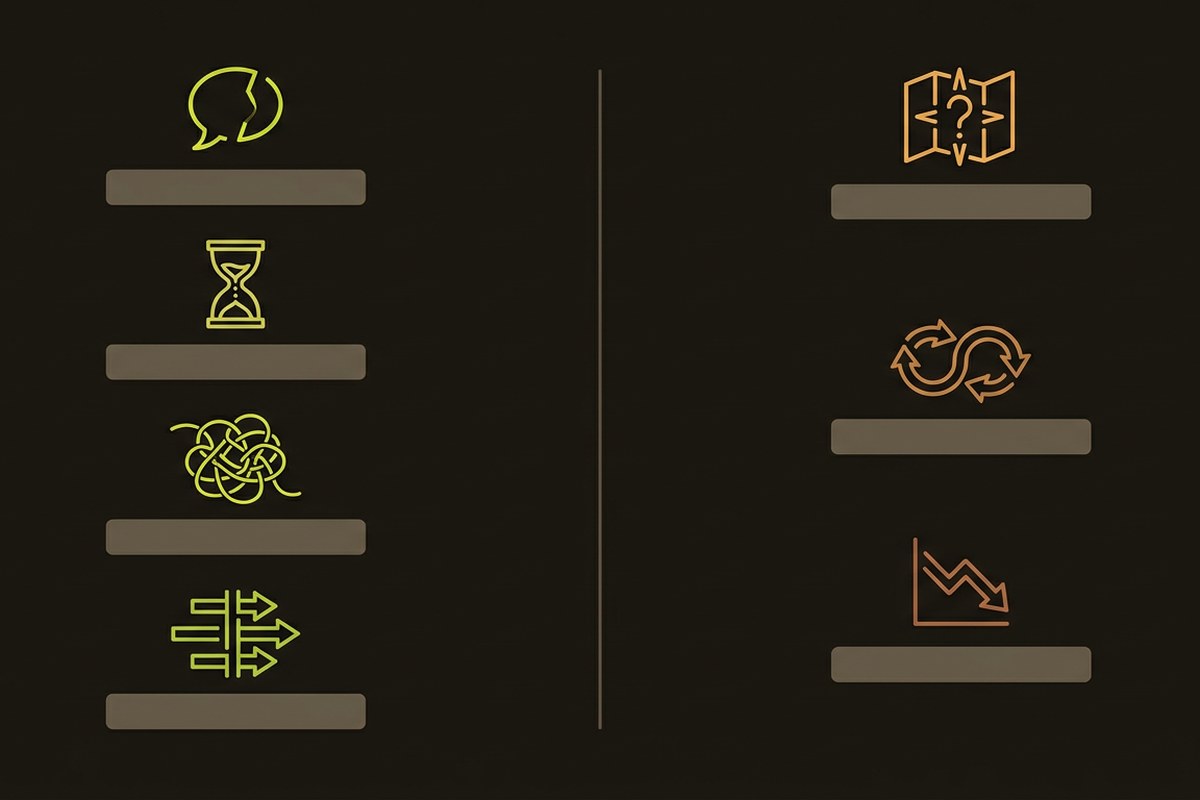
Brain fog is not a clinical diagnosis, which is part of why it gets dismissed. What women describe is remarkably consistent: word-finding trouble, a slower recall speed, difficulty holding a thread through interruptions, and a sense that multitasking has become expensive in a way it never used to be.
Notice what is usually not on that list: getting lost somewhere familiar, or forgetting how to do something you have done for thirty years. That distinction matters.
The reassurance, with a caveat
Longitudinal research on midlife women has examined memory and processing speed across the menopause transition, and studies collected in PubMed generally describe measurable but modest changes that improve after the transition rather than continuing to decline.
The caveat is important and it is not fine print: if changes are sudden, severe, or getting worse month over month, that is a conversation to have with your doctor promptly rather than something to file under menopause.
Why the Transition Affects Thinking
Estrogen is a brain hormone too
Estrogen receptors are distributed through regions involved in memory and executive function, and estrogen influences glucose use and neurotransmitter signaling in the brain. When levels fluctuate — and perimenopause is defined by fluctuation, not simply decline — those systems are adapting to a moving target.
The North American Menopause Society regards midlife cognitive complaints as a legitimate clinical topic rather than something to wave away, which is a good standard to hold your own clinician to.
The confounders do most of the damage
Here is the part that gets underplayed. Night sweats fragment sleep. Fragmented sleep degrades attention and memory consolidation. Falling iron reserves, thyroid changes and low mood each independently affect concentration.
Literature collected in PubMed Central has examined the sleep-cognition relationship in this population. In practice, a great deal of what women experience as "my memory is going" turns out to be "I have not had four uninterrupted hours since March".

What Helps You Function Now
Sleep is the highest-leverage thing you own
Not the most interesting, but the most effective. Consistent bed and wake times, a genuinely cool bedroom, alcohol recognized as the sleep disruptor it is, and a hard boundary around screens late in the evening.
Ask for the lab tests
Ferritin, B12, vitamin D and thyroid function. Each of these produces fog on its own, each is easy to check, and each can be addressed in a way that hormonal fluctuation cannot. Do not accept "your labs are normal" without seeing the numbers.
Externalize the load
One calendar, one list, notes taken during appointments rather than after. This is not a concession; it is what people with high cognitive demands have always done.
Move, and use your brain differently
Aerobic movement supports cerebral blood flow, and novelty — a language, an instrument, an unfamiliar route home — asks more of the brain than another crossword does.
The Desert Harvest Difference
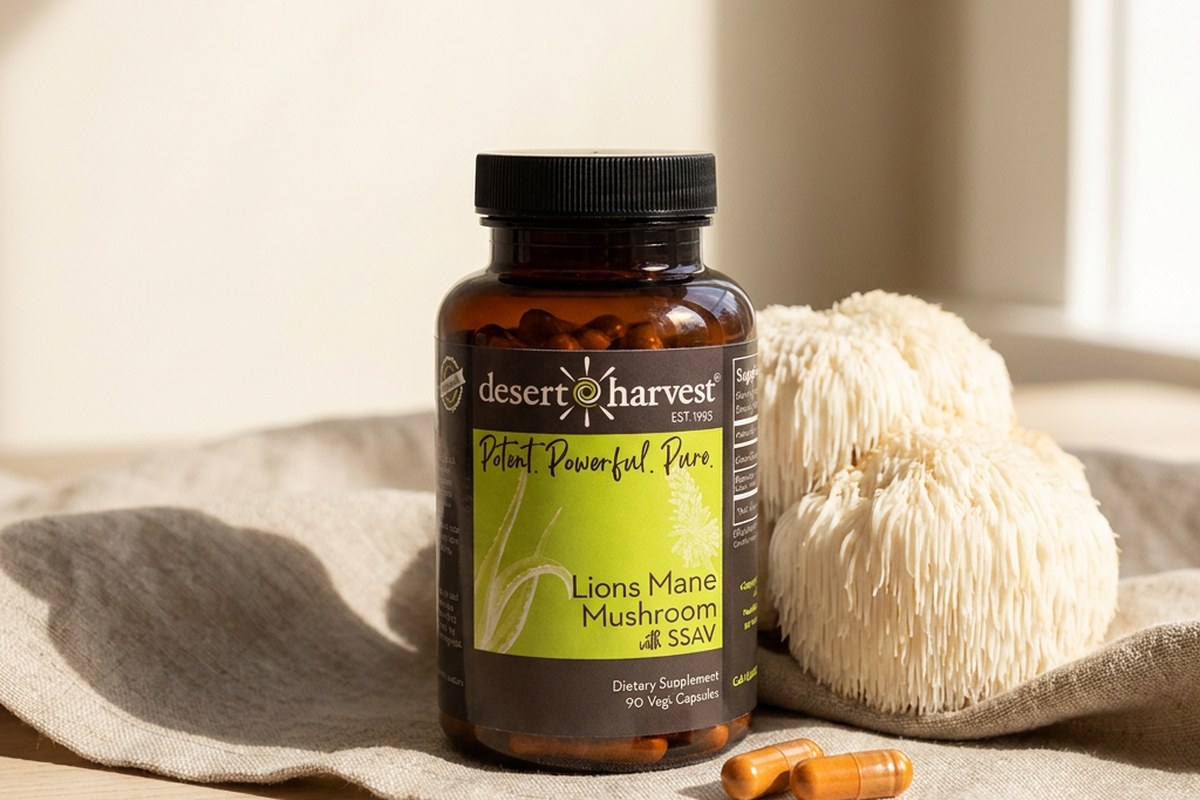
Beyond the basics, functional mushrooms are where a lot of women look next. Lion's Mane (Hericium erinaceus) has traditionally been used to support the nervous system, and research has examined its compounds in the context of mental clarity and focus. Ours provides 392 mg of fruiting body — never mycelium or grain — plus 98 mg of organic SSAV (Super-Strength Aloe Vera) per capsule, one a day, at $30.
If fatigue and iron are the bigger story for you, human bioidentical lactoferrin with effera® addresses a different mechanism entirely — we covered that in why menopause fatigue and iron are linked.
Benefits from mushrooms accrue gradually rather than overnight. Lion's Mane is not for use during pregnancy or lactation, and if you take prescription medication or manage a medical condition, speak with your provider before starting. You can read what other women say on our reviews page.
The Bottom Line
Midlife brain fog is real, it is common, and the evidence points to it being a phase rather than a trajectory. Most of the leverage sits in unglamorous places: protected sleep, lab tests you actually insist on, and offloading what you no longer need to carry in your head.
Subscribe to Lion's Mane and every subscription order ships free.
These statements have not been evaluated by the Food and Drug Administration. This product is not intended to diagnose, treat, cure, or prevent any disease. This content is for informational purposes only and does not constitute medical advice. Always consult with a qualified healthcare provider before making changes to your health regimen.