


Menopause and Skin: What Changes and Why
Why Skin Changes Cluster Around Menopause
Why does skin so often seem to change all at once around midlife, instead of gradually over the years? The timing is not a coincidence, and it traces back to one hormone.
According to the American College of Obstetricians and Gynecologists (ACOG), menopause happens when the ovaries no longer make estrogen, at an average age of 51. The years leading up to it, called perimenopause, can begin in your 30s or 40s as estrogen output starts to fluctuate before it declines for good.
Estrogen has a role well beyond the menstrual cycle. It also supports collagen and elastin production in the skin, which is why the skin is one of the places where a drop in estrogen shows up most visibly. Skin is not unique in this: the same hormone touches bone, muscle, and connective tissue throughout the body, which is part of why menopause can feel like several things changing at once rather than one.
What makes skin different is how visible the change is day to day. A joint ache can be easy to attribute to a busy week; a mirror is harder to argue with.
What the Research Shows About Estrogen and Skin
A review in the journal Menopause International reports what it calls a strong correlation between skin collagen loss and estrogen deficiency at menopause, and notes that with increasing age, skin becomes more fragile and more prone to small tears and bruising, according to the 2007 paper from researchers in Malta.
A more recent 2021 review in the journal Dermatology and Therapy describes the estrogen-deficient state after menopause as a loss of collagen, elastin, fibroblast function, and blood supply in the skin; fibroblasts are the skin cells that make collagen. The combined effect, the authors write, includes dryness, wrinkles, thinning, and an increased perception of aging.
None of this happens overnight, and it does not happen the same way for every woman. But it explains why so many women notice several skin changes arriving together rather than one at a time.
Dryness and Thinner Skin, in Practical Terms
In everyday terms, this often shows up as skin that feels drier than it used to, even with the same moisturizer that suited you for years. It can also mean skin that marks or reddens more easily, and products that once felt fine causing more irritation than before.
None of this reflects anything you did wrong. It reflects thinner skin, less collagen, and reduced blood flow at the skin's surface, all downstream of the same hormonal shift. Simple adjustments, like switching to a richer moisturizer or a gentler cleanser, can make daily comfort noticeably better.
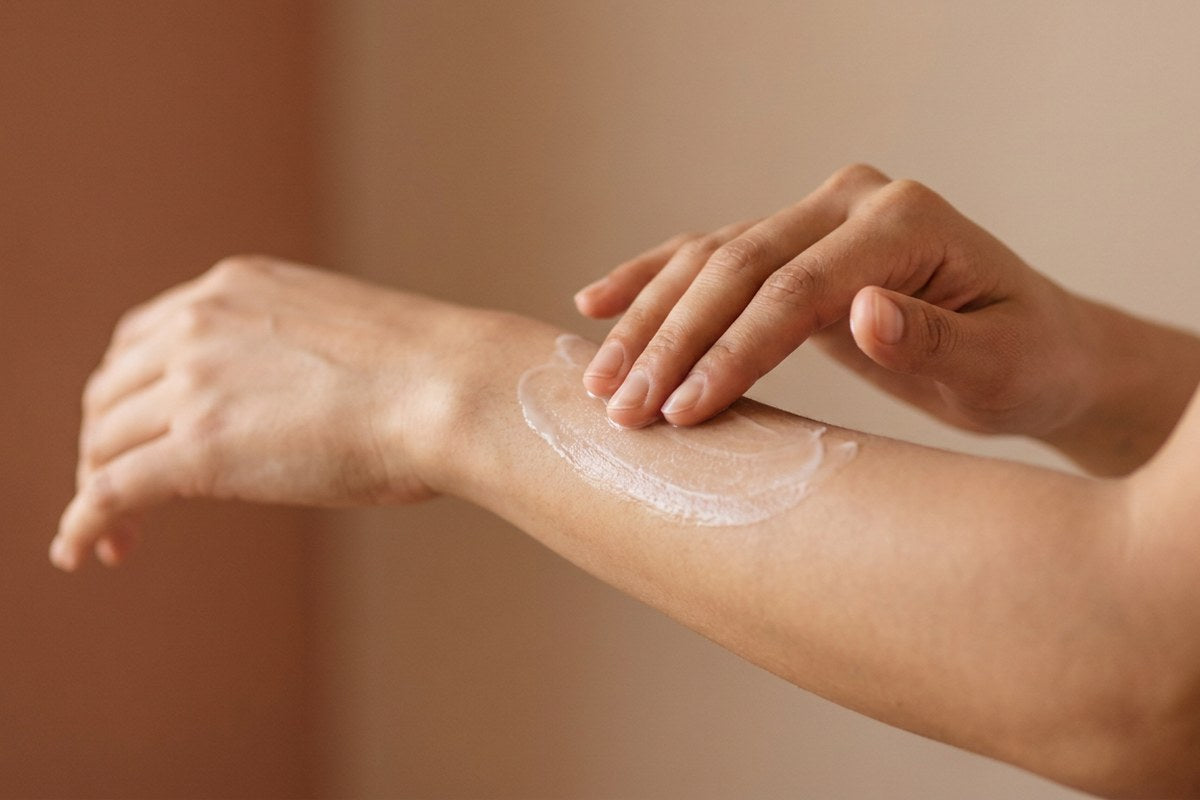
Sensitivity is another common thread. A cleanser or fragrance that never caused a problem before can suddenly leave skin feeling tight or looking flushed. That is worth a note to yourself rather than an assumption that a favorite product has changed. When you do try something new, a small patch of skin on the inner forearm for a day or two is a simple way to check how your skin reacts before using it more broadly.
Building a Simple Routine
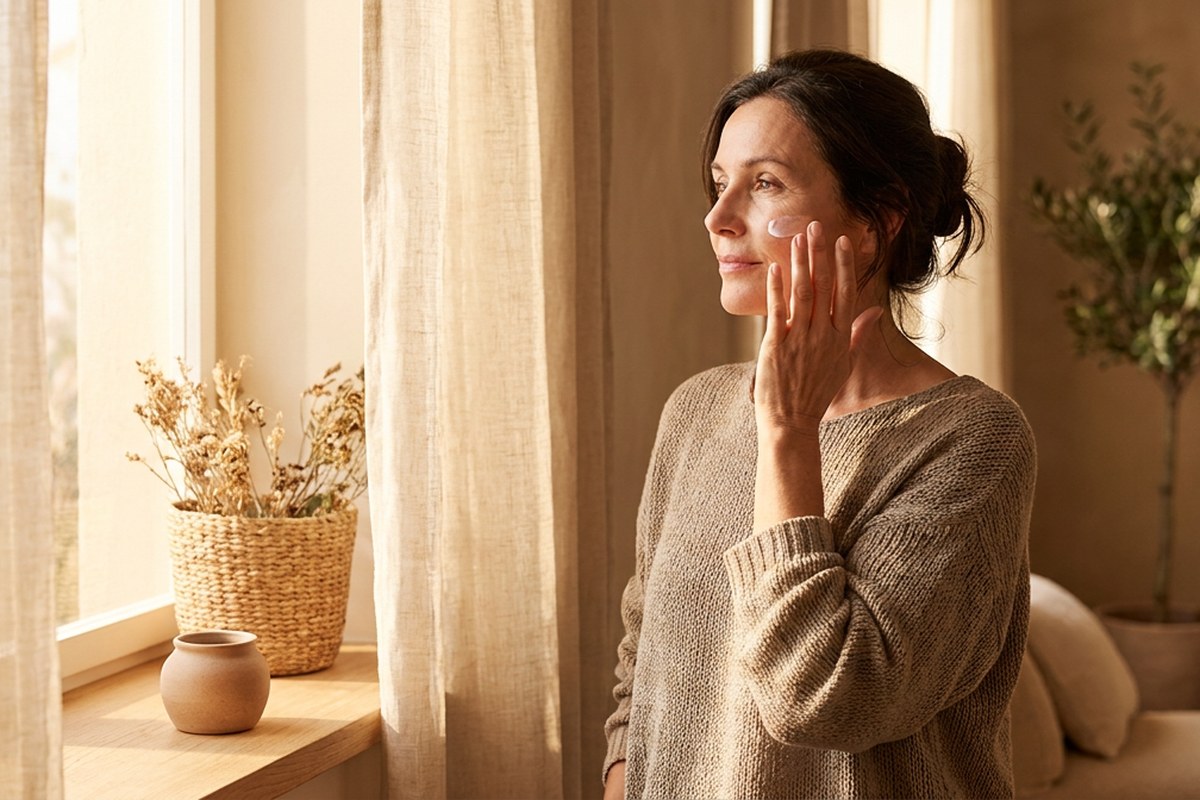
A workable routine for changing skin does not need to be complicated: a gentle, fragrance-free cleanser, a richer moisturizer applied while skin is still damp, and daily sun protection, since sun exposure adds its own toll on top of hormonal change. Drinking enough water and getting regular sleep are part of the picture as well, though neither is a quick answer on its own.
Order matters too. A simple sequence, cleanser first, then a hydrating layer while skin is still slightly damp, then sunscreen in the morning, keeps a routine manageable. Adding one new product at a time also makes it easier to notice which one is helping and which one is not.
Any skin change that is new, spreading, or does not fit the general pattern described here is worth a visit to a dermatologist or your regular provider rather than a guess. You can browse our full Aloe Vera skin care collection for more options, and our piece on the musculoskeletal changes of menopause covers another part of the body going through a similar hormonal shift.
Desert Harvest has supported women's health since 1993. Talk with your healthcare provider about any skin change that concerns you, and about whether an over-the-counter option fits your routine.
Everyday Habits That Support Changing Skin
Small routines may help skin that feels drier or thinner than it used to. Many dermatologists suggest shorter showers in lukewarm rather than hot water, a gentle fragrance-free cleanser, and a moisturizer applied while skin is still slightly damp so it holds on to water. A broad-spectrum sunscreen of SPF 30 or higher, worn every day, helps protect the collagen you have from further sun damage, which matters more once estrogen's support declines. Enough water, protein and colorful produce support your skin as part of your overall health.
Estrogen loss affects more than the skin you can see. The same tissue changes can show up as vaginal dryness and discomfort, which we cover in GSM: the menopause symptom nobody names. If a skin change is new, painful or not settling, a dermatologist or your healthcare provider is the right place to start. For the wider picture, from the stages to symptoms by body system, our menopause guide brings it together.
These statements have not been evaluated by the Food and Drug Administration. This product is not intended to diagnose, treat, cure, or prevent any disease. This content is for informational purposes only and does not constitute medical advice. Always consult with a qualified healthcare provider before making changes to your health regimen.