


Magnesium and Menopause: Why Sleep, Muscle Cramps and Mood Often Shift at the Same Time
Adult women need 310 to 320 mg of magnesium a day, and dietary surveys in the United States consistently show intakes below that figure — a gap the NIH Office of Dietary Supplements has documented for years. It rarely announces itself. It shows up as a 3 a.m. wake-up, a calf cramp that hauls you out of bed, and a fuse noticeably shorter than the one you had at forty.
Those three things arriving in the same season is not a coincidence, and it is not a sign that something is wrong with you. Magnesium sits underneath all three, and the menopause transition changes both how much you need and how well you hold on to it. Here is the mechanism, the real numbers, and how to think about form.
What Magnesium Is Actually Doing All Day
A cofactor in more than 300 reactions
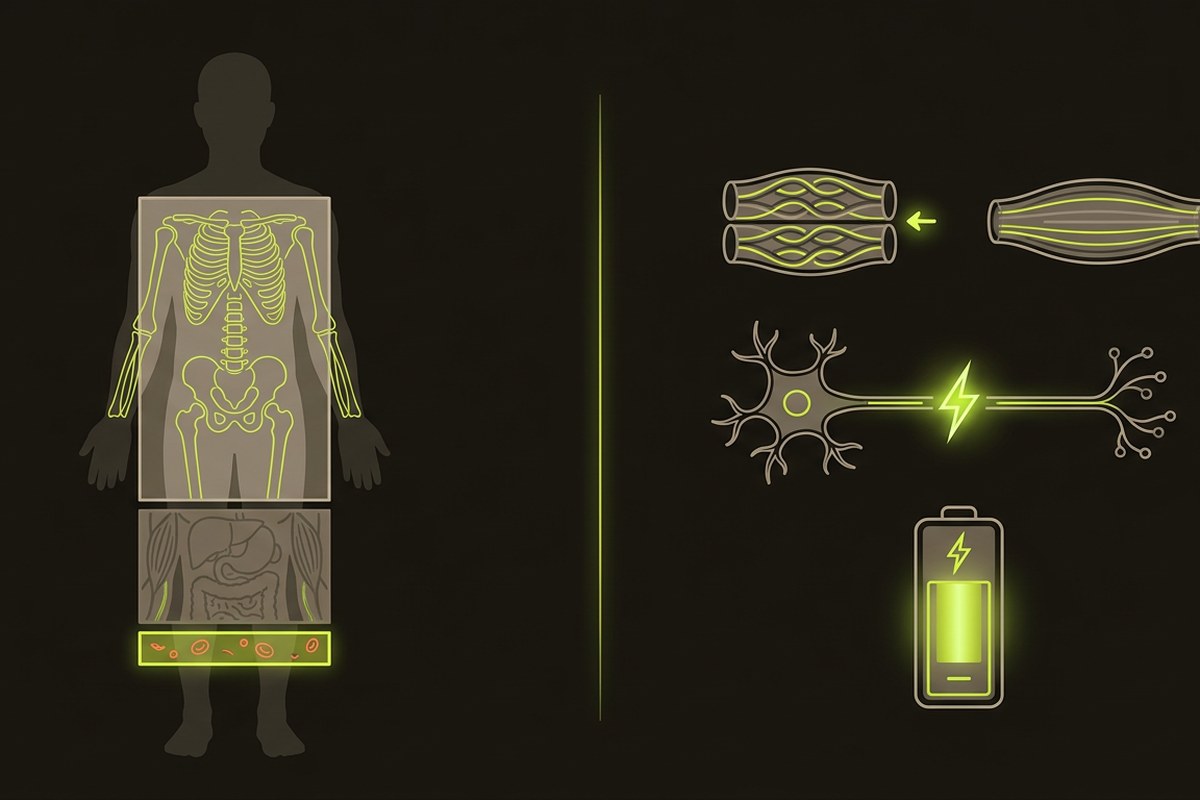
Magnesium is not a single-purpose mineral. It acts as a cofactor in more than 300 enzyme systems — energy production, protein synthesis, blood glucose regulation, blood pressure regulation, and the electrical signaling that lets nerves talk to muscles.
About 60 percent of the body's magnesium is stored in bone, with most of the remainder inside soft tissue. Only about one percent circulates in blood, which is why a standard serum magnesium test can look perfectly normal even when intake has been low for a long time.
Muscles need it to let go
Calcium tells a muscle fiber to contract. Magnesium is central to the signaling that lets it release again. That relationship is the simplest explanation for why the calf cramps, the eyelid twitch and the restless legs so often travel together — and why they tend to be loudest at night, when nothing else is competing for your attention.
Why Midlife Changes the Arithmetic
Sleep gets more fragile, and sleep needs magnesium
Sleep disruption is one of the most reported experiences of the menopause transition. Womenshealth.gov lists trouble sleeping among the common changes, and night sweats, an earlier waking time and a lighter sleep architecture frequently arrive together.
Magnesium is involved in the pathways that govern the nervous system's wind-down, including GABA signaling. Research indexed in PubMed has examined magnesium intake and sleep quality in older adults; the trials are small and the field is still developing, so the fair summary is that studies indicate a plausible relationship rather than a settled answer.
Bone becomes a bigger conversation
Falling estrogen accelerates bone turnover, which is why the North American Menopause Society puts bone health near the center of midlife guidance. Magnesium contributes to bone structure alongside calcium and vitamin D — and because calcium supplementation on its own commonly slows things down digestively, the two minerals are usually discussed as a pair.
Mood, stress and the feedback loop
Poor sleep worsens mood; low mood worsens sleep. Literature collected in PubMed Central has examined magnesium status in relation to mood in adults. Nobody should oversell this — magnesium is not a mood intervention — but it is one of the few variables in that loop you can actually adjust.
Getting Enough Without Guesswork
Food first, genuinely
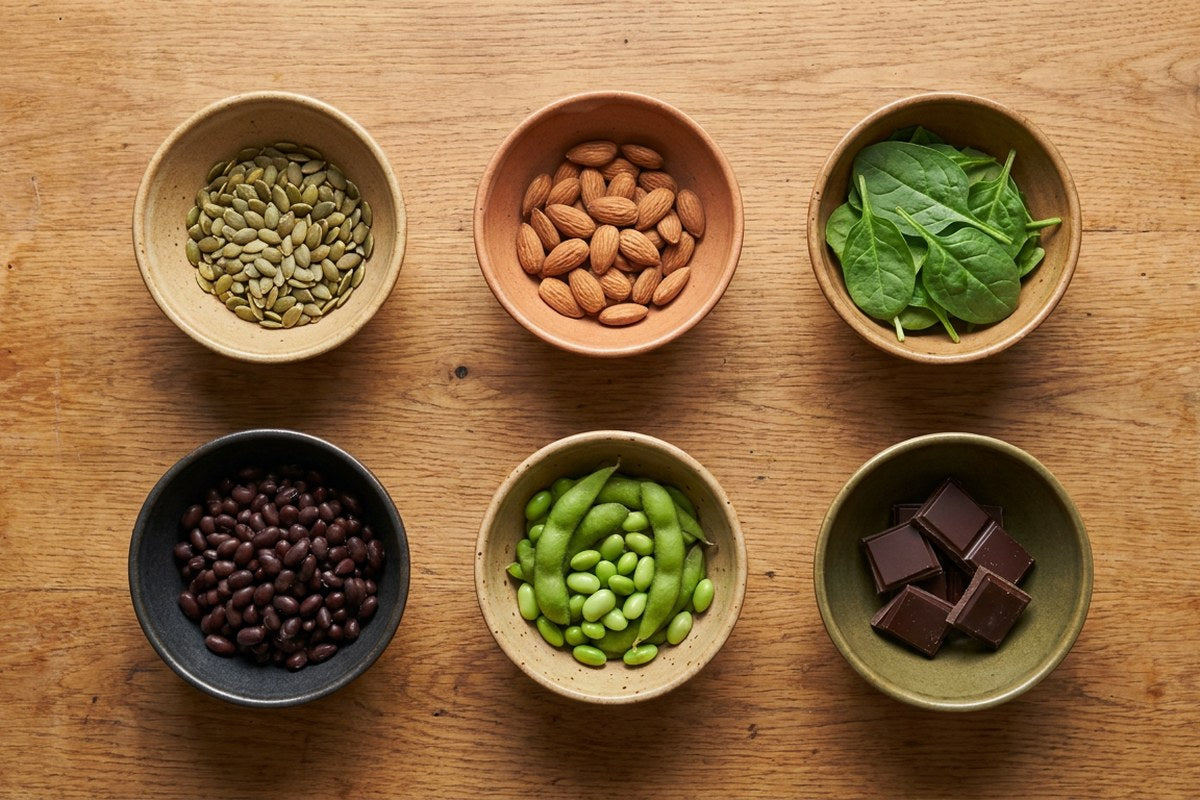
Pumpkin seeds, almonds, spinach, black beans, edamame, brown rice and dark chocolate are all meaningful sources. Building two of them into your week is worth more than any capsule, and it costs nothing.
Then choose a form on purpose
Forms are not interchangeable. Magnesium oxide delivers a high amount of elemental magnesium per capsule and draws water into the intestine, which is why it is the form usually chosen when regularity is part of the picture. Chelated forms such as glycinate are gentler on the gut but carry less elemental magnesium per milligram. Neither is universally better; they answer different questions.
Two practical notes. Magnesium is commonly taken in the evening. And if you have impaired kidney function, speak with your doctor before starting magnesium or calcium — your kidneys regulate both, and that conversation comes first.
The Desert Harvest Difference
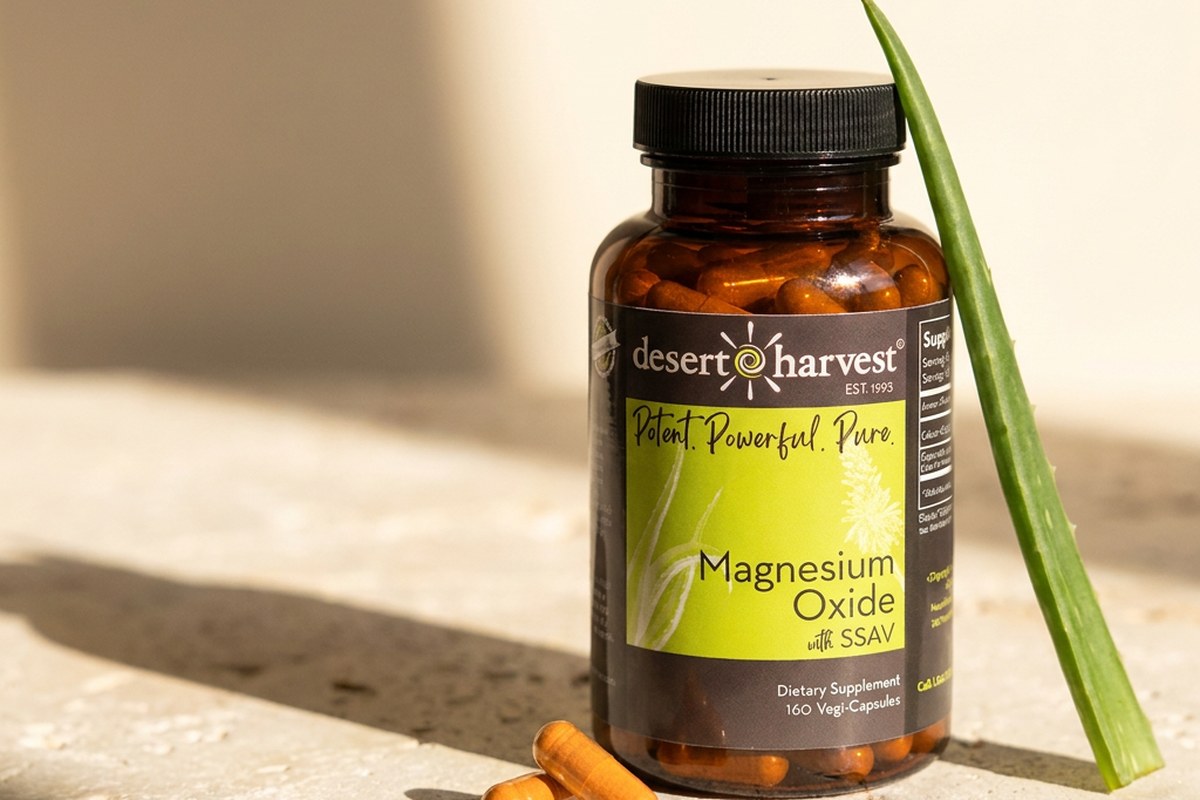
Desert Harvest Magnesium provides 250 mg of magnesium as magnesium oxide plus 75 mg of SSAV (Super-Strength Aloe Vera) per capsule, 160 capsules to a bottle, at $20. The Aloe Vera is there as a gentle carrier, and the whole formula is gluten-free, bladder-friendly, vegan, third-party tested and free of fillers.
"I use this twice a day. It helps me feel better and be more regular. Other magnesium pills have not been as effective as these." — Andria M., Verified Customer
For women pairing it with a daily foundation, the Multi-Vitamin Low Acid, Without B6 already carries 100 mg of magnesium plus calcium glycerophosphate, and both live in our everyday supplements collection. If fatigue is the loudest symptom rather than sleep, our piece on menopause and iron deficiency is the better starting point.
The Bottom Line
Sleep, cramps and mood shifting together in midlife is a recognizable pattern, not a personal failing — and magnesium sits underneath all three. Cover the food sources, pick a form that matches what you actually want from it, take it in the evening, and give it a fair few weeks before you judge.
Subscribe to Magnesium and every subscription order ships free.
These statements have not been evaluated by the Food and Drug Administration. This product is not intended to diagnose, treat, cure, or prevent any disease. This content is for informational purposes only and does not constitute medical advice. Always consult with a qualified healthcare provider before making changes to your health regimen.