

Lion's Mane, Honestly: Fruiting Body, Beta-Glucans and What the Research Actually Says
There are 392 mg of Hericium erinaceus in a Desert Harvest Lion's Mane capsule, and every one of those milligrams comes from the fruiting body — the shaggy white mushroom you would actually recognize on a log. That single word, "fruiting", is the biggest real difference between two mushroom supplements that look identical on a shelf.
Lion's Mane has had a loud few years, and loud is rarely good for accuracy. So this is the unhurried version: how the mushroom grows, what is genuinely in it, what the research has and has not established, and how to read a label without taking anyone's word for it.
Fruiting Body Versus Mycelium: The Distinction That Decides Everything
How a mushroom actually grows
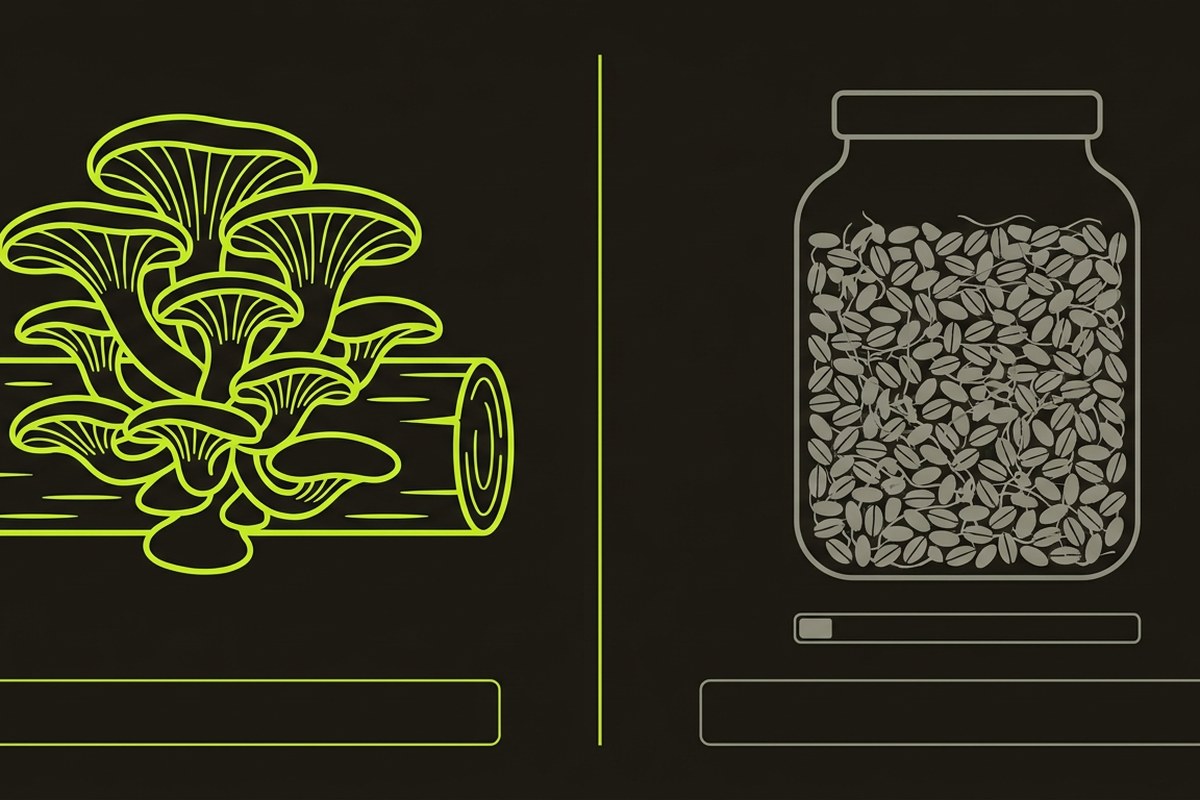
What we call a mushroom is only the reproductive structure. Most of the organism is mycelium — a fine, thread-like network running through the wood or soil it feeds on, invisible until it fruits.
Both parts are real fungus. They are not, however, the same material, and they do not contain the same compounds in the same concentrations.
The grain problem
Mycelium is cheap and fast to grow indoors, typically on sterilized grain such as rice or oats. The difficulty is that mycelium and grain cannot be practically separated at harvest, so what gets milled into the capsule is the mycelium plus its starchy substrate.
That is why some labels quote impressive milligram totals with no mention of which part was used. If a product does not say "fruiting body", it is reasonable to assume there is a reason. The NIH Office of Dietary Supplements makes the same general point about supplement labels: what a product does not tell you is part of the information.
What Is Actually In There
Beta-glucans, the measurable part
Beta-glucans are the structural polysaccharides of fungal cell walls, and they are the component most mushroom research is ultimately about. Studies indexed in PubMed have examined beta-glucan content across fungal materials, and fruiting bodies consistently carry more of them than grain-grown mycelium does.
Worth knowing: "polysaccharide" on a label is not the same claim as "beta-glucan". Starch from the growing substrate is also a polysaccharide, so a high polysaccharide number can quietly be a high starch number.
Hericenones and erinacines
These are the compounds that made Lion's Mane famous. Laboratory research collected in PubMed Central has examined their interaction with nerve growth factor pathways in cell and animal models.
Two caveats that rarely make it into the marketing. Hericenones are found principally in the fruiting body, while erinacines are associated with mycelium — so no single source gives you everything. And cell and animal findings are a starting point for human research, not a conclusion about people.
What the Research Has and Hasn't Shown
Human trials exist, and they are small
Human studies of Lion's Mane and cognitive measures have been conducted, and the honest summary is that they are small, short and varied in design. Research indexed in PubMed is best described as promising and preliminary.
Anyone telling you the case is closed is selling something. Traditional use in Chinese and Japanese food and medicine goes back centuries; the modern clinical picture is still being assembled.
Set expectations accordingly
This is not a stimulant and there is no first-day effect. Benefits accrue gradually — think in terms of consistent daily use over weeks, alongside sleep and nutrition rather than instead of them.
Lion's Mane is not for use during pregnancy or lactation. If you take pharmaceutical medication or manage a medical condition, speak with your healthcare provider before starting.
The Desert Harvest Difference
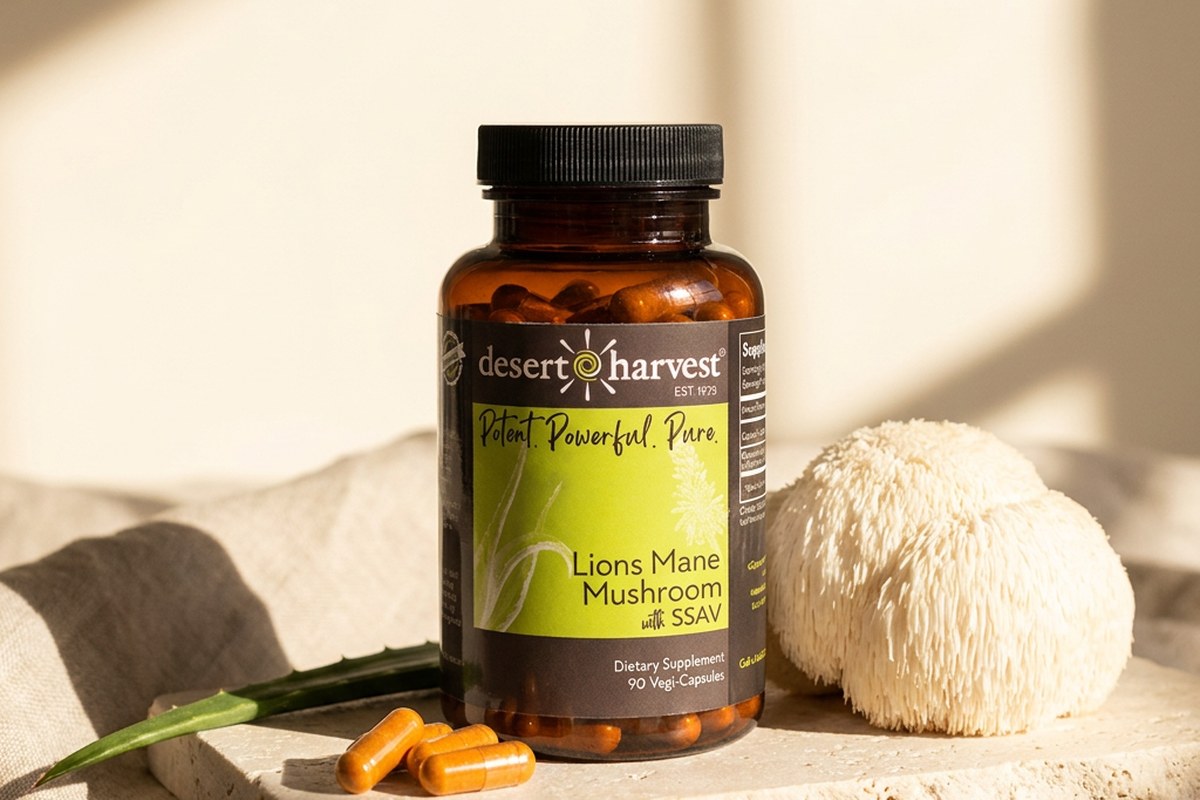
Desert Harvest Lion's Mane is 392 mg of Hericium erinaceus fruiting body plus 98 mg of organic SSAV (Super-Strength Aloe Vera) per capsule — 90 capsules, one a day, $30. No mycelium, no grain, no starch fillers, no artificial additives.
The Aloe Vera is the same 200:1 whole-leaf, freeze-dried, anthraquinone-free concentrate we have made since 1993, included as a carrier to support nutrient absorption. Like everything we make, it is formulated for sensitive systems — including the interstitial cystitis and bladder pain syndrome community served by the Interstitial Cystitis Association, and documented across our clinical studies page. It is vegan, BPA-free and made in the USA.
If immune support is more your priority than focus, Turkey Tail is the companion formula at the same 392 mg fruiting body plus 98 mg Aloe Vera. There are several thousand customer reviews on our reviews page if you want unvarnished opinions before you decide.
The Bottom Line
Lion's Mane deserves neither the hype nor the eye-roll. It is a well-studied traditional mushroom with a genuinely interesting chemistry and a human evidence base that is early rather than absent — and the single most useful thing you can do as a buyer is check which part of the organism you are actually paying for.
Subscribe to Lion's Mane and every subscription order ships free.
These statements have not been evaluated by the Food and Drug Administration. This product is not intended to diagnose, treat, cure, or prevent any disease. This content is for informational purposes only and does not constitute medical advice. Always consult with a qualified healthcare provider before making changes to your health regimen.