


The Fog That Comes With the Pain: Why IC/BPS Wears Down Your Concentration
In severe cases, people with interstitial cystitis/bladder pain syndrome may need the bathroom as often as 60 times a day, according to the National Institute of Diabetes and Digestive and Kidney Diseases. Nobody thinks clearly on that schedule — and yet the symptom people apologize for at appointments is rarely the pain. It is the fog.
Losing a word mid-sentence. Rereading the same paragraph three times. Walking into the kitchen with no idea why. If you have quietly wondered whether something else is wrong with you, this article is about the far more likely explanation: what chronic pain and fragmented sleep actually do to attention, and what genuinely helps.
Why Chronic Pain Costs You Attention
Pain and thinking draw on the same budget
Attention is finite. Pain is not a background process — it is a signal that continuously demands a share of the same limited mental workspace you were trying to use for the crossword, the email or your daughter's phone number.
Research collected in PubMed Central has examined attention and memory in adults living with chronic pain conditions. The consistent theme is that the cognitive effects are real and measurable, not imagined and not a character flaw.
Broken sleep is the multiplier
Nocturia is the part that does the quiet damage. Sleep that is interrupted three or four times is not a shorter version of good sleep — it is structurally different, and the deep and REM stages that consolidate memory are the first casualties.
Studies indexed in PubMed have examined fragmented sleep and next-day cognitive performance. This is why a flare week and a forgetful week so often turn out to be the same week.
The Second Layer Nobody Counts
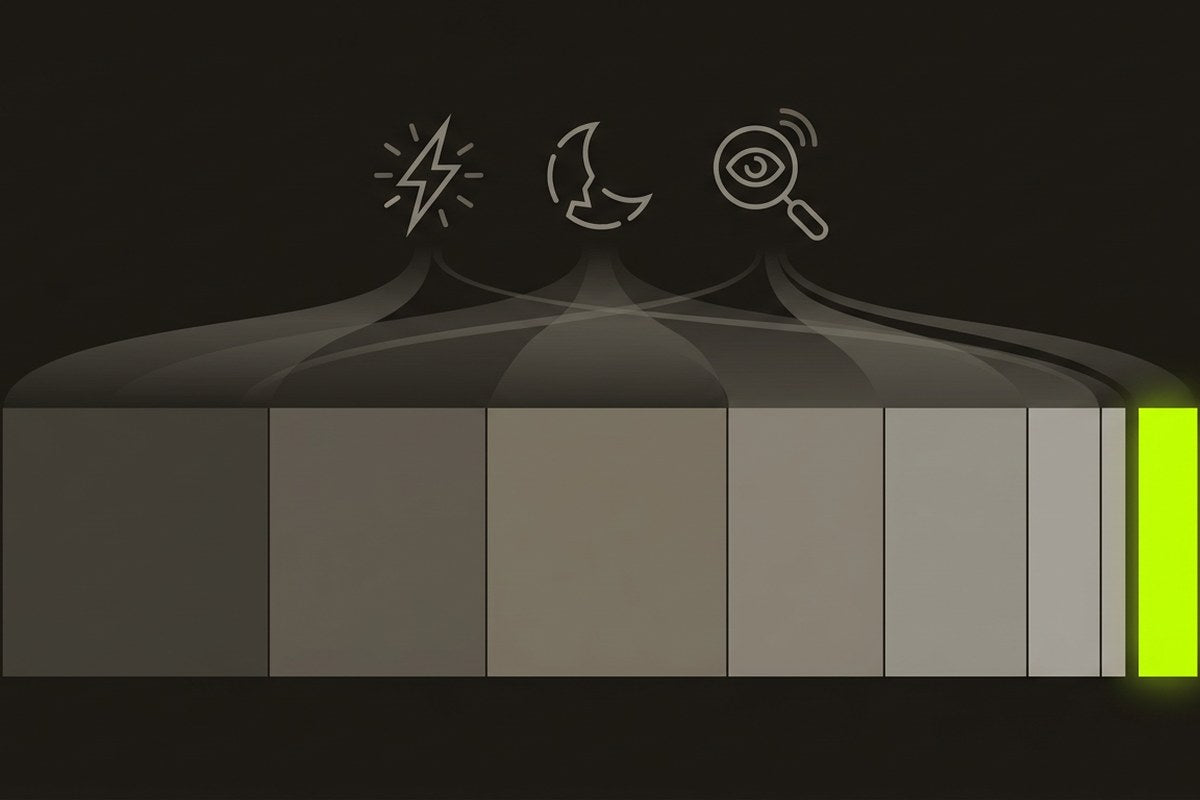
Vigilance is a full-time job
Living with IC/BPS means running a constant background process: where the bathrooms are, what is safe to drink, whether that restaurant will have anything on the menu you tolerate, how far you are from home. None of that feels like thinking. All of it consumes the same resource — and it never fully switches off, which is why a good day out can still leave you flattened by 4 p.m.
Then there is the paperwork
Appointments, insurance, refills, symptom logs, the effort of explaining yourself again to a new clinician. The Interstitial Cystitis Association has written for years about the administrative load that comes with a chronic condition, and it lands directly on the same depleted attention.
The useful reframe is this: you are not losing your mind. You are running a heavily loaded system on very little rest.
What Actually Helps
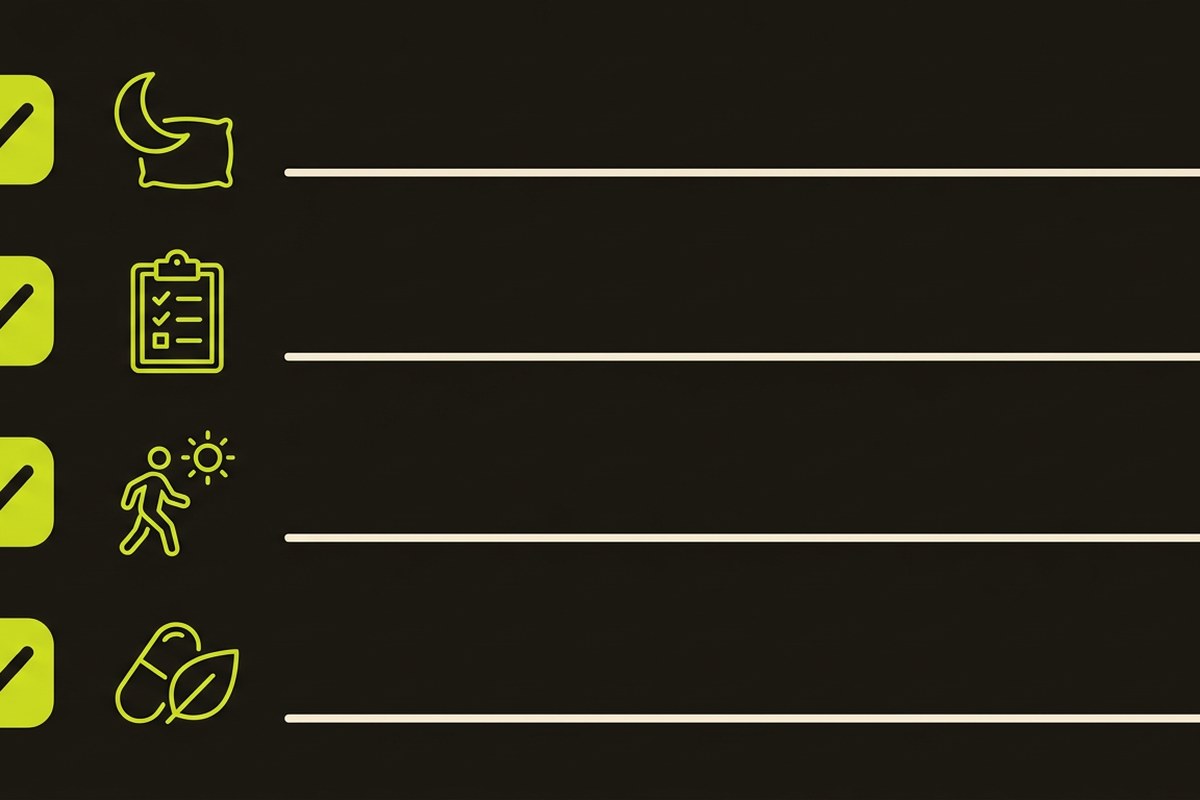
Protect the sleep window first
Everything else is downstream of this. Front-load fluids earlier in the day and taper in the evening. Keep a consistent bedtime. Guard the two hours before sleep as protected time, not as spare capacity for admin.
Offload rather than remember
Do not try to hold things in your head. One list, one calendar, phone reminders for medications, a note by the door. Externalizing memory is not a defeat — it is what frees up attention for the things that need you.
Move a little, in daylight
A short walk in morning light supports circadian rhythm, which supports sleep, which supports attention. It compounds, and it is free.
Cover the nutritional basics before the interesting stuff
Low iron, low B12 and poor overall intake all show up as fog. Those are worth checking with your provider before anything else — and worth mentioning explicitly, because fog is easy to leave out of a fifteen-minute appointment when the pain is what you came in for. Bring it up first, not last.
The Desert Harvest Difference
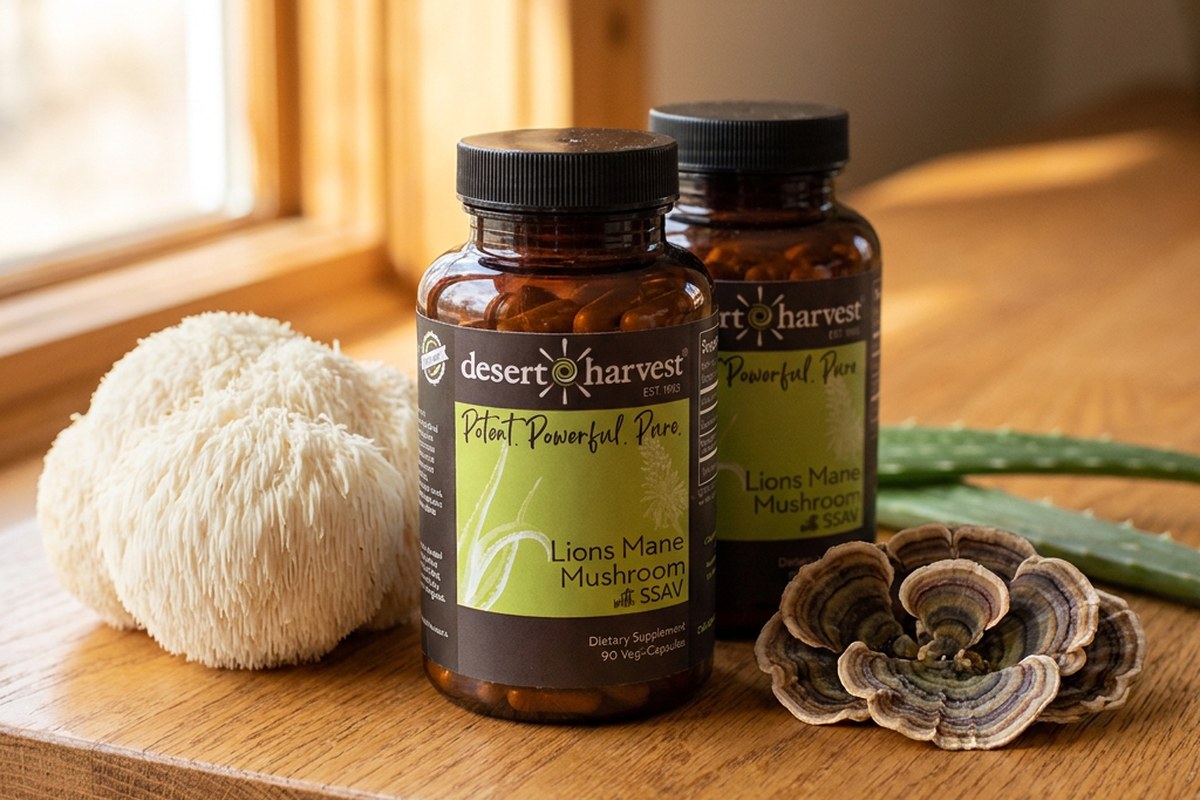
Once the basics are handled, functional mushrooms are where a lot of our customers look next. Lion's Mane (Hericium erinaceus) has traditionally been used to support the nervous system, and research has examined its compounds for mental clarity and focus. Turkey Tail (Trametes versicolor) has traditionally been used for immune and liver support, and is rich in beta-glucans.
Both give you 392 mg of fruiting body plus 98 mg of organic SSAV (Super-Strength Aloe Vera) per capsule, one capsule a day, with no fillers or starches. Both are third-party tested and built for sensitive systems — the same standard behind everything in our bladder health collection. Benefits accrue gradually rather than overnight. Neither is for use during pregnancy or lactation, and if you take prescription medication, ask your provider first.
If self-advocacy at appointments is the harder problem, our guide on being your own advocate with a chronic illness is the more useful place to start.
The Bottom Line
The fog is not separate from the condition and it is not evidence that something new is wrong. It is what pain, broken sleep and constant vigilance do to a finite attention budget — which means the levers that matter are sleep, offloading, daylight and basic nutrition, in that order.
Subscribe to Lion's Mane and every subscription order ships free.
These statements have not been evaluated by the Food and Drug Administration. This product is not intended to diagnose, treat, cure, or prevent any disease. This content is for informational purposes only and does not constitute medical advice. Always consult with a qualified healthcare provider before making changes to your health regimen.