


Heart Palpitations at Menopause: What's Actually Happening
A Racing or Pounding Heart Is More Common Than You'd Guess
If your heart has suddenly felt like it's pounding, fluttering or skipping a beat sometime in the last few years, you're far from alone. A 2021 Japanese study in the journal Menopause looked at the medical records of 394 women aged 40 to 59, including how much palpitations bothered them, and only about a quarter reported none at all.
The researchers found the rest ranged from mild (32.7%) to moderate (29.4%) to severe (11.4%). That's roughly three in four of the women in that study noticing something, and about four in ten rating it moderate or severe.
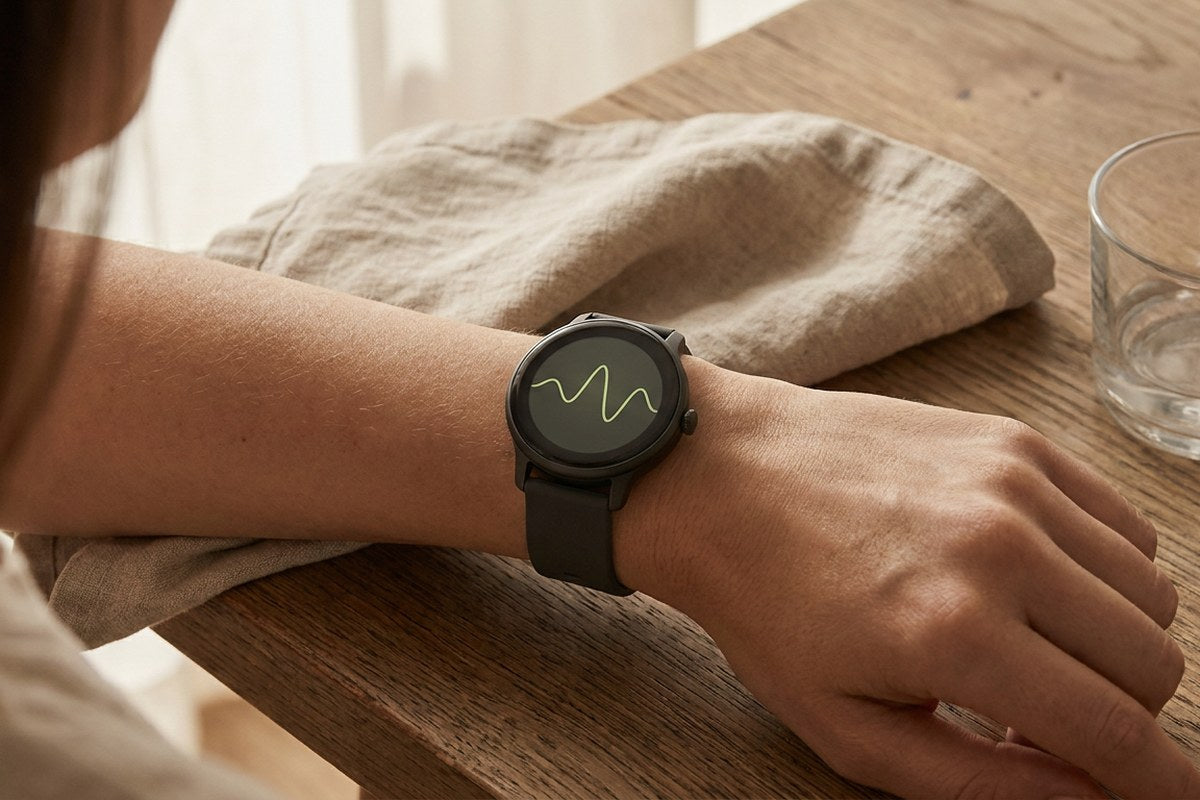
What's Actually Happening
The link to the menopause transition shows up clearly in the research, even if the exact mechanism is still being worked out. The Menopause Society notes that during a hot flash or night sweat, "some women can feel a rapid heartbeat at the same time." The Society describes hot flashes as disturbances in the body's ability to regulate temperature, and a faster heartbeat can come with them.
The 2021 study looked for a cleaner explanation and found one, though maybe not the one you'd expect. Palpitation severity was independently associated with vasomotor symptom scores and anxiety scores, not with age, menopausal status itself, heart rate, arrhythmia, caffeine, or alcohol. In plain terms: it tracks with hot flashes and stress levels more than with the calendar or your coffee habit. In simpler comparisons within the same study, women with worse palpitations also tended to do less regular exercise and score lower on a basic flexibility test, though those two factors didn't hold up once the researchers accounted for vasomotor symptoms and anxiety together.

The Reassuring Part: What a Large Study Didn't Find
A far larger dataset comes from SWAN, the long-running Study of Women's Health Across the Nation, which followed 3,276 women through the menopause transition. Researchers grouped them into three patterns: a high-probability group (15.9%) whose palpitations peaked around perimenopause and eased later, a moderate group (34.3%) following the same shape at a lower level, and just under half (49.8%) with consistently low probability throughout.
The reassuring finding sits in the fine print. In fully adjusted models, these palpitation patterns were not related to subclinical cardiovascular disease, measured as carotid artery thickening or arterial stiffness. That doesn't mean palpitations should be ignored, but it means the palpitation patterns seen during this transition weren't tied to early signs of artery disease in this large study.

When to Actually Call Someone
Menopause-linked or not, some palpitations deserve a same-day call, and a few deserve 911. MedlinePlus, from the National Library of Medicine, describes palpitations as "feelings or sensations that your heart is pounding or racing," felt in the chest, throat or neck, and lists when it's an emergency: loss of consciousness, chest pain, shortness of breath, unusual sweating, or dizziness and lightheadedness alongside the palpitations.
Call your provider, rather than wait it out, if palpitations are new for you, if the pattern changes or feels different from before, or if you already have heart disease risk factors like high cholesterol or diabetes. Bring a symptom diary; when and how often it happens is exactly what a provider will ask, alongside whether the sensation feels like a skipped beat, a flutter, or a racing rhythm, and whether it begins and ends abruptly. Outside the emergency signs above, an electrocardiogram at a regular office visit is a common first step, with more monitoring only if it points to an abnormal rhythm.
Building Habits Around a Racing Heart
Because this pattern tracks with hot flashes and stress more than with any single cause you can pin down, those two are the natural place to start. The MedlinePlus home-care advice for palpitations is short and practical: learn ways to lower stress and anxiety, try relaxation or breathing exercises, and get regular exercise. None of this can promise that a given episode won't happen, but it lines up with the two things this research keeps pointing back to. Hot flashes are also worth raising with your provider in their own right.
Night-time episodes deserve their own note. Palpitations that arrive with a hot flash or a night sweat can wake you and make it harder to settle back to sleep, and our look at night sweats and the 3 a.m. waking covers what research shows about sleep during the transition. Writing down when an episode happens, how long it lasts, and what came just before it, such as caffeine, alcohol, a hot flash or a stressful moment, gives your provider a much clearer picture than memory alone. Our simple symptom diary guide shows one easy way to keep that record on paper or on your phone.
If palpitations are new for you, start with your provider rather than a search engine. If you're also navigating early hormonal shifts more broadly, our guide to early perimenopause and our menopause support collection are worth reading next. Our menopause guide puts the rest of the transition in one place.
These statements have not been evaluated by the Food and Drug Administration. This product is not intended to diagnose, treat, cure, or prevent any disease. This content is for informational purposes only and does not constitute medical advice. Always consult with a qualified healthcare provider before making changes to your health regimen.