

Ragweed Season and Your Bladder: Why Fall Allergies Can Set Off an IC Flare
Between 4 and 12 million people in the United States are living with interstitial cystitis, and a surprising number of them notice the same thing every September — the bladder gets louder right as the pollen count climbs.
If you have been told your sinuses and your bladder are unrelated, that pattern can feel invented. It isn't. There is one cell type sitting at the center of both stories, and once you understand it, the late-summer flare no longer feels random. Here is what changes in your body when ragweed season starts, what the research on that cell actually shows, and why the useful window for planning opens in late July — not in September.
The One Cell Your Sinuses and Your Bladder Share
Mast cells are the body's smoke alarm
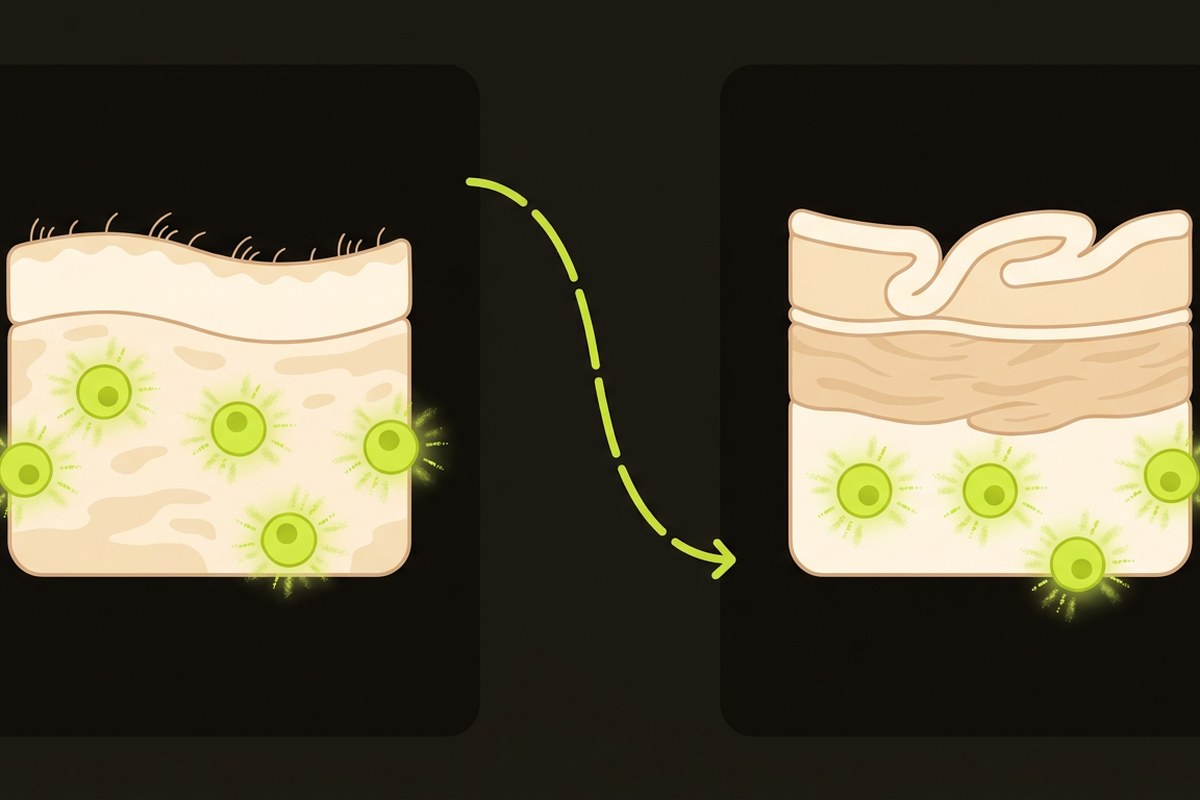
Mast cells are immune cells that live inside tissue rather than circulating in the blood — in your skin, your airways, your gut lining, and yes, the wall of your bladder. When they read something as a threat, they degranulate: they release histamine and a cocktail of other chemical messengers into the surrounding tissue within seconds.
In your nose, that is the sneezing and the streaming eyes. In tissue that happens to be your bladder, the same release shows up as swelling, nerve irritation, and urgency.
Ragweed does not stay in your nose
Here is the part most people are never told. Mast cell activation is not neatly confined to whichever tissue met the pollen. When the seasonal load rises, mast cells throughout the body sit closer to their trigger point — researchers describe this as a lowered activation threshold.
Ragweed pollen season across most of the country runs from roughly August until the first hard frost, peaking in early to mid September. For an already-sensitized bladder, that is a ten-week stretch with the alarm system turned up. The Interstitial Cystitis Association has long noted that IC/BPS travels with allergic conditions in many patients, which is exactly what you would expect if a shared cell is involved.
What the Research Actually Shows
Mast cells have been part of the IC conversation for forty years
Bladder tissue from people with IC/BPS has been examined repeatedly for mast cell counts and activation markers since the 1980s. That literature is indexed in the National Library of Medicine's PubMed database and runs to hundreds of entries.
The National Institute of Diabetes and Digestive and Kidney Diseases is careful to say the cause of IC is not settled — and that honesty matters. But mast cell involvement is one of the most durable threads running through the whole body of research.
Where quercetin enters the picture
Quercetin is a bioflavonoid, one of the plant pigments that gives fruit and vegetables their color. Its relationship with histamine release has been examined in laboratory and clinical settings for years; that research is searchable on PubMed too.
Research suggests quercetin may help support the stability of mast cell membranes — meaning the cell is less inclined to degranulate at a given level of provocation. That is a mechanism worth understanding, not a promise. We covered the mechanism itself in more depth in Quercetin for Allergic Bladder. This article is about timing.
Getting Ahead of the Fall Flare
Start before the pollen does
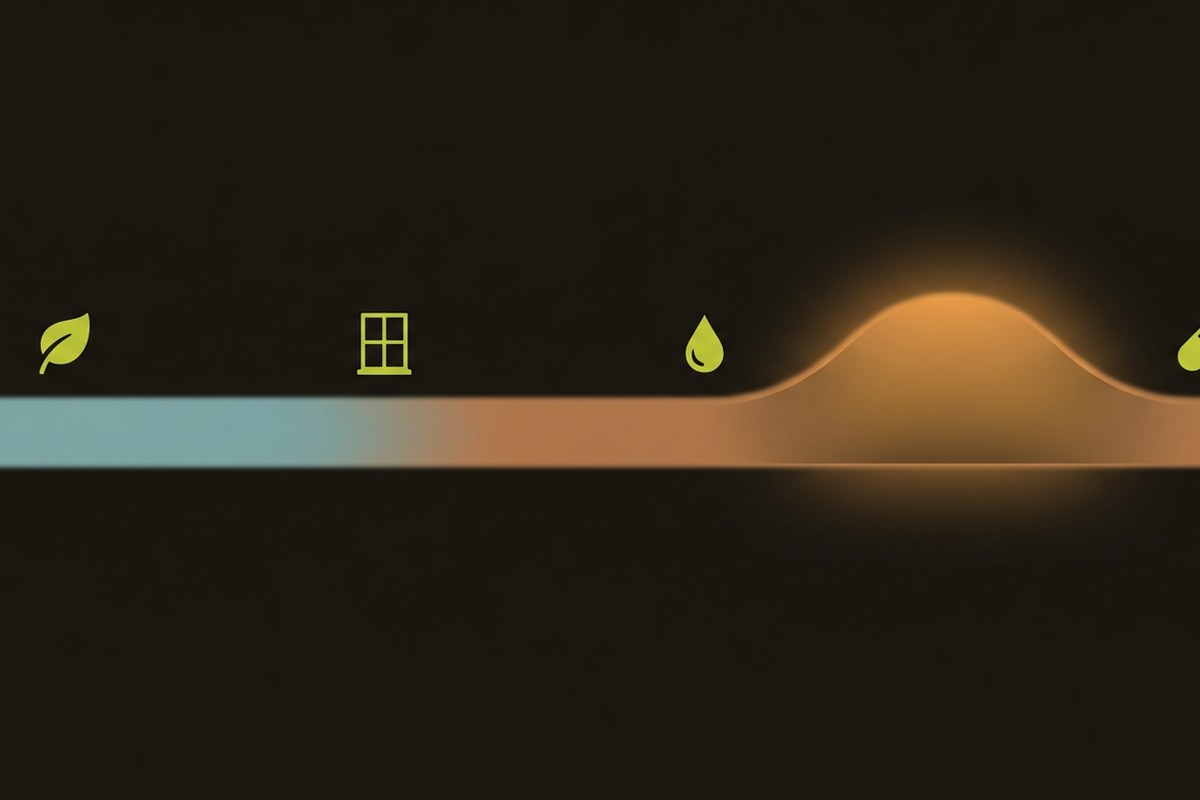
Bioflavonoids are not fast-acting the way a pharmacy antihistamine is. They build up with consistent daily use. So if your pattern is a September flare, the useful window opens in late July or early August — before the count climbs, not after you are already inside it.
Mark the week you usually notice symptoms shifting, then count backwards six weeks. That is your start date.
The rest of your season plan
- Watch the local count, not the calendar. Ragweed timing moves by hundreds of miles.
- Rinse the exposure off in the evening. Hair and clothing carry pollen into bed with you.
- Keep windows shut on high-count mornings, when ragweed release peaks.
- Change one thing at a time. If you add a new food and a new supplement in the same week and something shifts, you have learned nothing. Our IC diet myths guide walks through why single-variable testing matters so much with this condition.
We recommend consulting your healthcare provider before adding anything new, especially if you take blood pressure or blood-thinning medication — bioflavonoids can interact with both.
The Desert Harvest Difference
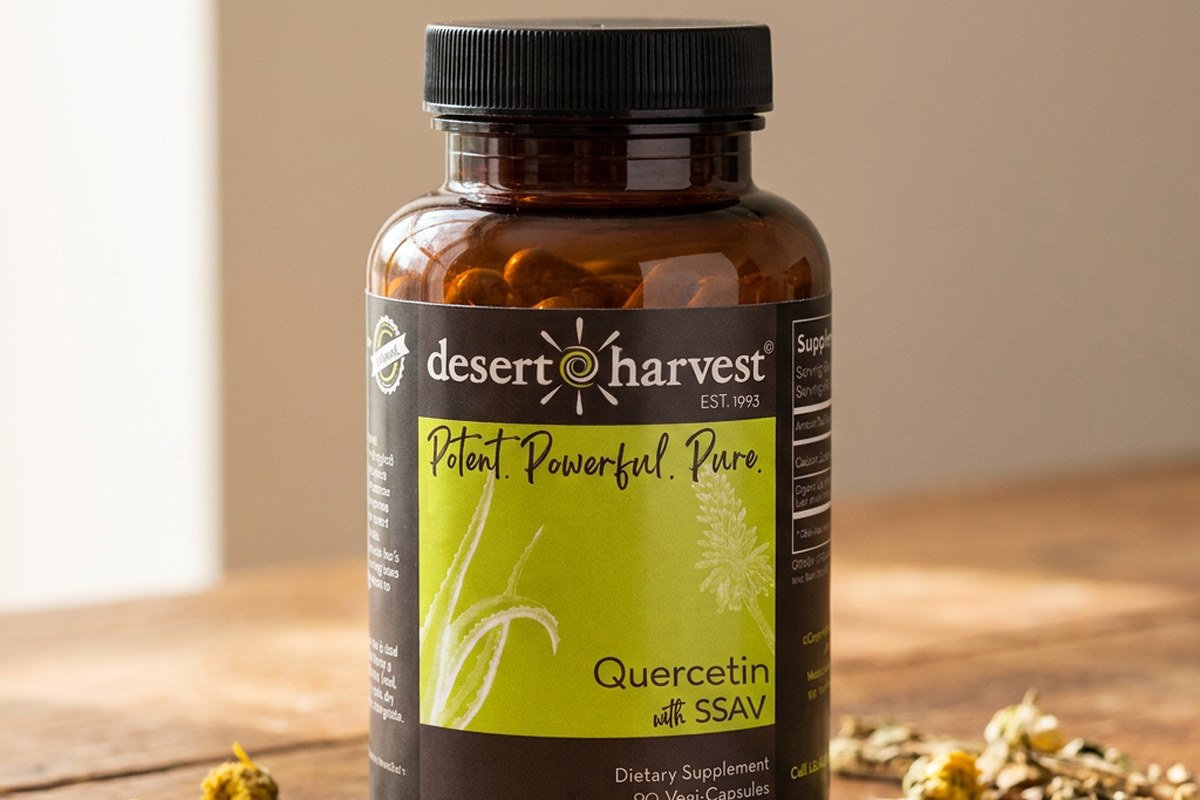
Desert Harvest has been formulating for bladder-sensitive bodies since 1993, and our Quercetin reflects that. Each two-capsule serving carries 500 mg of quercetin sourced from the flower buds of the Japanese pagoda tree, plus 100 mg of Super-Strength Aloe Vera (SSAV). There are no fillers, no artificial ingredients, and it is gluten-free, vegan, cGMP certified and third-party tested.
The Aloe Vera is not decoration. Aloe Vera polysaccharides have been studied for their role in nutrient uptake, which matters with a bioflavonoid that the body does not absorb easily on its own.
"This product is helping me tremendously with my overall health. I was able to see a difference when I added it to my daily IC/BPS routine. THANK YOU!" — Arabella R., Verified Customer
The Bottom Line
If your bladder has its worst weeks the same month the ragweed peaks, that is a pattern worth taking seriously rather than explaining away — and it is a pattern you can plan around instead of react to. Start six weeks before your usual flare window, change one variable at a time, and keep your provider in the loop. Subscribe & Save on Quercetin and get 10% off your first 3 shipments — no code needed, and subscriptions always ship free. You can read what 2,289+ customers say on our reviews page.
These statements have not been evaluated by the Food and Drug Administration. This product is not intended to diagnose, treat, cure, or prevent any disease. This content is for informational purposes only and does not constitute medical advice. Always consult with a qualified healthcare provider before making changes to your health regimen.