


Dietary Acid, Explained: Why pH Alone Doesn't Tell You Which Foods Will Bother You
Lemon juice sits around pH 2. Black coffee sits closer to pH 5 — a hundred times less acidic. Ask a room of people managing a sensitive bladder which one causes them more trouble, and coffee usually wins by a distance.
That single mismatch explains why so many "acidic foods to avoid" lists disappoint the people following them. Acidity is real and it matters, but pH is only one of three numbers involved, and it is the one most often quoted alone.
What "Acidic" Actually Means on a Plate
pH measures intensity, not quantity
The pH scale runs from 0 to 14 and is logarithmic: each whole step is a tenfold change. It tells you how strong the acid in a food is at any given instant.
What it does not tell you is how much acid is present. A dilute strong acid and a concentrated weak acid can read the same on a meter and behave completely differently once you have swallowed a glass of either.
Titratable acidity is the number that matters more
Titratable acidity measures the total amount of acid available — everything that can react, not just what is currently dissociated. This is why a large iced tea can deliver more acid overall than a small wedge of lemon, despite the lemon reading far lower on a pH meter.
Portion size, in other words, is not a footnote. It is part of the chemistry.
Food acid and stomach acid are separate conversations
Your stomach already sits between pH 1.5 and 3.5, more acidic than almost anything you will eat. So the question is not whether a food "acidifies" your stomach — it does not, in any meaningful sense.
The relevant questions are what the food does on the way down, what its metabolites do downstream, and how your own tissue responds. Research indexed in PubMed has examined dietary triggers in bladder pain syndrome repeatedly, and individual variation is one of the most consistent findings.
The Acid Map of a Summer Table
The genuinely acidic
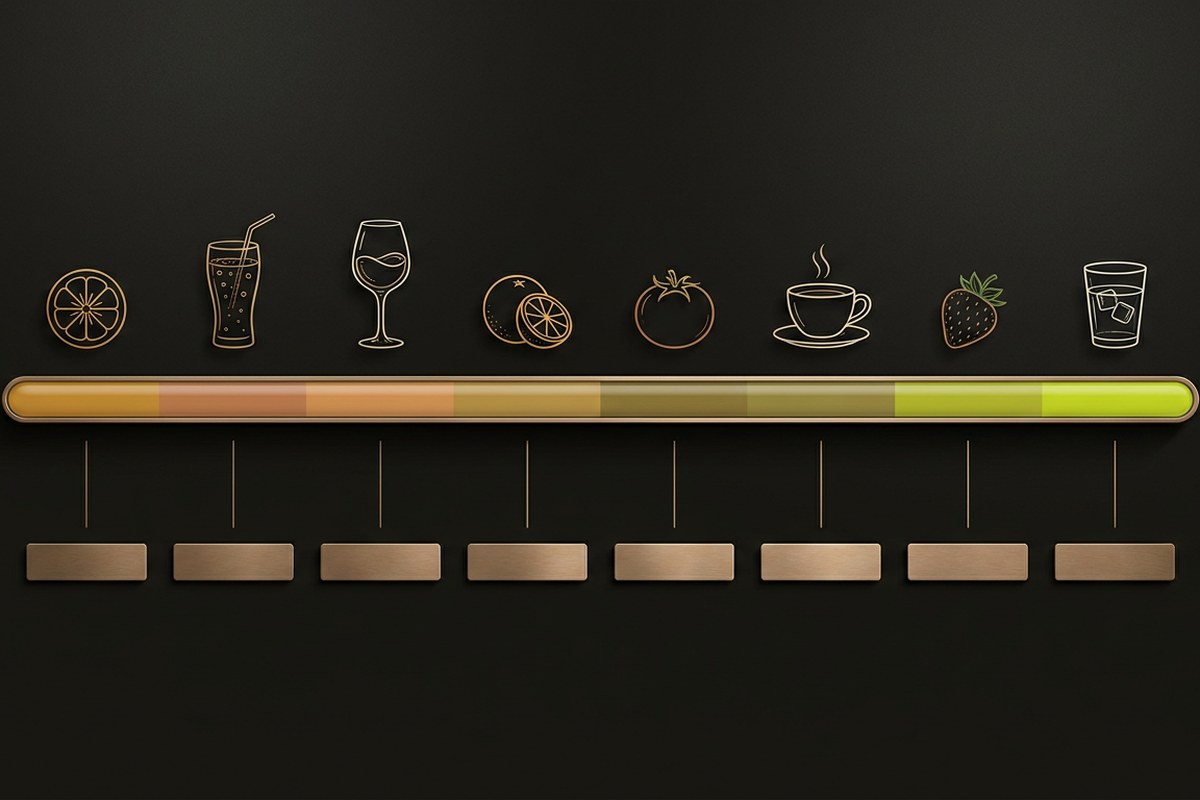
Approximate published values put lemon and lime juice near pH 2.0 to 2.6, cola around 2.5, vinegar between 2.4 and 3.4, wine around 3.0 to 3.8, orange juice near 3.3 to 4.2, and tomatoes between 4.3 and 4.9. Summer eating is unusually dense in that list.
The surprises
Coffee typically lands near pH 5 and is nonetheless one of the most frequently reported bladder triggers — which points at caffeine and the roughly thousand other compounds in the cup rather than at acidity alone.
Meanwhile plenty of people tolerate strawberries at pH 3.5 without incident. The Interstitial Cystitis Association has made this point for years: the published trigger lists are a starting hypothesis, not your personal data.
How to find your own pattern
Remove one suspected item completely for two weeks, then reintroduce it alone on a quiet day and record what happens over the following 48 hours. One variable at a time. It is slower than a printed list and it is the only method that produces an answer about you.
What You Can Actually Change
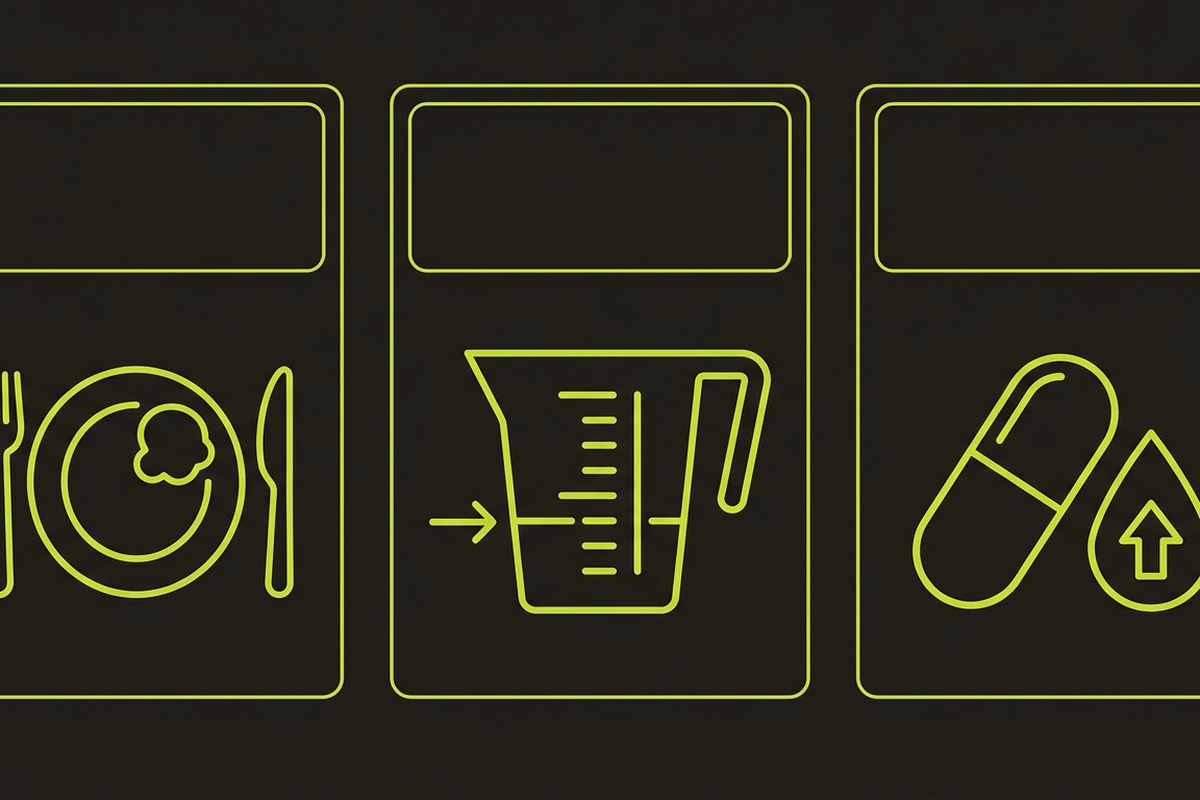
Three levers, not one
You can change which foods you eat, how much of them you eat at a sitting, and what the food's pH is when it arrives. Most people only ever use the first lever, which is why the strategy feels like nothing but subtraction.
Buffering the food itself
Calcium glycerophosphate is a calcium salt of glycerophosphoric acid used to raise the pH of foods and beverages. Taken with the acidic item rather than after it, it acts on the food, not on your stomach — which is the meaningful difference from an antacid, and why it does not produce the rebound acid response that acid-blocking approaches can.
Calcium is doing a second job
Calcium is not only a buffer. It is required for bone maintenance, muscle contraction, nerve signaling and normal cell function, and adequate intake across life supports bone health — see the NIH Office of Dietary Supplements fact sheet. If you have impaired kidney function, speak with your doctor before starting calcium or magnesium, since your kidneys regulate both.
The Desert Harvest Difference
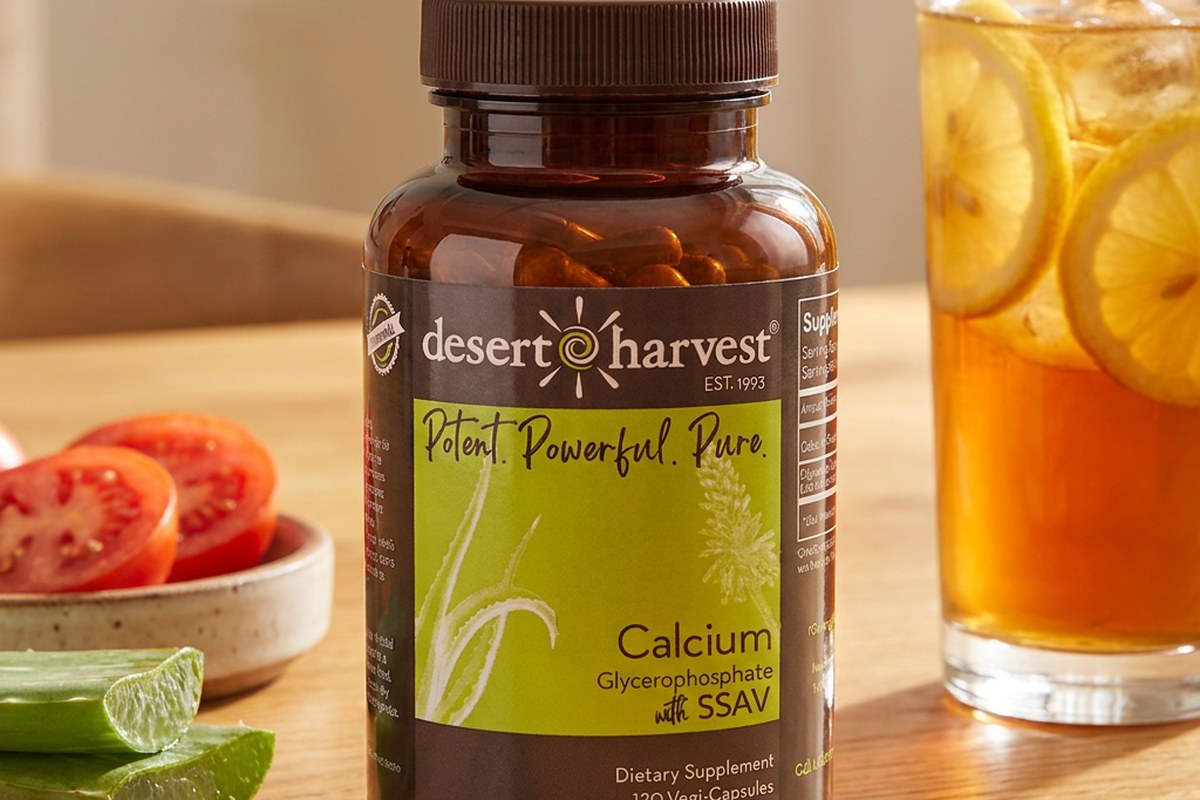
Calcium Glycerophosphate is the least glamorous product Desert Harvest makes and one of the most used. Each capsule carries 230 mg of calcium glycerophosphate — 25% of the Daily Value for calcium — plus 40 mg of SSAV (Super-Strength Aloe Vera), with 120 capsules per bottle.
The directions are the whole design: take one capsule with the acidic food or drink you want to enjoy. In clinical testing, calcium glycerophosphate reduced the acidity of foods and beverages by up to 95%. Studies cataloged in PubMed Central have examined calcium salts in food buffering more broadly.
"Now I can have my coffee without worry. Thank you." — Kaori, Verified Customer
Bladder-friendly, gluten-free, vegan, cGMP certified, third-party tested, no fillers. Calcium can constipate, so many people pair it with an equal amount of magnesium. Talk to your provider about whether it fits your routine.
The Bottom Line
Acidity is worth understanding, but pH by itself will mislead you — portion size, the rest of the food's chemistry and your own tolerance all sit alongside it. Testing one food at a time tells you more than any list, and buffering the meal gives you a third option beyond eating it or skipping it.
Subscribe to Calcium Glycerophosphate and every subscription order ships free.
These statements have not been evaluated by the Food and Drug Administration. This product is not intended to diagnose, treat, cure, or prevent any disease. This content is for informational purposes only and does not constitute medical advice. Always consult with a qualified healthcare provider before making changes to your health regimen.