


Repeat UTIs and the Unglamorous Basics: Fluids, Sleep and Daily Nutrition
Between 40 and 60 percent of women develop a urinary tract infection at some point in their lives, according to the National Institute of Diabetes and Digestive and Kidney Diseases — and for a sizeable minority, one episode turns into a pattern that reshapes how they plan a day.
If that is you, you have almost certainly already been handed the list: drink more water, do not hold it, wipe front to back. What nobody tends to explain is why the boring advice keeps coming up, or where daily nutrition fits alongside it. That is what this article covers. It is not a substitute for medical care — an active infection needs a clinician — but the everyday scaffolding underneath is genuinely worth getting right.
The Basics That Carry the Most Weight
Fluid volume, spread across the day
Urine that sits concentrated in the bladder for hours behaves differently from urine that is regularly diluted and cleared. That is the entire argument for fluid intake, and it is why the advice survives every revision of the guidance.
The practical version is not "drink eight glasses". It is steady intake across waking hours, tapering in the evening so you are not trading daytime comfort for a night of interrupted sleep. If your urine is consistently dark, that is usable feedback.
Sleep, because immunity runs on it
Sleep is when a great deal of immune regulation happens. Chronically short nights are associated with poorer immune function in research collected across PubMed Central, which is exactly why repeat infections so often cluster in the most exhausting stretches of a year.
For anyone with a sensitive bladder, this becomes circular: nocturia breaks up sleep, broken sleep is harder on immune function. Anything that reduces night waking is doing more than one job.
Bowel regularity, the part nobody mentions
Constipation and urinary symptoms are neighbors in more ways than one — a loaded bowel physically crowds the bladder, and gut flora and urogenital flora are connected communities. Regularity is quietly part of urinary tract wellness, which is why magnesium and probiotics turn up in this conversation at all.

Where Daily Nutrition Actually Fits
Vitamin C: the nuance nobody explains
Vitamin C is a genuine immune nutrient — the NIH Office of Dietary Supplements describes its role in immune function and as an antioxidant. But plain ascorbic acid is markedly acidic, and for people with interstitial cystitis or a reactive bladder it is one of the most commonly reported irritants.
The way around that is the form, not the nutrient: buffered vitamin C as calcium ascorbate delivers the same vitamin much closer to pH neutral.
The daily foundation, chosen carefully
A multivitamin is not an infection strategy. It is insurance against the small, chronic shortfalls that make everything harder — and for a sensitive bladder, the forms it uses matter more than the count on the front of the bottle. Buffered vitamin C rather than ascorbic acid, methylcobalamin B12, and no supplemental B6, which is a well-documented irritant for this group.
Botanicals, honestly framed
Cranberry and D-mannose have been studied for years, with mixed and much-debated results. Heather (Calluna vulgaris) is a newer entry: laboratory research indexed in PubMed has examined heather extracts against common urinary pathogens in vitro. In-vitro findings are a starting point, not a conclusion, and the honest framing is complementary daily support alongside your clinician's plan — never instead of it.

Building It Into an Ordinary Week
Keep it to things you will still be doing in November:
- A full glass of water with each meal, and one more mid-afternoon.
- A consistent bedtime, defended more fiercely than it sounds reasonable to defend it.
- Empty the bladder rather than putting it off, and always after intimacy.
- One daily foundation supplement chosen for form, taken with a meal.
- Something for regularity if that is a recurring issue for you.
The Urology Care Foundation's patient guide to urinary tract infections is a solid reference for the medical side, and anything recurring deserves a proper conversation with your provider rather than another round of guesswork.
The Desert Harvest Difference
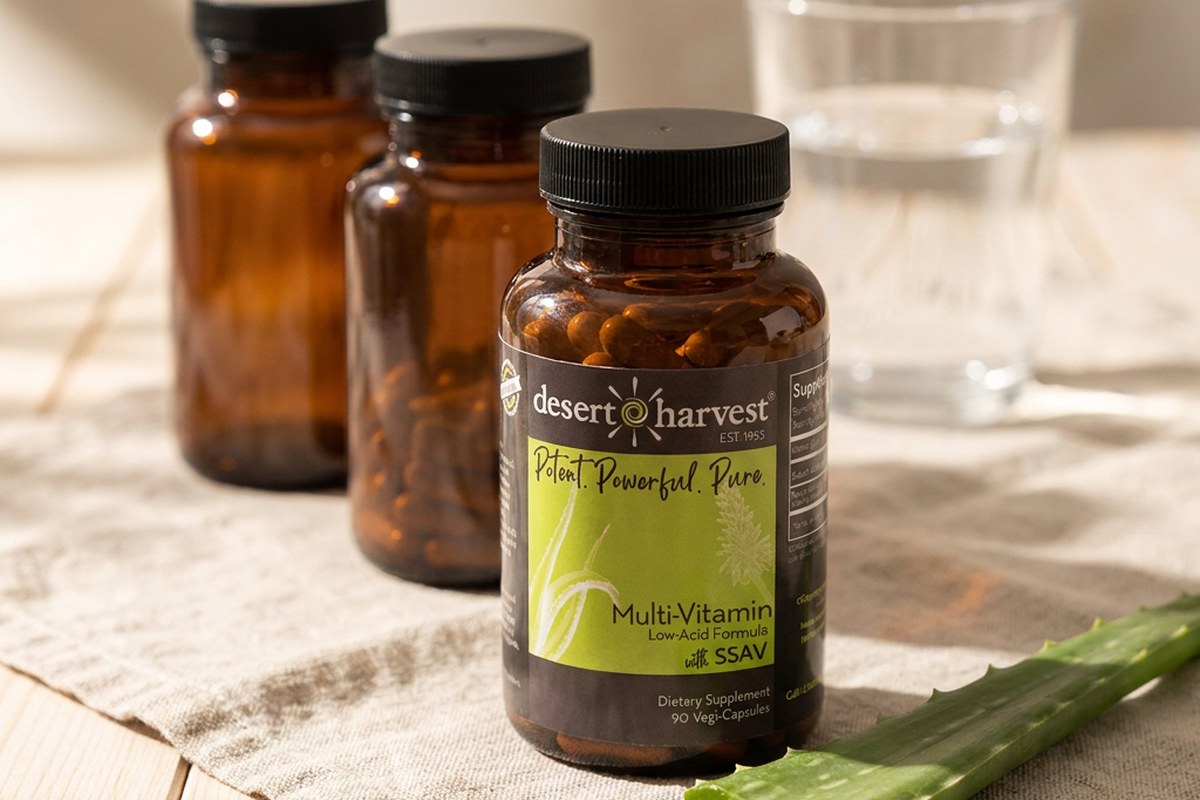
Desert Harvest has built for sensitive bladders since 1993, which means our daily foundation is designed around what it leaves out. The Multi-Vitamin Low Acid, Without B6 carries 24 vitamins and minerals plus 50 mg of organic SSAV (Super-Strength Aloe Vera) in one capsule — buffered vitamin C, calcium glycerophosphate instead of acidic mineral salts, no supplemental B6 and no B3.
Magnesium covers the regularity side at 250 mg plus 75 mg of SSAV (Super-Strength Aloe Vera), and Heather's UTI Defense pairs 300 mg of Calluna vulgaris with 300 mg of Aloe Vera for daily urinary tract support. All three sit in our bladder health collection.
The Bottom Line
The unglamorous basics are unglamorous because they are maintenance, not rescue. Steady fluids, protected sleep, regularity and a daily foundation chosen for its forms will not make headlines — but they are the layer underneath everything else you try, and they are the layer most often skipped.
Subscribe to the Multi-Vitamin Low Acid and every subscription order ships free.
These statements have not been evaluated by the Food and Drug Administration. This product is not intended to diagnose, treat, cure, or prevent any disease. This content is for informational purposes only and does not constitute medical advice. Always consult with a qualified healthcare provider before making changes to your health regimen.