


Your Bladder's Own Defenses: The Innate Immunity Behind Recurrent UTIs
Why does the same bacterium cause an infection in one woman and nothing at all in another? Bacteria reach the bladder far more often than infections follow, and the gap between exposure and illness is where the interesting biology sits.
Most conversations about urinary tract infections concentrate entirely on the organism. Far fewer look at the terrain it lands in — which is a shame, because the terrain is the part you have any influence over.
The Defenses You Were Born With
Mechanical flushing comes first
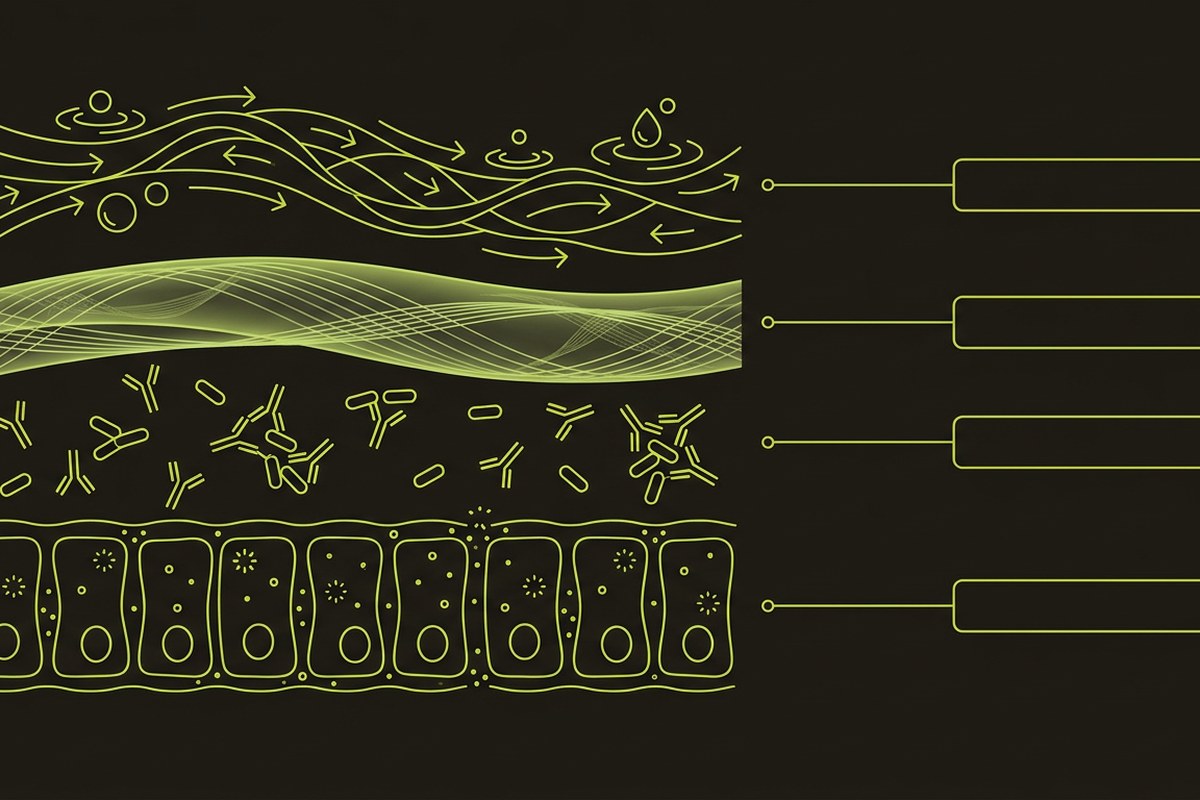
The simplest defense is volume. Each void physically washes organisms out of the urethra and bladder before they can establish themselves, which is why urinary frequency and fluid intake matter more than almost any supplement.
NIDDK describes urinary tract infections as among the most common infections in adults, and dilution remains the least glamorous and most reliable factor in the whole picture.
The GAG layer
The bladder wall is coated in a glycosaminoglycan layer — a slick, hydrated film that keeps urine and bacteria from making direct contact with the epithelium underneath.
When that layer is intact, adhesion is difficult. When it is thinned or disrupted, bacteria that would ordinarily wash away get a foothold. Research indexed in PubMed has examined this barrier in both recurrent infection and bladder pain syndrome.
Uromodulin, the most abundant protein in urine
Also called Tamm-Horsfall protein, uromodulin is produced by the kidney and is the single most abundant protein in normal urine. One of its functions is to bind the fimbriae that E. coli uses to attach to bladder cells — decoy binding sites that leave with the next void.
Antimicrobial proteins in the mucosa
The urinary tract also secretes antimicrobial peptides, including defensins and lactoferrin — an iron-binding protein that limits the iron bacteria need to multiply. Studies cataloged in PubMed Central have examined this iron-withholding strategy as one of the oldest tools in innate immunity.
Why Those Defenses Thin Out
Estrogen and the postmenopausal shift
Falling estrogen thins urogenital tissue and shifts the vaginal microbiome away from its lactobacillus-dominant state, removing a competitive barrier that used to sit between the gut reservoir and the urethra. For many women over 50, this single change explains a pattern that seemed to begin from nowhere.
Incomplete emptying
Residual urine is a reservoir. Pelvic floor dysfunction, prolapse and certain medications all leave more behind than they should, and bacteria multiply in what stays.
Repeated antibiotic courses
Antibiotics remain the medical standard of care for an active infection — that decision belongs with your clinician. But repeated broad-spectrum courses also disturb the gut and vaginal populations that ordinarily compete with E. coli. The Urology Care Foundation discusses recurrence patterns in plain language worth reading before your next appointment.
Genetics and blood group
Some people secrete blood group antigens into their mucosal fluids and some do not — a non-secretor status associated in the literature with more bacterial adhesion. Nothing to be done about it, but it is a reason recurrence is not a matter of hygiene or effort.
Supporting the Terrain
- Drink on a schedule. Four to eight ounces every 30 to 45 minutes; pale straw, not clear and not dark.
- Empty completely. Take your time, and consider pelvic floor physical therapy if emptying feels incomplete.
- Ask about local estrogen if you are postmenopausal — for many women this is the single largest lever.
- Support the microbiome after any antibiotic course, spaced at least two hours from the dose.
- Get iron measured rather than supplemented on assumption, since iron availability is part of this system.
The Desert Harvest Difference
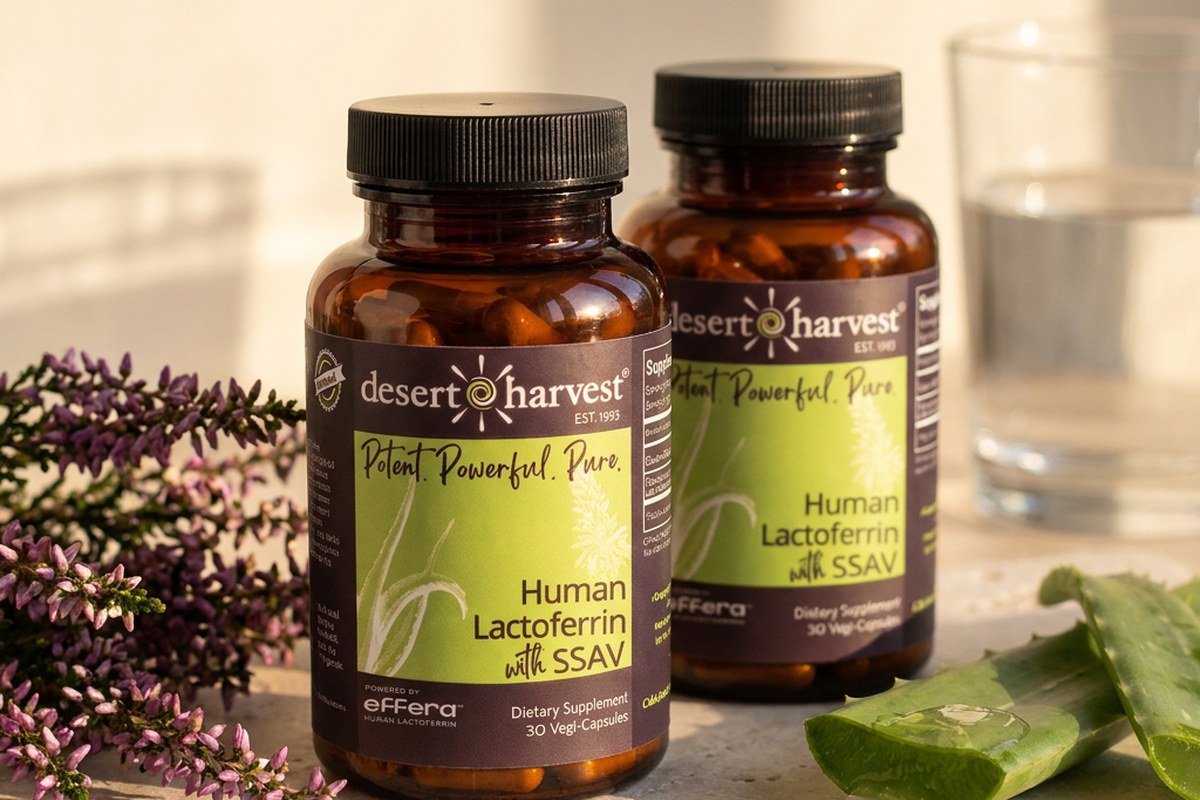
Lactoferrin is one of the proteins your own body uses in this iron-withholding mechanism, and Desert Harvest makes the first and only supplement built on effera® human-identical lactoferrin rather than the bovine form: Human Bioidentical Lactoferrin, 300 mg per capsule with 40 mg of SSAV (Super-Strength Aloe Vera), taken once daily in the morning on an empty stomach.
To be clear about what it is: this is a systemic supplement for iron balance and immune support during menopause, not a urinary product. If your interest is daily urinary wellness specifically, that is Heather's UTI Defense with 300 mg of Calluna vulgaris. Lactoferrin increases iron levels, so monitor them if you supplement iron, and speak with your doctor first if you take immunosuppressants or antibiotics.
Desert Harvest has served the bladder community since 1993 — cGMP certified, third-party tested, no fillers. Talk to your provider about which, if either, fits your regimen.
The Bottom Line
Recurrent infection is rarely a story about one unlucky bacterium. It is a story about a defensive system — flushing, the GAG layer, uromodulin, antimicrobial proteins, a competitive microbiome — that has lost some of its margin, most often to falling estrogen. That reframing matters, because terrain is something you and your clinician can actually address.
Subscribe to Human Bioidentical Lactoferrin and every subscription order ships free.
These statements have not been evaluated by the Food and Drug Administration. This product is not intended to diagnose, treat, cure, or prevent any disease. This content is for informational purposes only and does not constitute medical advice. Always consult with a qualified healthcare provider before making changes to your health regimen.