


Building a Bladder-Friendly Supplement Routine: What to Take, When, and What to Leave Out
As many as 3 to 8 million women and 1 to 4 million men in the United States live with symptoms of interstitial cystitis/bladder pain syndrome, according to the National Institute of Diabetes and Digestive and Kidney Diseases. A good number of them also take a daily vitamin — and quietly wonder whether the capsule they swallowed at breakfast had something to do with yesterday being a bad day.
If you have ever finished a bottle of vitamins feeling worse than when you opened it, you are not imagining things and you are not being difficult. A sensitive bladder reacts to what ends up in the urine, and several very ordinary supplement ingredients end up there in quantity. Here is how to build a daily routine around a bladder with opinions: what to read on a label, how to sequence changes so you learn something, and which forms tend to sit more comfortably.
Why the Supplement Shelf Deserves a Second Look
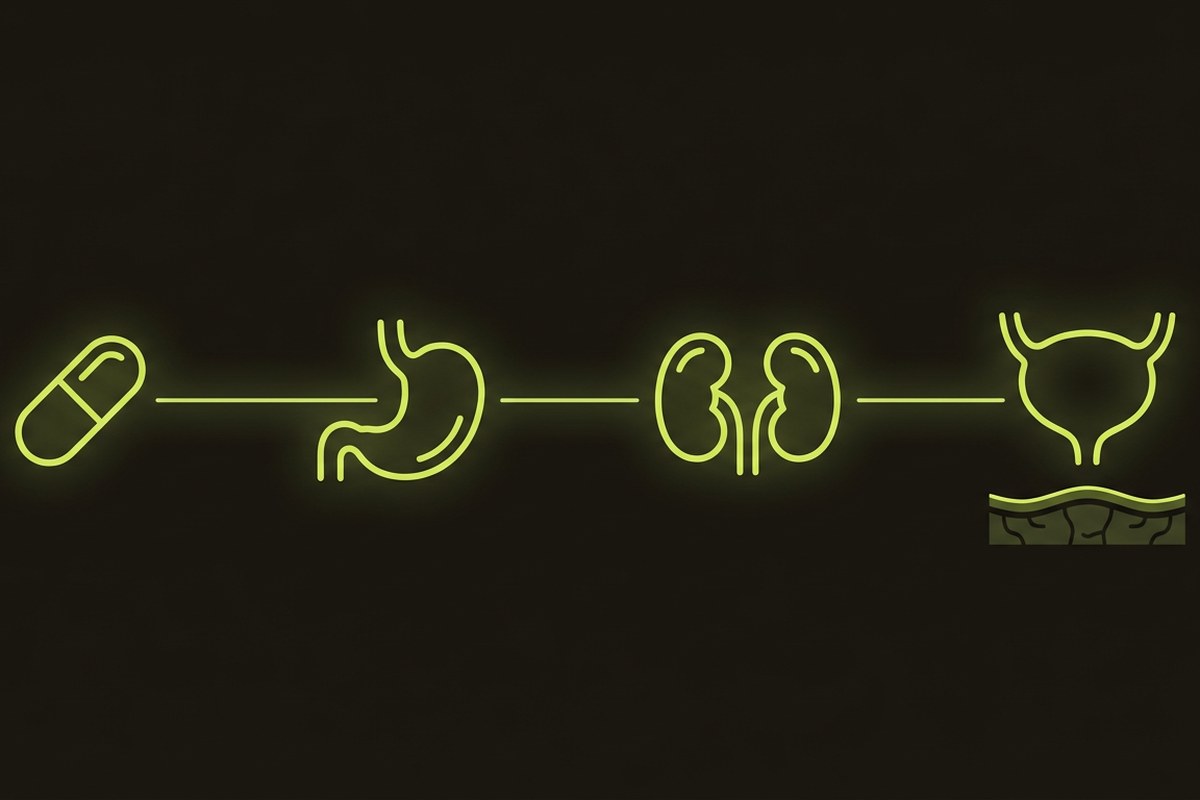
Everything you swallow eventually passes through
Your kidneys filter the bloodstream and concentrate what is left into urine, which then sits in the bladder until you empty it. For most people that is uneventful. For a bladder whose protective glycosaminoglycan layer is thinned or inflamed, concentrated compounds get hours of contact time with tissue that has lost part of its buffer.
That is the whole mechanism in one sentence, and it explains why two people can take the identical multivitamin and have completely different days. Reviews collected in PubMed Central have examined that surface layer and how its integrity relates to bladder sensitivity.
"Natural" and "gentle" are not synonyms
Ascorbic acid is natural. So are citric acid, high-dose B vitamins and several acidic mineral salts. All of them show up repeatedly on the trigger lists that patient organizations such as the Interstitial Cystitis Association compile from real-world reports.
The lesson is not that vitamins are dangerous. It is that the form a nutrient takes matters as much as the amount.
Reading a Label the Way a Sensitive Bladder Would
Forms are not interchangeable
Three swaps cover most of what matters on a bladder-friendly label:
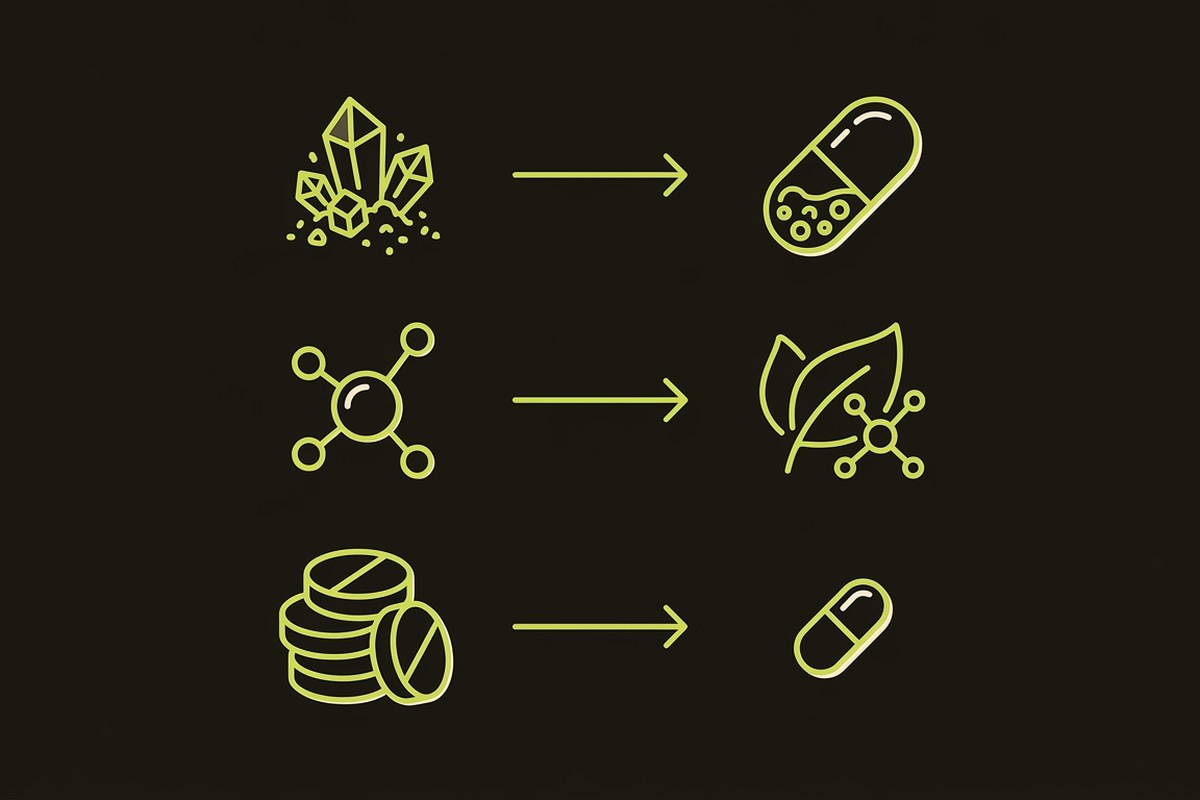
- Vitamin C: ascorbic acid is markedly acidic; a buffered form such as calcium ascorbate is much closer to pH neutral.
- Vitamin B12: methylcobalamin is the naturally occurring form, as opposed to synthetic cyanocobalamin.
- Vitamin B6: supplemental pyridoxine has a tolerable upper intake level of 100 mg per day for adults, and the NIH Office of Dietary Supplements documents sensory nerve problems in people who took very high amounts over long periods. Plenty of everyday multivitamins carry far more B6 than anyone needs. We covered that in detail in Vitamin B6 Toxicity: The Hidden Danger in Your Daily Multivitamin.
The ingredients nobody advertises
Turn the bottle over. Artificial colors, citrus-derived coatings, artificial sweeteners in chewables and gummies, and cheap bulking agents are all common, and none of them are there for you. A short "other ingredients" line is usually a good sign.
Sequencing: Change One Thing at a Time
Give each change two weeks
The most common mistake is starting four new things on the same Monday. If the week goes badly you have learned nothing except that it went badly. One new bottle, two weeks, then decide. Research indexed in PubMed on dietary modification in IC/BPS consistently describes symptom patterns as highly individual, which is exactly why a personal test beats a general rule.
Use the clock
Timing is free and it matters. A multivitamin with iron generally sits better with a meal. Magnesium is commonly taken in the evening. Probiotics are usually kept at least two hours away from an antibiotic dose.
Keep an unglamorous log
Date, what changed, how the following three days went. Half a page in a notebook. When you next sit down with your urologist, that log will be worth more than any recollection.
Talk to your healthcare provider before adding or removing anything, particularly if you have impaired kidney function — your kidneys regulate calcium and magnesium levels, and that conversation should happen first.
The Desert Harvest Difference
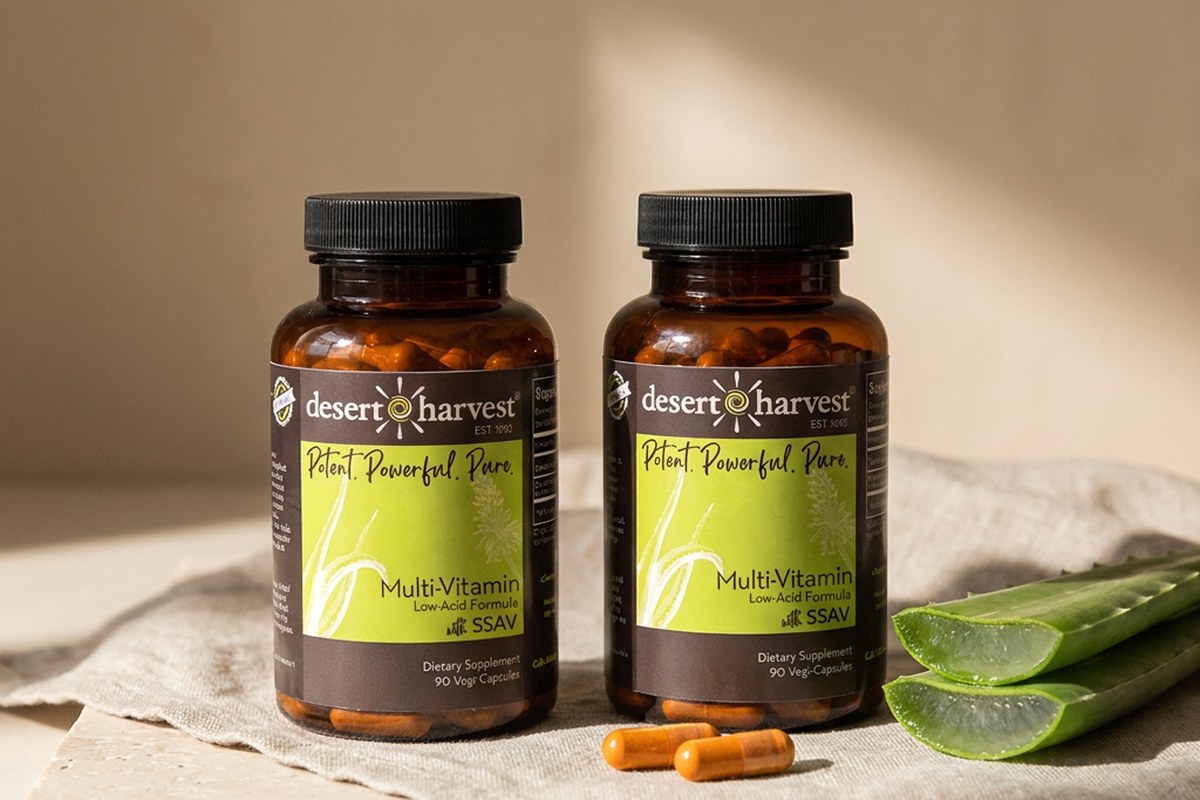
Desert Harvest has been formulating for this exact audience since 1993, which is why our supplements start from what to leave out. The Multi-Vitamin Low Acid, Without B6 carries 24 vitamins and minerals plus 50 mg of organic SSAV (Super-Strength Aloe Vera) in a single daily capsule — with no supplemental B6, no B3, buffered vitamin C as calcium ascorbate, methylcobalamin B12 and calcium glycerophosphate rather than acidic mineral salts.
Magnesium sits alongside it at 250 mg of magnesium oxide plus 75 mg of SSAV per capsule, and is the mineral most often paired with calcium to support ordinary bowel regularity. Both are gluten-free, third-party tested, cGMP compliant and free of fillers, and both sit in our everyday supplements collection.
The Bottom Line
A bladder-friendly routine is mostly subtraction: fewer acidic forms, fewer needless additives, fewer simultaneous changes. Read the form as carefully as the dose, move one variable at a time, write down what happens, and bring the notes to your provider.
Subscribe to the Multi-Vitamin Low Acid and every subscription order ships free.
These statements have not been evaluated by the Food and Drug Administration. This product is not intended to diagnose, treat, cure, or prevent any disease. This content is for informational purposes only and does not constitute medical advice. Always consult with a qualified healthcare provider before making changes to your health regimen.