


The Carrier Effect: Why Aloe Vera Sits Beside Every Other Nutrient You Take
Turn over any of the 16 Desert Harvest dietary supplements — magnesium, vitamin C, quercetin, a probiotic — and you will find Aloe Vera in the ingredient list. Not some of them. All of them. That is a deliberate formulation decision, and it has almost nothing to do with Aloe Vera’s reputation as a sunburn remedy.
Aloe Vera has a second job that gets far less attention than its first: it may help the nutrients traveling with it actually arrive. Understanding that job is also the fastest way to tell a serious Aloe Vera supplement from a cheap one.
What "Aloe Vera" on a Label Can Actually Mean
Inner leaf gel, whole leaf, and the layer between them
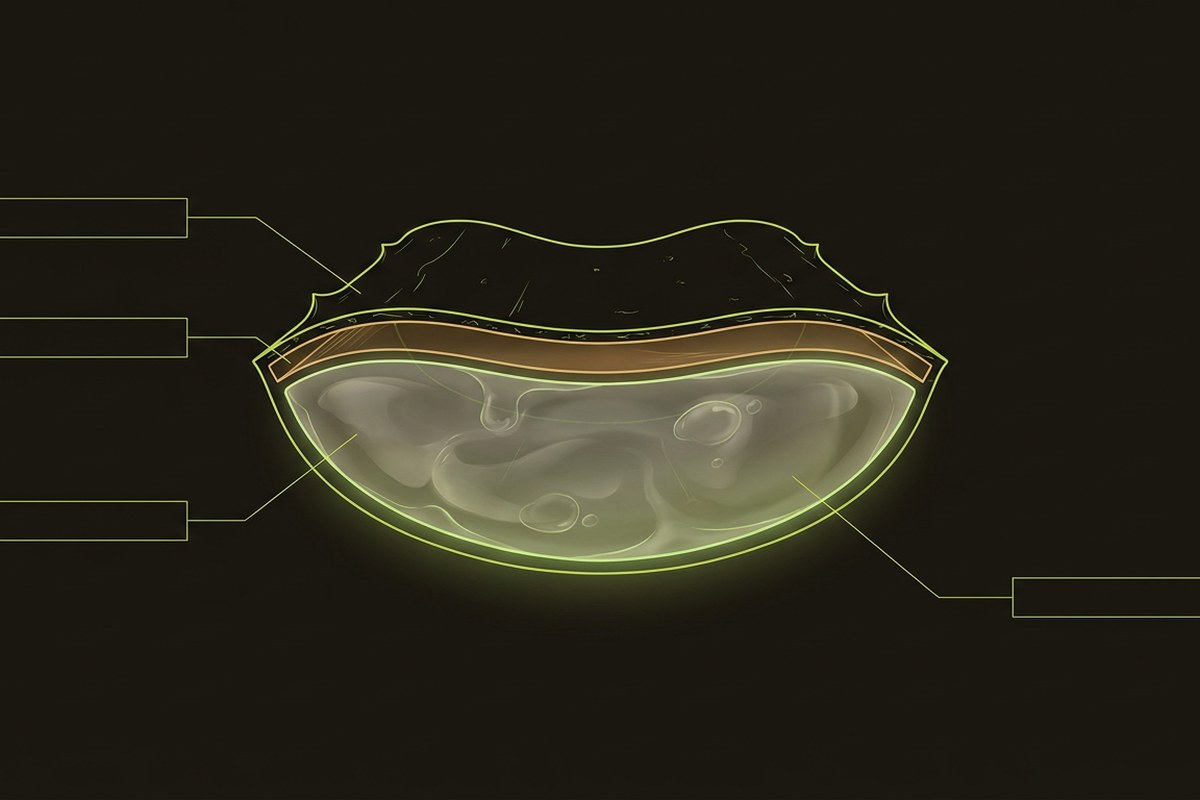
An Aloe Vera leaf has three distinct parts. The clear inner gel is the part almost everyone wants. The tough green rind is structural. Between them sits a bitter yellow latex containing anthraquinones, including aloin.
That middle layer is the reason two products labeled "Aloe Vera" can behave nothing alike. Aloin is a stimulant laxative compound, which is exactly what someone managing a sensitive bladder or a sensitive gut does not want arriving by surprise. Careful producers decolorize and filter it out; careless ones do not bother.
Concentration is not marketing language
A 200:1 Aloe Vera concentrate means 200 parts of raw leaf reduced to 1 part of finished powder. Dose matters enormously here, because a bottle promising "Aloe Vera" at an undisclosed strength can legally contain a rounding error of the plant.
Heat is the other variable. Aloe Vera’s larger polysaccharides are fragile, and processing that cooks the leaf leaves behind something chemically simpler than what was harvested. Cold-process freeze-drying is slower and more expensive, and it is the reason the finished powder still resembles the plant.
The compound everyone is actually after
Most interest in Aloe Vera’s internal use centers on acemannan, a long-chain mannose polysaccharide found in the inner gel. Research indexed in PubMed has examined acemannan across immune signaling, mucosal tissue and wound models for several decades.
The Carrier Effect: Aloe Vera and Absorption
Why a nutrient's dose is not the same as its delivery
The number on a supplement label is what went into the capsule, not what crossed your intestinal wall. Those are frequently very different figures, and the gap is where most disappointing supplements live.
Studies cataloged in PubMed Central have examined Aloe Vera gel alongside vitamins and minerals to see whether the polysaccharide fraction changes how much of the nutrient becomes available to the body. Research suggests Aloe Vera may support that uptake, which is the entire premise behind pairing it with everything else in a formula.
Mucilage, transit and a gentler landing
Aloe Vera’s polysaccharides are mucilaginous — they hold water and form a soft gel. Many people find that quality is why a mineral that normally sits heavily lands more gently when Aloe Vera is in the same capsule. It is not a dramatic effect. It is the difference between a supplement you keep taking and one you abandon in week three.
Reading an Aloe Vera Label Without Guesswork
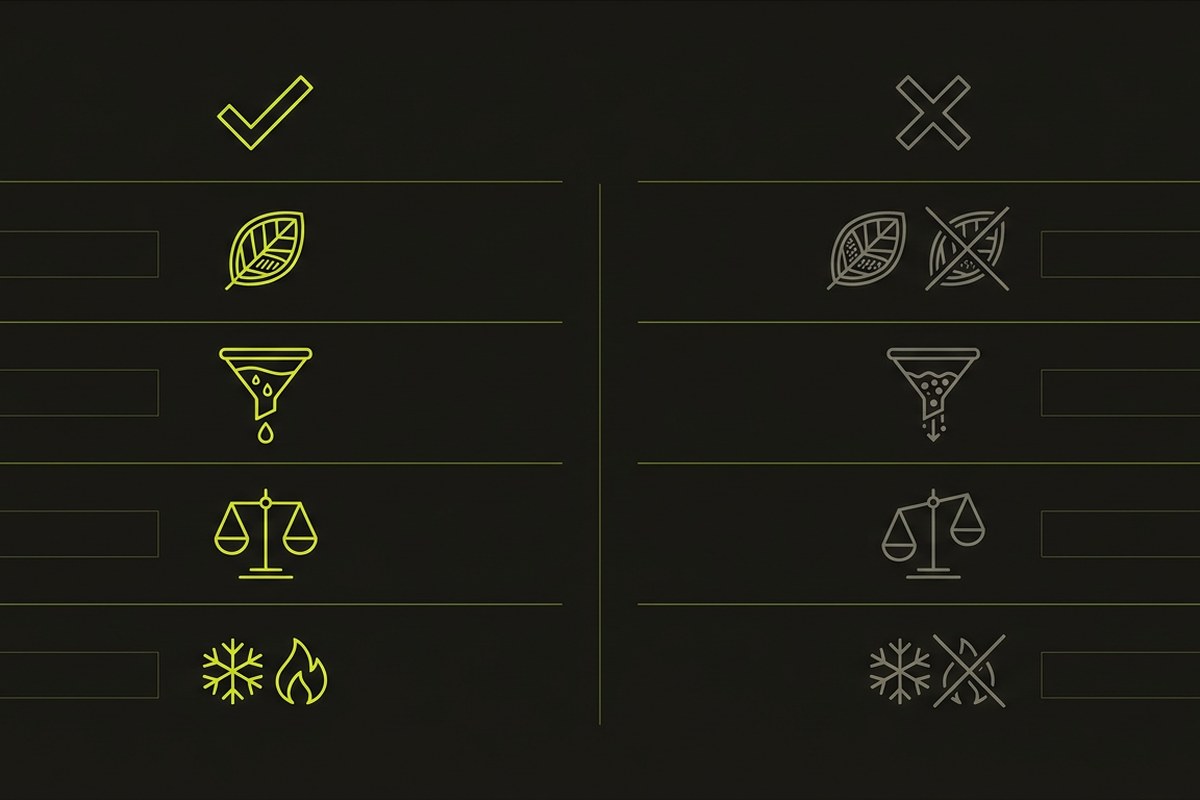
Four questions answer almost everything:
- Which part of the leaf? Inner leaf or inner gel should be stated outright.
- Is aloin removed? Look for decolorized, purified or anthraquinone-free.
- What concentration? A ratio such as 200:1, not the word "potent".
- How was it dried? Freeze-dried and cold-processed preserve more than heat-dried.
If a label answers none of these, you are buying a color on a shelf. The International Painful Bladder Foundation publishes global IC/BPS guidance that takes Aloe Vera seriously enough to name it — precision about the source is part of why.
A summer footnote
Hot months are when people add electrolytes, drink more and eat less predictably, and absorption gets less reliable exactly when intake gets more variable. It is a sensible season to look at what your supplements are riding in on.
The Desert Harvest Difference
Desert Harvest has been making Aloe Vera supplements since 1993, and the Aloe Vera in every formula is the same organic, inner-leaf, anthraquinone-free, cold-process freeze-dried 200:1 material used in SSAV (Super-Strength Aloe Vera) — the only Aloe Vera supplement named by name in the IPBF global IC/BPS guidelines.
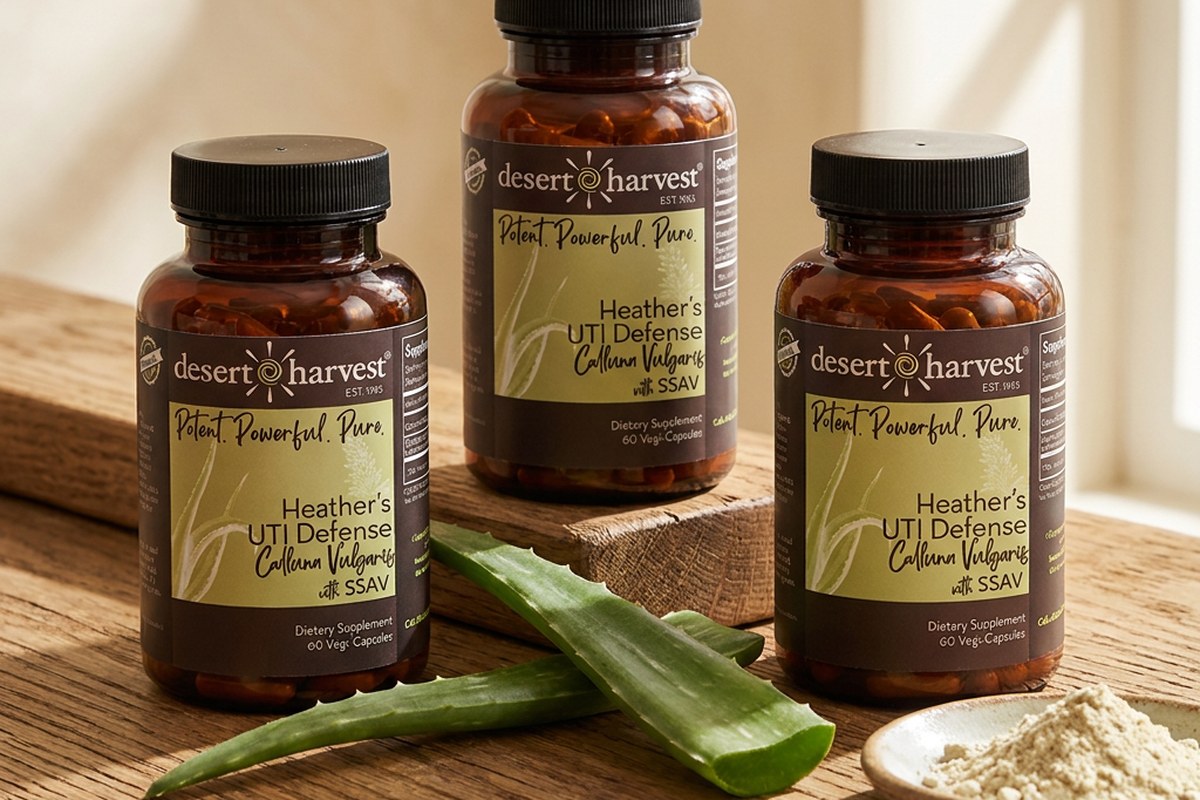
That is why Buffered Vitamin C carries 75 mg of SSAV (Super-Strength Aloe Vera), Quercetin carries 100 mg, and Heather's UTI Defense carries a full 300 mg alongside 300 mg of Calluna vulgaris. Every capsule is gluten-free, vegan, cGMP certified, third-party tested and free of fillers. As always, check with your healthcare provider before adding anything new to your regimen.
The Bottom Line
Aloe Vera earns its place in a formula twice: once for what it does on its own, and once for what it may do for everything beside it. The part of the leaf, the removal of aloin, the concentration ratio and the drying method are the four facts that separate a functional Aloe Vera from a decorative one — and they are all knowable before you buy.
Subscribe to Heather's UTI Defense and every subscription order ships free.
These statements have not been evaluated by the Food and Drug Administration. This product is not intended to diagnose, treat, cure, or prevent any disease. This content is for informational purposes only and does not constitute medical advice. Always consult with a qualified healthcare provider before making changes to your health regimen.